
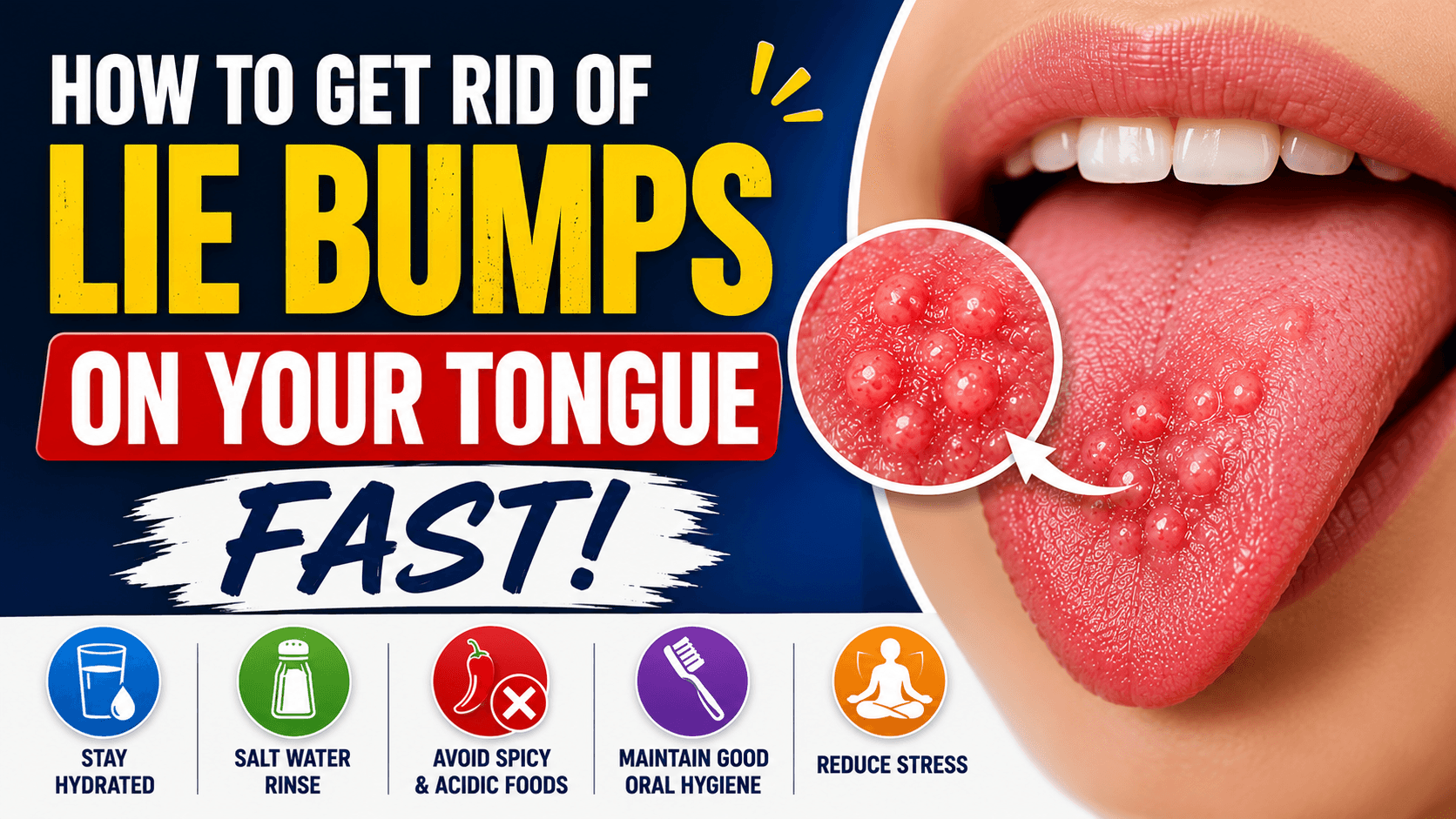
What Are Lie Bumps on the Tongue?
Lie bumps, medically known as Transient Lingual Papillitis (TLP), are small, painful bumps that suddenly appear on the surface or tip of the tongue. Although they can be uncomfortable, they are usually harmless and temporary. In most cases, they disappear on their own within a few days without medical treatment.
What Causes Lie Bumps?
Lie bumps develop when the tiny papillae (small taste buds) on your tongue become irritated or inflamed. Several factors may trigger this condition, including:
- Eating spicy, hot, or acidic foods
- Accidentally biting your tongue
- Irritation from sharp teeth or dental appliances
- Stress or emotional tension
- Lack of sleep
- Hormonal changes
- Food allergies or sensitivities
- Poor oral hygiene
Sometimes, the exact cause remains unknown.
Common Symptoms
Lie bumps are usually easy to identify because they often cause pain, tenderness, or noticeable discomfort on the tongue. Common symptoms include:
- Small red, white, or yellowish bumps on the tongue
- Pain or tenderness when eating or drinking
- Increased sensitivity to hot, spicy, or salty foods
- Mild discomfort while talking or swallowing
- A burning or tingling sensation on the affected area
These symptoms usually improve within 2–7 days.
Are Lie Bumps Dangerous?
The good news is that lie bumps are not dangerous. They are a temporary condition and are not contagious, meaning they cannot spread from one person to another. Most cases heal naturally without any medication.
However, you should consult a healthcare professional if:
- The bumps last more than two weeks
- The pain becomes severe
- You develop a fever or swollen lymph nodes
- The bumps continue to return frequently
- You have difficulty eating, drinking, or swallowing
Lie Bumps vs. Other Tongue Conditions
It is important to know the difference between lie bumps and other mouth problems.
- Lie Bumps: Small, painful bumps that heal within a few days.
- Canker Sores: Round ulcers with a white or yellow center and a red border.
- Oral Thrush: Creamy white patches caused by a fungal infection.
- Tongue Ulcers: Larger sores that usually take longer to heal.
Understanding these differences can help you identify whether you have a simple lie bump or another condition that may require medical attention.
Key Takeaway
Despite the popular myth, lie bumps are not caused by telling lies. They are swollen taste buds that typically improve and heal naturally without treatment. Maintaining good oral hygiene, avoiding irritating foods, and reducing stress can help lower the chances of developing them.
How to Get Rid of Lie Bumps Fast
Most lie bumps heal naturally within a few days, but there are several simple ways to reduce pain and speed up recovery. The goal is to minimize irritation, keep your mouth clean, and allow the inflamed papillae to heal.
Effective Ways to Relieve Lie Bumps
- Rinse with warm salt water 2–3 times a day to reduce inflammation and keep the affected area clean.
- Drink plenty of water to keep your mouth hydrated and prevent further irritation.
- Avoid spicy, hot, and acidic foods until the bump has healed.
- Eat soft foods such as yogurt, mashed potatoes, oatmeal, bananas, or soup to reduce discomfort while eating.
- Maintain good oral hygiene by brushing your teeth gently and cleaning your tongue carefully without scrubbing the sore area.
- Use an alcohol-free mouthwash if recommended, as it may help keep bacteria under control without causing extra irritation.
- Avoid touching or picking at the bump, as this can delay healing and increase discomfort.
Natural Home Remedies
Several simple home remedies can help calm tongue irritation and provide temporary relief from discomfort.
- Let small ice chips melt in your mouth to ease discomfort and help reduce swelling.
- Drink cool water throughout the day.
- Eat plain yogurt, which may help maintain a healthy balance of bacteria in the mouth.
- Gargle with baking soda mixed with warm water to soothe irritation.
When Will It Heal?
Most lie bumps improve within 2 to 7 days without any special treatment. If the bump becomes larger, lasts for more than two weeks, keeps coming back frequently, or is accompanied by severe pain, fever, or difficulty swallowing, it is important to consult a dentist or healthcare professional for a proper evaluation.
By following these simple care tips and avoiding further irritation, you can usually get rid of lie bumps quickly and return to eating and speaking comfortably.
How to Prevent Lie Bumps from Coming Back
Although lie bumps usually heal on their own, taking a few preventive steps can reduce the chances of getting them again. Since these bumps are often triggered by irritation, maintaining good oral health and avoiding common triggers can make a significant difference.
Practice Good Oral Hygiene
Keeping your mouth clean is one of the best ways to protect your tongue from irritation and inflammation.
- Use a soft-bristled toothbrush and brush your teeth gently twice a day to maintain good oral hygiene.
- Gently clean your tongue to remove bacteria, food debris, and buildup that can contribute to irritation.
- Floss every day to help remove plaque and reduce the buildup of harmful bacteria in your mouth.
- Use an alcohol-free mouthwash if your dentist recommends it to help keep your mouth clean and reduce irritation.
Good oral hygiene not only helps prevent lie bumps but also supports overall dental health.
Avoid Common Triggers
Many people develop lie bumps after exposing their tongue to irritation. To lower the risk:
- Limit spicy, hot, or highly acidic foods if they frequently cause discomfort.
- Avoid biting your tongue while eating or chewing.
- Be careful with hard or sharp foods such as chips and crackers that can scratch the tongue.
- Replace damaged toothbrushes that may irritate the mouth.
Paying attention to what triggers your symptoms can help prevent future flare-ups.
Stay Healthy and Hydrated
A healthy body supports a healthy mouth. Simple lifestyle habits can reduce irritation and improve healing.
- Stay well hydrated by drinking enough water throughout the day to help prevent dry mouth.
- Eat a balanced diet rich in vitamins and minerals, especially vitamin B, iron, and zinc.
- Get enough sleep each night.
- Manage stress through relaxation techniques, exercise, or meditation, as stress may contribute to recurring lie bumps in some people.
Know When to Seek Medical Advice
While lie bumps are generally harmless, recurring or long-lasting bumps should not be ignored. Schedule a visit with a healthcare professional if:
- The bumps last longer than two weeks.
- They return frequently without an obvious cause.
- You experience severe pain, swelling, or difficulty swallowing.
- You notice bleeding, large sores, or other unusual changes in your mouth.
A dentist or doctor can rule out other conditions such as mouth ulcers, infections, allergies, or vitamin deficiencies that may require treatment.
Final Prevention Tips
Preventing lie bumps is mostly about reducing irritation and maintaining good oral care. By brushing and flossing regularly, staying hydrated, eating a nutritious diet, avoiding foods that trigger irritation, and managing stress, you can significantly lower the risk of these painful tongue bumps returning. If symptoms become persistent or unusual, seeking professional medical advice is the safest approach.
Conclusion
Lie bumps can be uncomfortable and sore, but they are generally harmless and tend to disappear on their own within a few days. In most cases, they heal naturally within a few days with proper oral care and a little patience. Simple habits like rinsing with warm salt water, drinking plenty of water, avoiding spicy or acidic foods, and practicing good oral hygiene can ease discomfort and promote quicker healing.
To reduce the chances of lie bumps returning, focus on keeping your mouth healthy, eating a balanced diet, managing stress, and avoiding common triggers that irritate your tongue. While occasional lie bumps are normal, persistent, severe, or frequently recurring bumps should be evaluated by a healthcare professional to rule out other underlying conditions.
By understanding the causes, following effective treatment methods, and practicing preventive care, you can keep your tongue healthy and minimize the risk of future flare-ups.
Frequently Asked Questions
Q1. What Are Lie Bumps on the Tongue?
Answer:
Lie bumps, medically known as Transient Lingual Papillitis (TLP), are small, painful bumps that appear on the tongue when the tiny taste buds (papillae) become irritated or inflamed. They are harmless in most cases and usually heal on their own.
Q2. How Long Do Lie Bumps Usually Last?
Answer:
Most lie bumps disappear within 2 to 7 days without treatment. If the bumps remain for more than two weeks, become larger, or cause severe pain, you should seek medical advice.
Q3. How Can I Get Rid of Lie Bumps Fast?
Answer:
To help lie bumps heal faster:
Rinse your mouth with warm salt water.
Drink plenty of water.
Avoid spicy, hot, and acidic foods.
Practice good oral hygiene.
Eat soft foods until the irritation improves.
Q4. Are Lie Bumps Contagious?
Answer:
No. Lie bumps are not contagious. They cannot spread through kissing, sharing utensils, food, or other close contact with another person.
Q5. What Causes Lie Bumps on the Tongue?
Answer:
Lie bumps can be triggered by several factors, including tongue irritation, spicy or acidic foods, accidental biting, stress, lack of sleep, allergies, or poor oral hygiene. In many cases, the exact cause is unknown.
Q6. Can Stress Lead to Lie Bumps?
Answer:
Yes. Emotional stress and inadequate sleep may increase the likelihood of developing lie bumps in some people by affecting the body’s immune response.
Q7. When Should I See a Doctor for Lie Bumps?
Answer:
Consult a healthcare professional if the bumps:
Last longer than two weeks.
Keep coming back frequently.
Cause severe pain or bleeding.
Make it difficult to eat or swallow.
Are accompanied by fever or unusual swelling.