
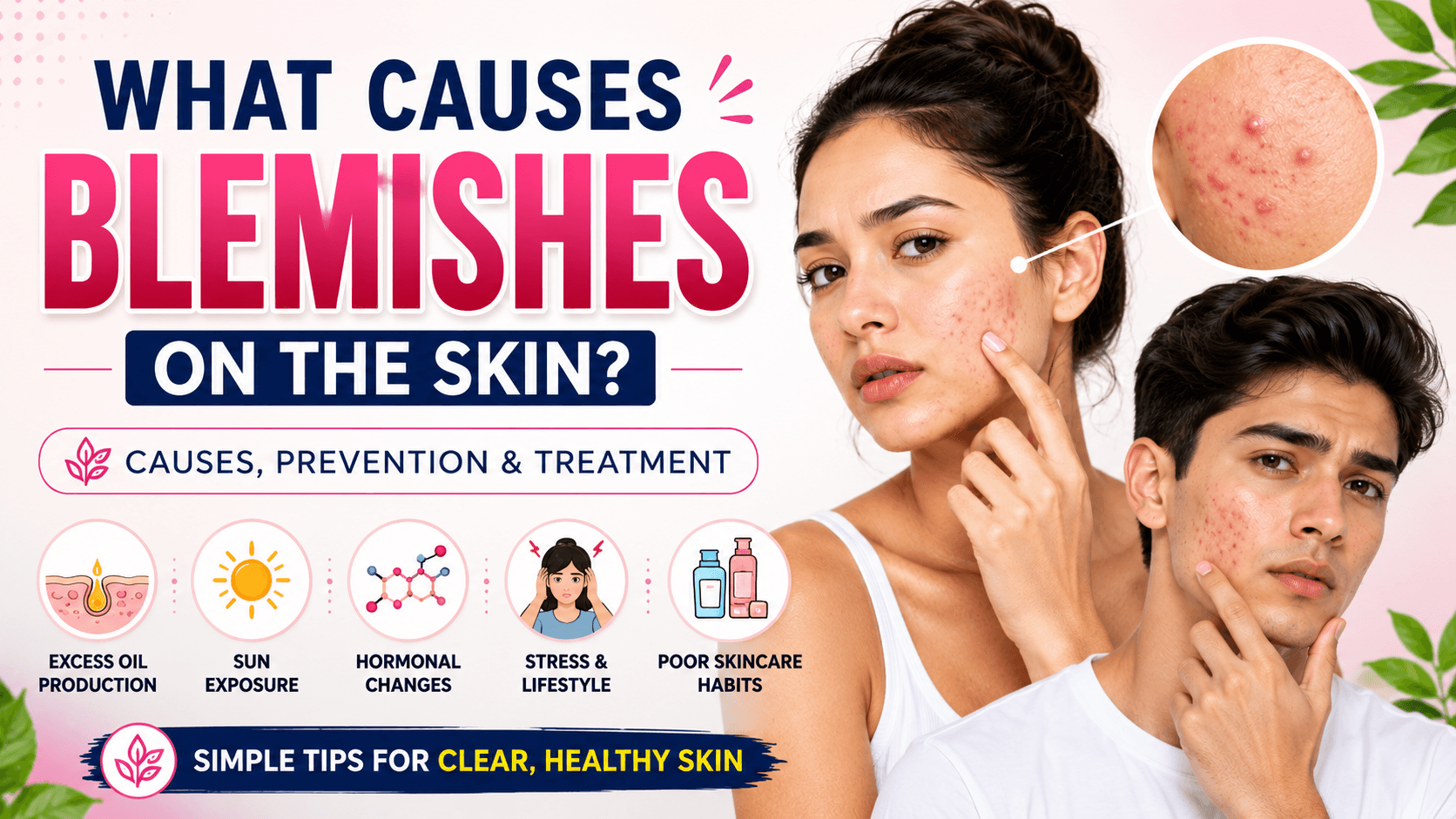
Common Causes of Blemishes on the Skin
Skin blemishes are common and can affect people of all ages. They may appear as dark spots, acne marks, redness, uneven skin tone, or other visible imperfections. Although most blemishes are harmless, knowing their causes can help you follow the right skincare routine and lower the chances of future breakouts or skin discoloration.
Common Causes of Skin Blemishes
- Acne: Pimples, blackheads, and whiteheads are among the most common causes of skin blemishes. They can leave dark marks or scars on the skin after they heal.
- Excess Oil Production: Oily skin can clog pores, increasing the likelihood of acne and blemishes.
- Sun Exposure: Prolonged exposure to ultraviolet (UV) rays can trigger excess melanin production, leading to dark spots and uneven skin tone.
- Hormonal Changes: Hormonal fluctuations during puberty, pregnancy, menstruation, or menopause can increase oil production and contribute to breakouts.
- Aging: As you get older, years of sun exposure and slower skin cell renewal can make age spots and uneven skin tone more noticeable.
- Post-Inflammatory Hyperpigmentation: After acne, cuts, burns, or insect bites heal, dark spots may remain on the skin and gradually fade over time.
- Poor Skincare Habits: Sleeping with makeup on, using harsh skincare products, or not cleansing the skin properly can contribute to clogged pores and blemishes.
- Genetics: Some people are naturally more prone to acne, pigmentation, or other skin conditions because of their family history.
- Unhealthy Diet: A diet high in sugary foods and highly processed snacks may contribute to acne in some individuals, although the relationship varies from person to person.
- Stress: Ongoing stress can influence hormone levels, which may worsen acne and other skin problems in some people.
Additional Factors That May Contribute
- Lack of quality sleep
- Smoking and excessive alcohol consumption
- Certain medications
- Environmental pollution
- Frequent touching or picking at the skin
- Using cosmetic products that clog pores
Each blemish can have a different cause, and several factors may contribute to skin problems at the same time. Identifying the underlying reason is an important step toward choosing effective treatment and preventing new blemishes from developing. If blemishes are persistent, painful, rapidly changing, or accompanied by other concerning symptoms, it is best to consult a qualified dermatologist for an accurate diagnosis and personalized treatment plan.
Effective Ways to Prevent and Treat Skin Blemishes Naturally
Although skin blemishes cannot always be prevented, adopting healthy skincare habits and maintaining a balanced lifestyle can significantly reduce their appearance and lower the risk of developing new blemishes. Consistency is essential, as noticeable improvements often take several weeks or months depending on the underlying cause.
Follow a Gentle Skincare Routine
Cleanse your face twice a day using a gentle cleanser that removes dirt, oil, and impurities without stripping the skin’s natural moisture. Avoid scrubbing your skin too hard, as it may cause irritation and make inflammation worse. After cleansing, apply a lightweight moisturizer suitable for your skin type to keep the skin hydrated and maintain a healthy skin barrier.
Protect Your Skin from the Sun
Daily sunscreen use helps keep dark spots from becoming darker and more noticeable. Use a broad-spectrum sunscreen with SPF 30 or higher every morning, including on cloudy days. Wearing a wide-brimmed hat and seeking shade during peak sunlight hours can provide additional protection against harmful UV rays.
Avoid Picking or Squeezing Blemishes
Popping pimples or scratching blemishes can damage the skin, increase inflammation, and raise the risk of permanent scars or dark marks. Allow blemishes to heal naturally or use appropriate acne treatments recommended for your skin type.
Use Skincare Ingredients That Support Clear Skin
Some skincare ingredients can gradually reduce the appearance of blemishes, including:
- Salicylic acid to help unclog pores.
- Niacinamide: Helps reduce redness and promotes a more even skin tone.
- Vitamin C: Helps brighten the complexion and gradually reduce the look of dark spots.
- Retinoids: Encourage faster skin cell renewal and help improve overall skin texture.
- Azelaic acid to help reduce pigmentation and acne-related blemishes.
Introduce new products gradually and perform a patch test before applying them to larger areas of the skin.
Maintain a Healthy Lifestyle
Healthy daily habits can support overall skin health.
- Eat a balanced diet rich in fruits, vegetables, whole grains, and lean protein.
- Drink enough water to stay hydrated.
- Get 7–9 hours of quality sleep each night.
- Exercise regularly to improve blood circulation.
- Reduce stress by practicing meditation, yoga, or simple deep breathing techniques.
Keep Your Skin Clean
Wash your face after heavy sweating, clean makeup brushes regularly, and avoid sharing personal skincare or cosmetic products. Choose non-comedogenic makeup and skincare products that are less likely to clog pores.
When to See a Dermatologist
If your blemishes are severe, painful, continue to spread, or do not improve after several weeks of proper skincare, consult a dermatologist. A medical professional can identify the underlying cause and recommend treatments such as prescription medications, chemical peels, laser therapy, or other advanced procedures if necessary.
With proper skincare, sun protection, and healthy lifestyle choices, many skin blemishes can gradually fade over time. Patience and consistency are key, as healthy skin develops through long-term care rather than overnight results.
Conclusion
Skin blemishes are a common concern, but they can often be managed with the right knowledge and consistent skincare habits. Understanding the underlying causes—such as acne, sun exposure, hormonal changes, aging, or poor skincare practices—is the first step toward choosing an effective treatment plan. At the same time, maintaining a gentle skincare routine, protecting your skin from harmful UV rays, eating a balanced diet, staying hydrated, and avoiding the temptation to pick at blemishes can help improve your skin’s appearance over time.
It is important to remember that every person’s skin is unique, and results may vary depending on the cause and severity of the blemishes. While many blemishes gradually fade with proper care, persistent, painful, or rapidly changing skin problems should be evaluated by a qualified dermatologist. With patience, consistency, and healthy daily habits, you can support clearer, healthier-looking skin and reduce the likelihood of developing new blemishes in the future.
➤ Tap here to explore effective remedies for common health issues along with practical tips to keep your body strong and healthy.
https://hinditipsonline.com/category/health-tips/
➤ If you’d rather watch than read, just click the link below to enjoy the full video.
https://youtu.be/xbEqpYTkuXg?si=z1NARWW6s7LSSXJE
https://youtu.be/Xmm4SuhYi0c?si=W8RNQ5ia0puIcYW2
Frequently Asked Questions
Q1. What causes blemishes on the skin?
A: Skin blemishes can develop due to acne, excess oil production, sun exposure, hormonal changes, aging, genetics, stress, poor skincare habits, or post-inflammatory hyperpigmentation. Identifying the underlying cause is important for choosing the right treatment.
Q2. How can I prevent skin blemishes naturally?
A: You can help prevent skin blemishes by cleansing your face regularly, using sunscreen every day, keeping your skin moisturized, eating a balanced diet, drinking plenty of water, avoiding picking at pimples, and using non-comedogenic skincare products.
Q3. When should I see a dermatologist for skin blemishes?
A: You should see a dermatologist if your blemishes are severe, painful, frequently return, leave scars, spread quickly, or do not improve after several weeks of proper skincare. A dermatologist can diagnose the cause and recommend the most effective treatment.