
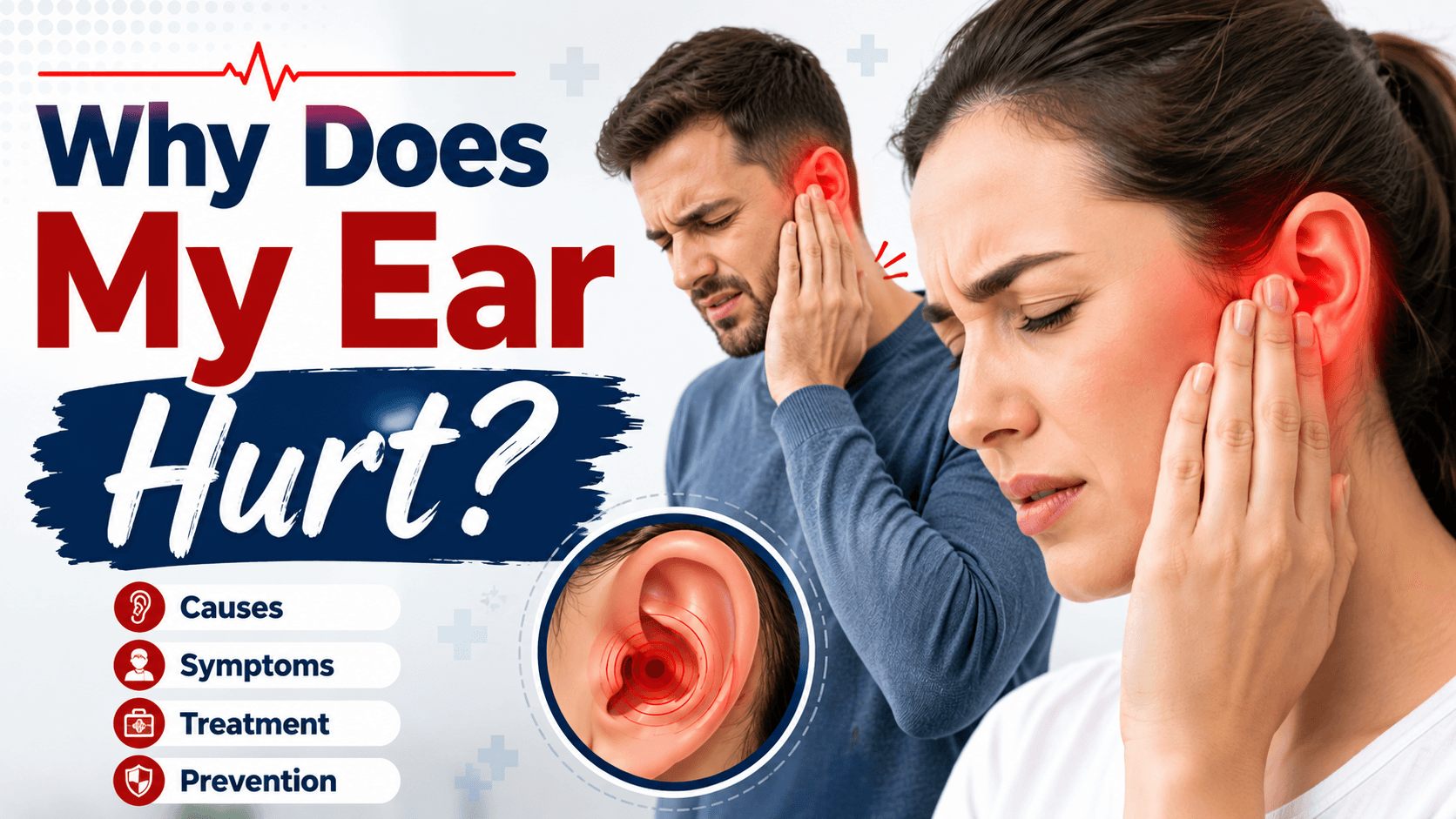
What Causes Ear Pain? Common Reasons Behind a Sore Ear
Ear pain is a common health problem that can affect people of all ages, from young children to older adults. While some cases are mild and disappear within a day or two, others may indicate an underlying medical condition that requires medical attention. If you’re wondering, “Why does my ear hurt?”, The pain may be caused by an ear condition or may originate from the throat, teeth, jaw, or sinuses.
Understanding the possible causes of ear pain can help you identify the problem early and choose the right treatment.
Common Causes of Ear Pain
The most common reasons behind ear pain include:
- Middle ear infection (otitis media) is commonly caused by bacterial or viral infections.
- Outer ear infection (Swimmer’s Ear) due to trapped moisture.
- Excess earwax buildup blocking the ear canal.
- Sinus infections creating pressure around the ears.
- Tooth infections or cavities that spread pain to the ear.
- TMJ (Jaw Joint) disorders causing pain while chewing.
- Throat infections, including tonsillitis or strep throat.
- Air pressure changes during flights or mountain travel.
- Ear injuries caused by inserting cotton swabs or sharp objects.
- Foreign objects trapped inside the ear, especially in children.
Ear Infections Are the Most Common Cause
An ear infection is one of the most common causes of ear pain. Middle ear infections are more common in children because their shorter Eustachian tubes can become blocked easily after a cold, flu, or allergies. When fluid becomes trapped behind the eardrum, bacteria or viruses can multiply, leading to pain and inflammation.
Common symptoms of an ear infection include:
- Sharp or throbbing ear pain
- Fever
- Temporary hearing loss
- Feeling of pressure inside the ear
- Fluid draining from the ear
- Difficulty sleeping due to pain
Swimmer’s Ear Can Cause Severe Discomfort
Swimmer’s ear is an infection of the outer ear canal that develops when water remains trapped after swimming or bathing. The warm, moist environment allows bacteria to grow quickly.
Symptoms often include:
- Pain when touching or pulling the outer ear
- Redness inside the ear canal
- Swelling
- Itching
- Clear or yellow fluid drainage
Keeping the ears dry after swimming can significantly reduce the risk of this condition.
Earwax Buildup May Block the Ear Canal
Earwax naturally protects the ears by trapping dust and germs. However, too much wax can block the ear canal and cause discomfort.
Signs of excessive earwax include:
- Ear pain
- Hearing loss
- Ringing in the ears (Tinnitus)
- Feeling of fullness
- Dizziness in some cases
Avoid inserting cotton swabs or pointed objects into the ear, as they often push the wax deeper instead of removing it.
Other Health Problems Can Also Cause Ear Pain
In many cases, the ear itself is completely healthy, but pain is referred from nearby structures because they share the same nerve pathways.
These conditions include:
- Tooth abscesses or wisdom tooth problems
- TMJ (Jaw) disorders
- Tonsillitis
- Strep throat
- Sinus infections
- Neck muscle strain
- Facial nerve irritation
Treating the underlying condition usually helps relieve the ear pain as well.
Identifying the exact cause of ear pain is essential because the right treatment depends on the source of the problem. Mild discomfort may improve with simple home care, but persistent, severe, or recurring ear pain should always be evaluated by a healthcare professional to prevent complications and protect your hearing.
Ear Pain Symptoms: Signs You Should Never Ignore
Ear pain can vary from mild discomfort to intense pain that affects your daily routine. In many cases, ear pain is accompanied by other symptoms that provide important clues about the underlying cause. Recognizing these warning signs early can help you seek the right treatment before the condition becomes more serious. While some symptoms go away naturally, others may signal an infection, injury, or another condition that needs prompt medical care.
Common Symptoms of Ear Pain
Depending on the underlying cause, ear pain may occur along with one or more of these symptoms.
- Sharp, stabbing, or throbbing ear pain
- A dull ache that comes and goes
- Feeling of fullness or pressure inside the ear
- Temporary hearing loss or muffled hearing
- Ringing in the ears (Tinnitus)
- Itching inside the ear canal
- Swelling or redness around the ear
- Fluid, pus, or blood draining from the ear
- Fever, especially in children
- Headache or facial pain
- Dizziness or loss of balance
- Pain while chewing or opening the mouth
Symptoms That May Indicate an Ear Infection
Ear infections are among the most common causes of ear pain. They often develop after a cold, flu, or sinus infection and can affect the outer, middle, or inner ear.
Common signs of an ear infection include:
- Persistent or worsening ear pain
- Fever above 100.4°F (38°C)
- Yellow, white, or bloody discharge from the ear
- Difficulty hearing clearly
- Trouble sleeping because of pain
- Irritability or excessive crying in young children
- Loss of appetite due to discomfort
If these symptoms continue for more than 48 hours or become severe, medical evaluation is recommended.
Symptoms That Should Never Be Ignored
Some ear pain symptoms may indicate a more serious condition and should not be ignored.
Seek medical attention immediately if you experience:
- Sudden hearing loss
- Severe ear pain after a head injury
- Blood or large amounts of pus coming from the ear
- High fever with intense ear pain
- Swelling behind the ear
- Severe dizziness or difficulty walking
- Weakness of the facial muscles
- Ear pain that lasts longer than two days without getting better.
Early treatment can reduce the risk of permanent hearing damage or other complications.
Symptoms in Children May Be Different
Young children are often unable to explain their symptoms clearly. Instead, parents should watch for changes in behavior that may suggest ear pain.
Common signs in children include:
- Pulling or rubbing the ear frequently
- Crying more than usual
- Difficulty sleeping
- Loss of appetite
- Fever
- Trouble hearing or not responding to sounds
- Fluid leaking from the ear
- Increased irritability or restlessness
If these symptoms occur together, it is important to consult a pediatrician for proper diagnosis and treatment.
When Ear Pain Becomes an Emergency
Although most cases of ear pain are not life-threatening, certain symptoms require immediate medical care.
Emergency warning signs include:
- Sudden complete hearing loss
- Severe swelling around the ear
- Facial weakness or paralysis
- Persistent vomiting with dizziness
- Ear pain following a serious injury
- Heavy bleeding from the ear
- Severe pain that becomes unbearable despite pain medication
Ignoring these symptoms may result in hearing loss, a worsening infection, or damage to the eardrum.
Understanding the symptoms of ear pain can help you identify whether the condition is minor or requires medical attention. Paying close attention to changes such as hearing loss, fever, swelling, or discharge can make a significant difference in receiving timely treatment. If your symptoms are severe, persistent, or continue to worsen, consult a healthcare professional as soon as possible for an accurate diagnosis and appropriate care.
How Is Ear Pain Diagnosed? Tests and Medical Evaluation
Diagnosing ear pain begins with identifying its exact cause. Because ear pain can result from infections, earwax buildup, injuries, sinus problems, dental issues, or jaw disorders, healthcare providers perform a thorough evaluation before recommending treatment. An accurate diagnosis helps ensure that the underlying problem is treated correctly and prevents unnecessary medications or complications.
Medical History Assessment
The first step in diagnosing ear pain is discussing your symptoms and medical history. Your healthcare provider may ask several questions, including:
- When did the ear pain begin?
- Is the pain sharp, dull, or throbbing?
- Does the pain affect one ear or both ears?
- Have you recently had a cold, flu, or sinus infection?
- Have you been swimming or exposed to water?
- Are you experiencing hearing loss, fever, dizziness, or ear discharge?
- Do you have tooth pain or jaw discomfort?
Your answers help narrow down the possible causes and guide the next steps of the examination.
Physical Ear Examination
After reviewing your symptoms, the doctor will examine your ears, nose, and throat. During the examination, they may look for:
- Redness or swelling inside the ear
- Excess earwax blocking the ear canal
- Fluid behind the eardrum
- Signs of an outer or middle ear infection
- Injury to the ear canal
- A ruptured or damaged eardrum
The doctor may also gently press around the ear or jaw to determine whether the pain is coming from nearby structures instead of the ear itself.
Diagnostic Tests That May Be Needed
Based on your symptoms, your doctor may recommend additional tests to confirm the diagnosis.
Common diagnostic tests include:
- An otoscope exam allows the doctor to examine the ear canal and eardrum.
- Hearing test (Audiometry) if hearing loss is present.
- Tympanometry to check how well the eardrum moves and detect fluid in the middle ear.
- Ear discharge testing if fluid or pus is draining from the ear.
- CT scan or MRI in rare cases when a serious condition, injury, or complication is suspected.
These tests help identify the underlying cause of ear pain and guide the most appropriate treatment.
Why Early Diagnosis Matters
Ignoring persistent ear pain can allow the underlying condition to worsen. Early diagnosis offers several important benefits:
- Identifies the exact cause of ear pain
- Prevents unnecessary complications
- Protects hearing by treating problems promptly
- Ensures the most appropriate treatment is given
- Reduces the risk of recurring ear infections
If your ear pain lasts longer than two days, becomes severe, or is accompanied by fever, hearing loss, dizziness, or fluid discharge, it is important to seek medical evaluation. A timely diagnosis can lead to faster recovery and help prevent long-term damage to your ears and hearing.
Best Ear Pain Treatments: Home Remedies and Medical Options
The most effective treatment for ear pain depends on its underlying cause. Some cases, such as mild pressure changes or minor irritation, may improve with simple home care. However, ear pain caused by bacterial infections, injuries, or other medical conditions often requires professional treatment. Identifying the cause before starting treatment is essential because using the wrong medicine may delay recovery or even worsen the condition.
Home Remedies for Mild Ear Pain
If your ear pain is mild and not accompanied by severe symptoms such as high fever or fluid discharge, several home remedies may provide temporary relief.
Some effective home care methods include:
- Apply a warm compress to the affected ear for 10–15 minutes to help reduce pain and improve blood circulation.
- Stay well-hydrated and get enough rest to support your body’s natural healing process.
- Chew gum or yawn if ear pain is caused by changes in air pressure during flying or traveling to high altitudes.
- Keep the affected ear dry while bathing or swimming.
- Sleep with your head slightly elevated to reduce pressure inside the ear.
- Use over-the-counter pain relievers only as directed on the label or as advised by a healthcare professional.
While these remedies may help relieve discomfort, they should not replace medical treatment if symptoms become severe or persist.
Medical Treatments for Ear Pain
When ear pain is caused by an infection or another medical condition, your doctor may recommend one or more treatment options.
Common medical treatments include:
- Antibiotics for confirmed bacterial ear infections.
- Antibiotic or antifungal ear drops for outer ear infections.
- Pain-relieving medications to reduce discomfort and inflammation.
- Professional earwax removal may be needed if excess wax is blocking the ear canal.
- Treatment for allergies or sinus infections when they contribute to ear pain.
- TMJ or dental treatment if the pain originates from the jaw or teeth.
Always complete the full course of prescribed medication, even if your symptoms improve within a few days.
Treatments You Should Avoid Without Medical Advice
Many people attempt to treat ear pain at home without knowing its exact cause. Certain practices can increase the risk of complications.
Avoid the following:
- Avoid putting cotton swabs, hairpins, or any other objects inside the ear.
- Using leftover antibiotics from a previous illness.
- Do not put oils or herbal remedies into your ear without medical advice.
- Ignoring severe pain, hearing loss, or ear discharge.
- Stopping prescribed antibiotics before the treatment course is complete.
These actions can injure the ear canal or eardrum, making the condition harder to treat.
When Surgery May Be Needed
Most cases of ear pain do not require surgery. However, certain conditions may need surgical treatment if they do not respond to medication.
Examples include:
- Recurrent middle ear infections requiring ear tubes.
- A severely damaged or perforated eardrum.
- Cholesteatoma (an abnormal skin growth inside the ear).
- Serious complications involving the middle or inner ear.
Your ear specialist will determine whether surgery is necessary based on your symptoms and test results.
Tips for a Faster Recovery
Following your treatment plan carefully can help speed up recovery and reduce the risk of future ear problems.
Helpful recovery tips include:
- Take all medications exactly as prescribed.
- Keep your ears clean and dry.
- Avoid swimming until your doctor says it is safe.
- Do not expose your ears to loud noises during recovery.
- Attend follow-up appointments if recommended.
- Seek medical attention immediately if your symptoms worsen or new symptoms develop.
Most cases of ear pain improve with the right treatment and proper care. Home remedies may ease mild ear pain temporarily, but persistent or severe symptoms should always be checked by a healthcare professional. Early diagnosis and appropriate treatment not only relieve pain more quickly but also help protect your hearing and prevent long-term complications.
When Should You Visit a Doctor for Ear Pain?
Ear pain is often mild and may improve within a day or two with rest and proper home care. However, not every case of ear pain should be treated at home. In some situations, ear pain can be a sign of a serious infection, injury, or another medical condition that requires prompt attention. Recognizing the right time to see a doctor can help prevent hearing loss, eardrum damage, and the spread of infection.
Mild Ear Pain That Can Be Monitored
Not all ear pain requires immediate medical treatment. If the discomfort is mild and there are no other concerning symptoms, you may monitor your condition for a short period while following basic home care measures.
Mild symptoms may include:
- Slight discomfort or pressure inside the ear
- Mild pain after air travel or swimming
- Temporary ear fullness
- Minor irritation without fever
- Pain that gradually improves within 24 to 48 hours
Even in these cases, avoid inserting objects into the ear or using medications that have not been recommended by a healthcare professional.
Signs That You Should Schedule a Doctor’s Visit
If your symptoms do not improve or continue to worsen, it is important to seek medical evaluation. A healthcare provider can determine the exact cause of the pain and recommend the most appropriate treatment.
Make an appointment if you experience:
- Ear pain lasting longer than 48 hours
- Moderate to severe pain that does not improve
- Hearing loss or muffled hearing
- Ringing in the ears (Tinnitus)
- Persistent feeling of pressure inside the ear
- Swelling or redness around the ear
- Pain that repeatedly comes back
- Ear pain accompanied by a sore throat or severe toothache
Early diagnosis can prevent the condition from becoming more serious and reduce the risk of long-term complications.
Seek Immediate Medical Care for Emergency Symptoms
Certain symptoms require urgent medical attention because they may indicate a severe infection, a ruptured eardrum, or another serious condition.
Visit the nearest emergency department or seek immediate medical attention if you experience any of the following:
- Sudden or complete hearing loss
- Blood or large amounts of pus draining from the ear
- High fever with severe ear pain
- Severe dizziness or difficulty maintaining balance
- Swelling behind the ear
- Facial weakness or drooping
- Ear pain after a serious head injury
- Severe pain that becomes unbearable despite pain medication
Ignoring these warning signs may increase the risk of permanent hearing damage or the spread of infection.
Special Considerations for Children
Children are more likely than adults to develop ear infections because of the structure of their Eustachian tubes. Since young children cannot always describe their symptoms, parents should pay close attention to changes in behavior.
Contact a pediatrician if your child:
- Pulls or rubs the ear repeatedly
- Cries excessively due to ear pain
- Has a fever along with ear discomfort
- Has fluid draining from the ear
- Experiences trouble hearing or responding to sounds
- Has symptoms that continue for more than one or two days
Prompt treatment can relieve pain quickly and help prevent hearing or speech-related complications.
Preparing for Your Doctor’s Appointment
Before visiting your healthcare provider, it is helpful to note important details about your symptoms. This information can make diagnosis easier and ensure you receive the right treatment.
Be prepared to tell your doctor:
- When the ear pain started
- Whether one or both ears are affected
- The type of pain (sharp, dull, throbbing, or constant)
- Any recent illnesses, allergies, or injuries
- Whether you have fever, hearing loss, dizziness, or ear discharge
- Any medications or home remedies you have already tried
Providing accurate information allows your doctor to identify the cause more quickly and recommend the most effective treatment.
Although many cases of ear pain improve on their own, persistent or severe symptoms should not be ignored. Seeking medical care at the right time can help prevent serious problems, relieve discomfort more quickly, and protect your hearing. If you are unsure whether your symptoms require medical attention, it is always safer to consult a qualified healthcare professional for an accurate diagnosis and personalized treatment.
How to Prevent Ear Pain and Keep Your Ears Healthy
Although ear pain cannot always be prevented, many cases are linked to infections, poor ear care, allergies, or lifestyle habits that can be managed. Taking simple preventive steps can reduce your risk of developing ear problems and help protect your hearing for years to come. Whether you are an adult or caring for a child, maintaining good ear hygiene and avoiding common risk factors are essential for keeping your ears healthy.
Keep Your Ears Clean the Right Way
Good ear hygiene is important, but cleaning your ears incorrectly can do more harm than good. The ears naturally produce earwax, which helps trap dust, dirt, and bacteria while keeping the ear canal lubricated. In most cases, the ear is able to clean itself without any assistance.
To protect your ears:
- Clean only the outside of your ear gently with a soft cloth.
- Let earwax come out naturally instead of trying to remove it yourself.
- Avoid inserting cotton swabs deep into the ear canal.
- Never insert sharp objects such as hairpins, keys, or pens into your ears.
- Visit a healthcare professional if you suspect excessive earwax buildup.
Proper ear cleaning reduces the risk of irritation, infections, and accidental damage to the eardrum.
Protect Your Ears from Moisture
Excess moisture inside the ear creates an ideal environment for bacteria and fungi to grow, increasing the risk of swimmer’s ear and other infections.
To keep your ears dry:
- Dry your ears gently after swimming or showering.
- Tilt your head to let trapped water flow out naturally.
- Gently dry the outer ear with a clean, soft towel.
- Wear swimming earplugs if you swim frequently.
- Avoid swimming in contaminated water whenever possible.
Keeping your ears dry is one of the simplest and most effective ways to prevent outer ear infections.
Reduce the Risk of Ear Infections
Many ear infections develop after colds, flu, allergies, or sinus infections. Managing these conditions early can help prevent bacteria or viruses from spreading to the ears.
Helpful prevention tips include:
- Wash your hands frequently to help prevent the spread of germs.
- Stay up to date with recommended vaccinations.
- Treat colds and sinus infections promptly.
- Manage seasonal allergies with appropriate medical advice.
- Avoid exposure to cigarette smoke, which increases the risk of ear infections, especially in children.
A healthy immune system also plays an important role in protecting against infections.
Protect Your Hearing Every Day
Exposure to loud sounds can damage the delicate structures inside the ear and may lead to hearing loss, ringing in the ears, or long-term discomfort.
To protect your hearing:
- Keep your headphone volume at a safe level to help protect your hearing.
- Wear hearing protection in noisy workplaces.
- Limit the amount of time spent around loud music or machinery.
- Take regular breaks from noisy environments.
- Have your hearing checked if you notice any changes.
Preventing hearing damage is just as important as preventing infections because both can contribute to ongoing ear problems.
Healthy Lifestyle Habits That Support Ear Health
Your overall health can have a direct impact on your ears. A healthy lifestyle helps strengthen your immune system and lowers the risk of conditions that may contribute to ear pain.
Healthy habits include:
- Eat a balanced diet rich in fruits, vegetables, and whole grains.
- Drink enough water throughout the day.
- Exercise regularly to improve circulation.
- Get enough sleep each night.
- Avoid smoking and limit alcohol consumption.
- Manage stress through relaxation techniques or regular physical activity.
These habits not only support ear health but also improve your overall well-being.
Schedule Regular Checkups When Needed
Routine medical checkups can help detect ear problems before they become serious. This is especially important for children, older adults, people who frequently experience ear infections, and individuals who work in noisy environments.
You should consider regular ear examinations if you:
- Experience frequent ear infections.
- Have recurring earwax buildup.
- Notice changes in hearing.
- Use hearing aids.
- Work in high-noise settings.
- Have ongoing allergies or sinus problems.
Preventing ear pain is often easier than treating it. By practicing good ear hygiene, protecting your ears from moisture and loud noise, maintaining a healthy lifestyle, and seeking medical advice when necessary, you can significantly reduce the risk of ear problems. Small daily habits can make a lasting difference in preserving your hearing and keeping your ears healthy throughout life.
Ear Pain in Children vs Adults: What’s the Difference?
Ear pain can affect people of any age, but the causes, symptoms, and treatment often differ between children and adults. Children are more prone to ear infections because their immune systems are still developing, and their Eustachian tubes are shorter and narrower, making infections more likely. Adults, on the other hand, are more likely to experience ear pain due to earwax buildup, jaw disorders, sinus problems, or prolonged exposure to loud noise. Recognizing these differences can help with early diagnosis and proper treatment.
Why Ear Pain Is More Common in Children
Children, especially those under the age of five, experience ear infections more frequently than adults. Their Eustachian tubes do not drain fluid as efficiently, allowing bacteria and viruses to grow more easily after a cold or respiratory infection.
Common causes of ear pain in children include:
- Middle ear infections (Otitis Media)
- Colds and flu
- Sinus infections
- Allergies
- Swimmer’s ear
- Teething pain in infants
- Foreign objects placed inside the ear
- Enlarged adenoids blocking the Eustachian tubes
Because young children cannot always explain what they are feeling, parents should pay close attention to changes in behavior.
Common Signs of Ear Pain in Children
Instead of describing their symptoms, children often show physical or behavioral signs that indicate discomfort.
Watch for these symptoms:
- Pulling or rubbing the affected ear
- Frequent crying or unusual irritability
- Trouble sleeping
- Fever
- Reduced appetite
- Difficulty hearing or not responding to sounds
- Fluid draining from the ear
- Loss of balance
- Increased fussiness, especially at night
If these symptoms continue for more than 48 hours or are accompanied by a high fever, a pediatric evaluation is recommended.
Common Causes of Ear Pain in Adults
Adults usually develop ear pain for different reasons than children. Although infections can occur, ear pain in adults is often related to problems affecting nearby areas.
Common causes include:
- Earwax buildup
- Outer ear infections (Swimmer’s Ear)
- Sinus infections
- Tooth infections or wisdom teeth problems
- TMJ (Jaw Joint) disorders
- Sore throat or tonsillitis
- Air pressure changes during flying
- Exposure to loud noise
- Ear injuries
Adults are also more likely to ignore mild ear pain, allowing the underlying condition to worsen before seeking treatment.
Differences in Diagnosis and Treatment
Doctors use similar examination methods for both children and adults, but treatment recommendations often depend on age, symptoms, and the underlying cause.
Treatment for children may include:
- Careful observation for mild infections
- Pain-relieving medications
- Prescribed antibiotics when necessary
- Ear tubes for recurring middle ear infections in some cases
Treatment for adults may include:
- Ear drops for outer ear infections
- Professional earwax removal
- Antibiotics for bacterial infections
- Treatment for dental, jaw, or sinus conditions
- Hearing evaluation if hearing loss is present
Following the doctor’s treatment plan is important for both age groups to ensure complete recovery.
When Parents or Adults Should Seek Medical Care
Whether the patient is a child or an adult, certain symptoms should never be ignored.
Seek medical attention if:
- Ear pain lasts longer than two days
- High fever develops
- Blood or pus drains from the ear
- Sudden hearing loss occurs
- Severe dizziness or balance problems appear
- Swelling develops behind the ear
- Pain becomes severe despite home treatment
Prompt medical care can help prevent complications such as hearing loss, ruptured eardrums, or the spread of infection.
Although ear pain is common in both children and adults, the reasons behind it are often different. Children are more vulnerable to ear infections because of their developing anatomy and immune systems, while adults are more likely to experience ear pain related to earwax buildup, jaw problems, sinus disease, or environmental factors. Understanding age-related differences helps detect warning signs early, receive the right treatment, and keep your ears healthy at every stage of life.
What Happens If Ear Pain Is Left Untreated? Possible Complications
Many people ignore ear pain, hoping it will go away on its own. Mild ear pain from temporary pressure changes or a minor cold may go away on its own, but persistent or severe pain should never be ignored. In some cases, untreated ear pain may indicate an infection or another condition that can lead to serious complications if left untreated. Seeking timely medical care can help prevent long-term damage and protect your hearing.
Ear Infections Can Become More Serious
One of the biggest risks of ignoring ear pain is that a simple ear infection can gradually worsen. If bacteria or viruses continue to multiply, the infection may spread beyond the ear and become more difficult to treat.
Possible complications include:
- Increased inflammation and swelling
- Severe, persistent ear pain
- High fever
- Fluid buildup behind the eardrum
- Recurrent ear infections
- Infection spreading to nearby tissues
Early treatment can often stop the infection before these complications develop.
Temporary or Permanent Hearing Loss
Untreated ear problems may interfere with your ability to hear clearly. Fluid buildup, excessive earwax, damage to the eardrum, or infections affecting the middle or inner ear can reduce hearing.
Warning signs include:
- Muffled hearing
- Difficulty understanding conversations
- Ringing in the ears (Tinnitus)
- Feeling of fullness inside the ear
- Sudden hearing changes
In many cases, hearing returns after proper treatment. However, delaying medical care for severe infections or injuries may increase the risk of permanent hearing damage.
Ruptured Eardrum
Severe pressure caused by an untreated middle ear infection can sometimes lead to a ruptured eardrum. Although some small tears heal naturally, larger perforations may require medical treatment or surgery.
Symptoms of a ruptured eardrum may include:
- Sudden sharp pain followed by relief
- Fluid, pus, or blood draining from the ear
- Hearing loss
- Ringing in the ear
- Dizziness or balance problems
A ruptured eardrum should always be evaluated by a healthcare professional to prevent further complications.
Spread of Infection to Nearby Areas
In rare cases, untreated ear infections can spread beyond the ear and affect nearby bones or tissues. Although these complications are uncommon, they can become serious if left untreated.
Potential complications include:
- Infection of the bone behind the ear (Mastoiditis)
- Facial nerve irritation or weakness
- Balance problems
- Chronic ear infections
- Persistent ear drainage
Prompt diagnosis and treatment greatly reduce the likelihood of these complications.
Long-Term Impact on Daily Life
Persistent ear pain can affect much more than your ears. Ongoing discomfort and hearing problems may interfere with work, school, sleep, and social activities.
Untreated ear pain may lead to:
- Difficulty concentrating
- Poor sleep quality
- Reduced work or school performance
- Communication difficulties due to hearing problems
- Increased stress and frustration
- Lower overall quality of life
Addressing ear pain early helps prevent these challenges and supports faster recovery.
How to Reduce the Risk of Complications
The best way to avoid serious ear problems is to respond quickly when symptoms appear.
Follow these simple steps:
- Do not ignore ear pain that lasts longer than 48 hours.
- Never insert cotton swabs or sharp objects into your ear.
- Complete all prescribed medications exactly as directed.
- Keep your ears clean and dry.
- Attend follow-up appointments if recommended.
- Seek immediate medical attention for severe pain, hearing loss, high fever, dizziness, or ear discharge.
Most cases of ear pain improve with timely treatment and proper care. However, ignoring persistent symptoms can increase the risk of hearing loss, a ruptured eardrum, recurring infections, and other complications. Paying attention to warning signs and consulting a healthcare professional when necessary is the safest way to protect your hearing and maintain long-term ear health. Early diagnosis not only relieves pain more quickly but also helps prevent serious health problems in the future.
Conclusion
Ear pain is a common symptom that can have many different causes, ranging from minor problems like earwax buildup and pressure changes to more serious conditions such as ear infections or injuries. Understanding why your ear hurts is the first step toward choosing the right treatment and preventing future complications. While mild ear discomfort may improve with proper home care, persistent or severe pain should never be ignored.
Recognizing the warning signs—such as hearing loss, fever, ear discharge, dizziness, or swelling—can help you determine when it is time to seek medical attention. An accurate diagnosis by a healthcare professional ensures that the underlying cause is identified and treated appropriately, whether it requires simple home remedies, medication, or specialized medical care.
Preventing ear pain is just as important as treating it when it occurs. Maintaining proper ear hygiene, avoiding the use of cotton swabs inside the ear, protecting your ears from excessive moisture and loud noise, and managing allergies or infections promptly can significantly reduce your risk of future ear problems. Parents should also pay close attention to signs of ear pain in children, as early treatment can help prevent hearing and speech-related complications.
Ignoring ongoing ear pain can lead to serious issues such as chronic infections, hearing loss, a ruptured eardrum, or the spread of infection to nearby tissues. Taking action early not only speeds up recovery but also protects your long-term ear health.
If your ear pain lasts for more than 48 hours, becomes severe, or is accompanied by symptoms like high fever, hearing loss, fluid discharge, or balance problems, consult a qualified healthcare professional without delay. With timely diagnosis, appropriate treatment, and healthy daily habits, most cases of ear pain can be managed successfully, allowing you to recover quickly and maintain healthy hearing for years to come.
➤ Tap here to explore effective remedies for common health issues along with practical tips to keep your body strong and healthy.
https://hinditipsonline.com/category/health-tips/
➤ If you’d rather watch than read, just click the link below to enjoy the full video.
https://youtu.be/-afVsSX81ew?si=IAaz8ydm2910_1Zf
Frequently Asked Questions
Q1. Why does my ear hurt without an infection?
A: Ear pain is not always caused by an infection. It can result from earwax buildup, sinus infections, TMJ (jaw joint) disorders, tooth problems, allergies, changes in air pressure, or throat infections. A proper medical evaluation can help identify the exact cause.
Q2. Can ear pain go away on its own?
A: Yes, mild ear pain caused by minor irritation, pressure changes, or a common cold may improve within a few days. However, if the pain lasts more than 48 hours or becomes severe, you should consult a healthcare professional.
Q3. What is the most common cause of ear pain?
A: The most common causes include middle ear infections, swimmer’s ear, earwax buildup, sinus infections, and dental or jaw problems. The exact cause depends on your symptoms and medical history.
Q4. When should I see a doctor for ear pain?
A: You should seek medical care if ear pain lasts longer than 48 hours, is accompanied by fever, hearing loss, dizziness, swelling, or if fluid, pus, or blood drains from the ear.
Q5. Can tooth problems cause ear pain?
A: Yes. Tooth infections, cavities, impacted wisdom teeth, and TMJ disorders can cause referred pain that feels like it is coming from the ear because these areas share common nerves.
Q6. What is the fastest way to relieve ear pain?
A: Applying a warm compress, resting, staying hydrated, and taking an over-the-counter pain reliever (as directed) may help reduce mild ear pain. If the pain is caused by an infection or injury, medical treatment may be necessary.
Q7. Is ear pain a sign of a serious problem?
A: Not always. Many cases are mild and temporary. However, severe pain, sudden hearing loss, high fever, persistent dizziness, or ear discharge may indicate a more serious condition that requires immediate medical attention.
Q8. Can allergies cause ear pain?
A: Yes. Allergies can block the Eustachian tubes, causing pressure, fluid buildup, and discomfort in the ears. Treating the allergies often helps relieve the symptoms.
Q9. Why do children get ear infections more often than adults?
A: Children’s Eustachian tubes are shorter and narrower, making it easier for bacteria and viruses to become trapped. Their developing immune systems also make them more susceptible to ear infections.
Q10. Can earwax buildup cause ear pain?
A: Yes. Excess earwax can block the ear canal and lead to ear pain, hearing loss, ringing in the ears (tinnitus), dizziness, or a feeling of fullness. Earwax should be removed safely by a healthcare professional if necessary.
Q11. How can I prevent ear pain?
A: You can reduce your risk by keeping your ears dry, avoiding cotton swabs inside the ear canal, protecting your ears from loud noise, treating allergies promptly, practicing good hygiene, and seeking early treatment for infections.
Q12. Can flying or altitude changes cause ear pain?
A: Yes. Air pressure changes during flights or traveling to high altitudes can create pressure inside the ears, causing discomfort or pain. Swallowing, yawning, or chewing gum can often help equalize the pressure.
Q13. What happens if ear pain is left untreated?
A: Ignoring persistent ear pain may lead to complications such as worsening infections, hearing loss, a ruptured eardrum, chronic ear problems, or the spread of infection to nearby tissues. Early diagnosis and treatment are the best ways to prevent these complications.