
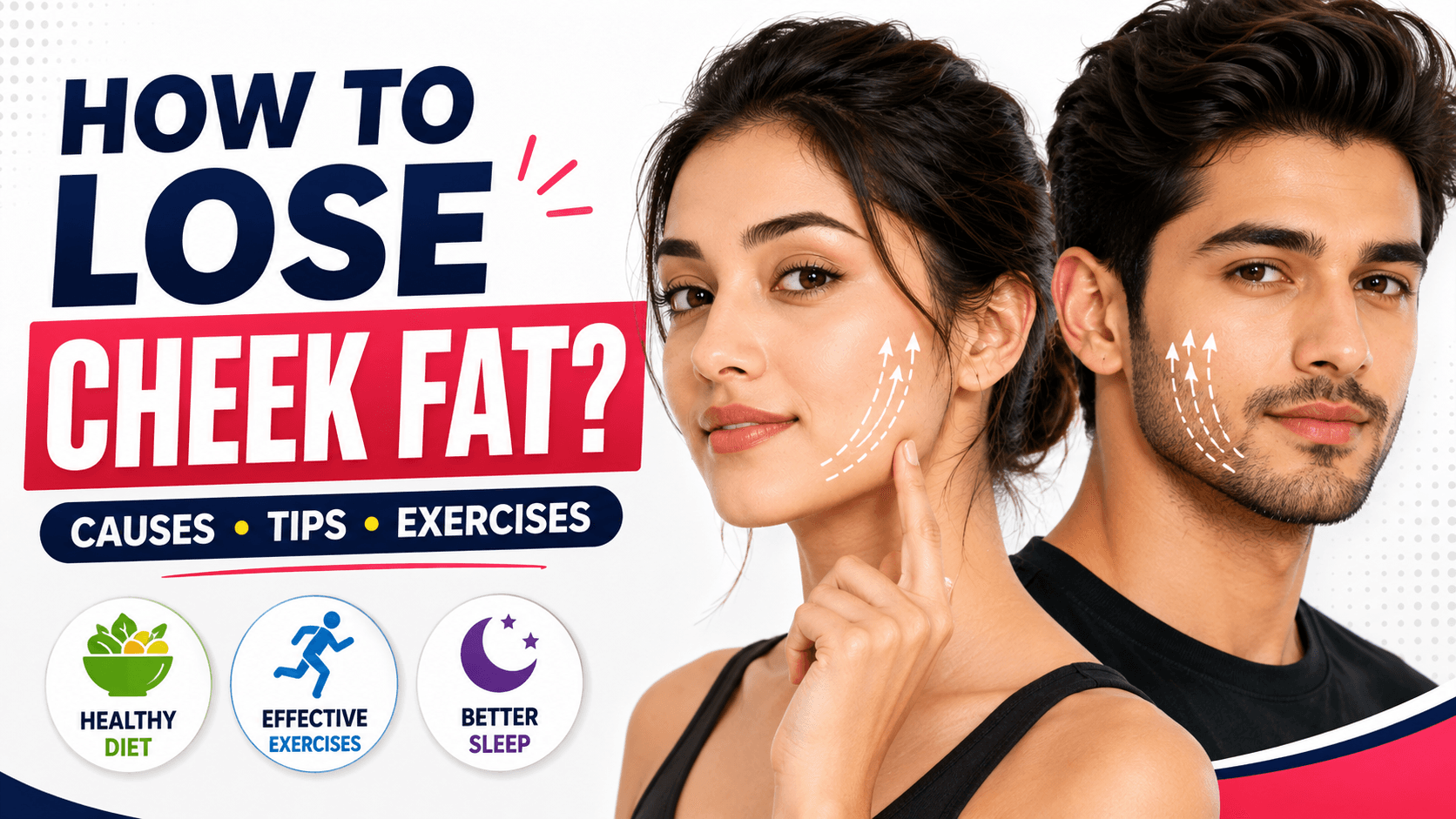
What Causes Cheek Fat and a Fuller Face?
Cheek fat can make the face look rounder, fuller, or less defined, but it is not always caused by having excess body fat. The shape and fullness of your cheeks are influenced by several factors, including genetics, age, body composition, diet, fluid retention, and your natural facial structure. Understanding the underlying cause is an important first step if you want to make your face look slimmer.
Body Fat and Cheek Fullness
One of the most common reasons for fuller cheeks is having a higher overall body-fat percentage. When the body stores excess fat, some of it can accumulate around the face, including the cheeks, jawline, and chin.
However, you cannot choose exactly where your body loses fat first. Losing fat from only the cheeks through a specific exercise or diet is generally not possible. As overall body fat decreases, some people naturally notice changes in their face as well.
The amount of facial fat a person carries varies considerably. Two people with the same body weight may have very different facial shapes because fat distribution is influenced by genetics and other individual factors.
Genetics and Natural Face Shape
Genetics play a major role in determining facial structure. Some people naturally have rounder or fuller cheeks even when they are at a healthy weight.
Your genes can influence:
- Where your body tends to store fat
- The amount of facial fat you naturally carry
- The shape of your cheekbones and jaw
- The width and length of your face
- How quickly your face changes when your weight changes
This means that having fuller cheeks does not automatically mean you need to lose weight. A naturally round face can be completely healthy.
Age and Changes in Facial Fat
Facial appearance also changes as you get older. During childhood and early adulthood, cheeks may naturally appear fuller because of the distribution of facial fat and the structure of the face.
With age, facial fat can shift and decrease in some areas while other areas may become fuller or looser. Skin elasticity also changes over time.
Therefore, a fuller-looking face is not always the result of excess fat. Changes in skin, muscles, bone structure, and facial-fat distribution can all affect how the cheeks appear.
Diet and High-Sodium Foods
Your diet can sometimes make your face appear temporarily puffier. Eating a large amount of sodium may cause the body to retain more water, which can contribute to temporary facial puffiness in some people.
Common sources of high sodium include:
- Packaged snacks
- Fast food
- Processed meats
- Instant noodles
- Salty sauces
- Processed foods
- Some canned foods
Reducing excessive sodium intake and choosing more minimally processed foods may help reduce water retention. This is different from losing cheek fat itself—the change is mainly related to fluid balance rather than permanent fat loss.
Dehydration and Facial Puffiness
Drinking too little fluid can contribute to dehydration, although the relationship between hydration and facial puffiness is complex. Maintaining adequate hydration supports normal body functions and helps maintain fluid balance.
Instead of relying on extreme water intake, focus on drinking fluids regularly according to your thirst, activity level, climate, and individual needs.
If facial swelling is persistent or unusual, however, it should not simply be assumed to be caused by dehydration.
Sleep and a Puffy Face
Poor or irregular sleep can affect how your face looks, particularly when combined with stress, dehydration, or other lifestyle factors. Some people may notice more puffiness around the eyes and face after inadequate sleep.
Getting consistent, adequate sleep can support overall health and make you look less tired or puffy. Sleep itself does not directly burn cheek fat, but healthy sleep habits can support a lifestyle that makes maintaining a healthy weight easier.
Alcohol and Temporary Facial Puffiness
Alcohol can affect hydration and fluid balance and may make some people look temporarily puffy. Alcoholic drinks can also contribute extra calories, especially when consumed frequently.
Reducing alcohol intake may therefore help some people improve overall health and reduce temporary facial puffiness. However, it should not be considered a specific treatment for cheek fat.
Hormonal and Medical Causes
Sometimes facial fullness or swelling can be associated with an underlying medical condition or medication. Hormonal changes, certain medications, and other health conditions can affect body weight or cause fluid retention.
For example, persistent facial swelling that develops suddenly or without an obvious explanation deserves medical attention.
You should consider speaking with a healthcare professional if facial swelling is:
- Sudden or severe
- Persistent or worsening
- Associated with difficulty breathing
- Associated with significant pain
- Accompanied by swelling elsewhere
- Appearing after starting a new medication
- Associated with other unusual symptoms
In these situations, treating the underlying cause is more important than trying to lose cheek fat.
The Difference Between Cheek Fat and Facial Puffiness
It is important to distinguish facial fat from facial puffiness.
Cheek fat is part of your body’s fat tissue and generally changes gradually with changes in body composition. Puffiness, on the other hand, can result from temporary changes in fluid balance, sleep, diet, hormones, inflammation, or other factors.
For example, if your face looks noticeably different from one morning to the next, that change is unlikely to represent a sudden gain or loss of cheek fat. Temporary fluid changes are a more likely explanation.
Can Facial Exercises Remove Cheek Fat?
Facial exercises are often promoted as a way to burn cheek fat. However, there is limited evidence that exercises can specifically remove fat from the cheeks.
Facial movements may work certain muscles and could potentially affect muscle tone or appearance, but they cannot selectively force the body to burn fat from the cheeks.
If your goal is a slimmer face, the most reliable approach is generally to focus on overall health and, when appropriate, gradual overall fat loss rather than trying to target one specific area.
The Role of Overall Weight Management
If excess body fat is contributing to fuller cheeks, gradual and sustainable weight management may eventually change facial appearance.
A balanced approach usually includes:
- Nutritious, minimally processed foods
- Appropriate calorie intake
- Regular physical activity
- Strength training
- Adequate sleep
- Stress management
- Consistent hydration
The goal should be improving overall health rather than trying to make the face extremely thin.
Why Spot Reduction Does Not Work
A common misconception is that performing an exercise for a particular body part causes fat to disappear from that exact area.
For example, doing hundreds of facial movements does not necessarily cause the body to use cheek fat for energy. During fat loss, the body mobilizes stored fat according to complex biological processes, and genetics largely influence where fat is lost first and where it remains longer.
That is why a healthy overall approach is more useful than searching for a single exercise that supposedly melts cheek fat.
Your Natural Facial Structure Matters
Even after losing body fat, some people will continue to have naturally full cheeks. Facial bones, cheekbone position, jaw structure, skin thickness, and inherited facial characteristics all influence appearance.
There is no single “ideal” cheek shape. A round or fuller face can be completely normal and healthy.
If you are already at a healthy weight, trying to lose additional weight solely to make your cheeks smaller may not be necessary or appropriate.
Key Takeaway
Cheek fullness can have many causes, and excess body fat is only one possibility. Genetics, natural facial structure, age, fluid retention, diet, sleep, and certain medical factors can all influence how full the face looks.
If excess body fat is contributing to fuller cheeks, gradual overall fat loss through a balanced diet and regular physical activity may eventually make the face appear leaner. However, targeted cheek-fat loss is not something you can reliably control, so extreme diets or excessive facial exercises are not the answer.
Understanding whether you are dealing with actual facial fat or temporary puffiness can help you choose a safer and more realistic approach.
Can You Actually Lose Cheek Fat?
If you have fuller cheeks, you may wonder whether it is possible to lose fat specifically from your face. The short answer is that you can make your face look leaner, but you generally cannot choose to lose fat only from your cheeks. The body decides where stored fat is used during weight loss, and factors such as genetics, hormones, age, body composition, and natural facial structure all play a role.
Understanding how fat loss works can help you avoid unrealistic promises and focus on methods that are actually useful.
Can You Target Fat Loss From Your Cheeks?
One of the biggest misconceptions about losing cheek fat is the idea of spot reduction. Spot reduction means trying to burn fat from one specific area by exercising that area.
For example, someone might perform repeated cheek movements, facial exercises, or exaggerated smiling exercises in the hope that they will directly burn cheek fat. However, working a particular muscle does not necessarily cause the fat stored around that area to disappear.
When your body needs additional energy, it can use stored fat from different parts of the body. You cannot reliably control which area loses fat first.
Some people notice changes in their face relatively early during weight loss, while others may notice greater changes in their abdomen, hips, arms, or legs first. This difference is largely individual.
How Overall Fat Loss Can Change Your Face
If you have excess body fat, gradually reducing overall body fat may eventually make your cheeks, jawline, and chin appear more defined.
When you consistently consume fewer calories than your body uses, your body can begin using stored energy. Over time, this can reduce overall fat stores.
As your body composition changes, you may notice:
- Less fullness around the cheeks
- A more visible jawline
- Reduced fullness around the chin
- More definition around the lower face
- Changes in the appearance of the neck
However, the amount of change varies greatly from person to person.
A slimmer face is usually a result of overall changes in body composition rather than a special cheek-fat-burning technique.
Genetics Can Determine Where You Lose Fat
Genetics have a major influence on facial appearance and fat distribution. Some people naturally store more fat around their cheeks, while others may carry more fat around their abdomen, hips, thighs, or other areas.
Genetics can also influence how quickly your face changes during weight loss.
For example, two people could follow similar healthy routines and lose a similar amount of weight but experience noticeably different changes in their faces.
One person may see a sharper jawline relatively quickly, while another may continue to have naturally full cheeks even after losing weight.
This is completely normal.
Your Natural Face Shape Matters
Not every person with full cheeks has excess fat.
Your natural facial structure can make your cheeks appear fuller even when your body weight is healthy. Bone structure, cheekbone position, jaw shape, facial muscles, skin thickness, and the distribution of facial fat all contribute to the appearance of your face.
Common natural face shapes include:
- Round
- Oval
- Square
- Heart-shaped
- Oblong
- Diamond
A person with a naturally round face may have fuller cheeks regardless of their body-fat percentage.
Therefore, trying to eliminate all cheek fullness is not necessarily realistic or healthy.
Facial Fat Is Not Always a Problem
Having some fat in the cheeks is normal. Facial fat contributes to the natural shape and appearance of the face and can provide soft tissue around facial structures.
Extremely low body fat is not required for a healthy appearance. In fact, attempting to lose excessive amounts of body fat simply to achieve sharper facial features can be unhealthy.
A better goal is to maintain a body weight and lifestyle that support your overall health.
If you are already at a healthy weight, you may not need to lose additional weight just because your cheeks look full.
Facial Exercises: Do They Work?
Facial exercises are widely promoted online as a method for reducing cheek fat. These exercises may involve puffing out the cheeks, moving the mouth in different directions, smiling repeatedly, or performing resistance movements.
Although facial exercises can activate facial muscles, there is not strong evidence that they can selectively burn cheek fat.
They should therefore not be considered a replacement for healthy nutrition and physical activity.
Some people may feel that facial exercises make their face look or feel different, but this does not necessarily mean that cheek fat has been burned.
If you enjoy facial exercises, they can be performed gently, but avoid excessive movements that cause pain or strain.
What About Chewing Gum?
Chewing gum is sometimes recommended as a way to “work out” the cheeks and jaw.
Chewing activates the jaw muscles, but it does not provide a reliable way to remove cheek fat. It is also possible to overdo chewing and develop jaw discomfort.
If you chew gum, do so moderately and stop if you experience jaw pain, clicking, or discomfort.
Chewing gum should not be treated as a cheek-fat-loss strategy.
Why Some People Lose Face Fat Quickly
You may notice that some people seem to lose facial fullness soon after starting a weight-loss program. This can happen because different people have different patterns of fat distribution.
A person who naturally stores a larger proportion of body fat around the face may notice facial changes earlier.
Another person may lose fat from other areas first and see little visible change in the face initially.
There is no universal order in which the body loses fat.
Your personal pattern is influenced by factors that cannot be completely controlled.
Facial Puffiness Is Different From Cheek Fat
Sometimes people believe they have excess cheek fat when the actual issue is temporary facial puffiness.
Puffiness can be influenced by:
- High-sodium meals
- Poor sleep
- Alcohol
- Dehydration
- Hormonal changes
- Allergies
- Certain medications
- Temporary fluid retention
If your face looks significantly different from one day to another, it is unlikely that you gained or lost a large amount of facial fat overnight.
Fat loss occurs gradually, whereas fluid-related changes can sometimes happen much more quickly.
Understanding this difference can prevent unnecessary dieting.
Can Drinking More Water Remove Cheek Fat?
Staying adequately hydrated is important for general health, but drinking extra water does not directly burn cheek fat.
Adequate hydration can support normal fluid balance, and replacing sugary drinks with water may reduce overall calorie intake for some people.
However, there is no special amount of water that will specifically dissolve fat from your cheeks.
Drink fluids regularly according to your thirst, activity level, environment, and individual needs rather than forcing excessive amounts of water.
Can Diet Alone Make Your Face Slimmer?
Diet can play an important role in overall fat loss when it helps you maintain an appropriate calorie intake.
Instead of following extreme diets, focus on nutritious foods that provide protein, fiber, vitamins, minerals, and other essential nutrients.
A balanced eating pattern can include:
- Vegetables and fruits
- Whole grains
- Beans and legumes
- Lean protein sources
- Eggs, fish, or other protein-rich foods
- Nuts and seeds in appropriate portions
- Healthy sources of dietary fat
Reducing excessive intake of highly processed foods, sugary drinks, and high-calorie snacks can also make it easier to manage overall calorie intake.
Exercise and a Slimmer Face
Regular physical activity can support overall fat loss and healthy weight management.
A combination of aerobic activity and strength training can be particularly useful for improving fitness and maintaining muscle while losing body fat.
Examples of physical activities include:
- Walking
- Jogging
- Cycling
- Swimming
- Dancing
- Resistance training
- Bodyweight exercises
Exercise does not specifically burn cheek fat, but it can contribute to the overall changes that may eventually make the face appear leaner.
How Fast Can Cheek Fat Change?
There is no exact timeline for losing cheek fat.
The speed of change depends on factors such as your starting body composition, calorie intake, physical activity, genetics, age, and overall health.
Some people may notice changes in their face after losing a modest amount of overall weight, while others may require more time.
Avoid programs that promise to remove cheek fat in a few days. Rapid changes in facial appearance are often related to fluid shifts rather than meaningful fat loss.
Sustainable changes generally take time.
Should You Lose Weight Just to Reduce Cheek Fat?
If you are carrying excess body fat, achieving a healthier body composition may also reduce facial fullness.
However, if your weight is already within a healthy range, losing additional weight solely to change your cheeks may not be necessary.
Your face does not have to look extremely sharp or angular to be healthy.
A realistic goal is to support your overall health while accepting that some aspects of facial appearance are determined by genetics and natural anatomy.
When Fuller Cheeks May Need Medical Attention
Most fuller cheeks are simply a normal variation in facial appearance. However, sudden or unusual facial swelling can have other causes.
Seek medical advice if facial swelling is:
- Sudden or severe
- Persistent or getting worse
- Painful
- Associated with breathing difficulties
- Associated with swelling of the lips or tongue
- Accompanied by fever or other concerning symptoms
- Appearing after starting a new medication
In these situations, the goal should not be to lose cheek fat. The underlying cause should first be identified and treated appropriately.
The Most Realistic Approach to Losing Cheek Fat
If excess body fat is contributing to fuller cheeks, the most practical approach is to focus on overall health rather than trying to target the face.
A sustainable routine can include:
- Eat a balanced diet.
- Maintain an appropriate calorie intake.
- Exercise regularly.
- Include strength training.
- Get adequate sleep.
- Stay appropriately hydrated.
- Limit excessive alcohol and highly processed foods.
- Give your body enough time to change.
These habits may help reduce overall body fat and, in turn, may make the face look leaner.
Final Answer: Can You Really Lose Cheek Fat?
Yes, cheek fullness can decrease for some people when overall body fat decreases, but you generally cannot control fat loss specifically from the cheeks.
The most important distinction is between facial fat and temporary facial puffiness. Fat changes gradually, while fluid retention can change much more quickly.
Rather than relying on facial exercises, extreme diets, or products that promise instant results, focus on sustainable nutrition, regular physical activity, adequate sleep, hydration, and healthy weight management.
Most importantly, remember that natural cheek fullness is not automatically unhealthy. Your genetics and facial structure play a significant role in how your face looks, and a healthy face does not need to meet a particular beauty standard.
How to Lose Overall Body Fat for a Slimmer Face
If you want to lose cheek fat and make your face look slimmer, the most important thing to understand is that fat loss cannot usually be directed to one specific area. Instead of trying to burn fat only from your cheeks, a more realistic approach is to reduce excess body fat gradually through healthy eating, regular physical activity, adequate sleep, and sustainable lifestyle habits.
When overall body fat decreases, some people naturally notice changes in their cheeks, jawline, chin, and neck. However, the amount and speed of facial change vary from person to person because genetics and natural fat distribution influence where the body stores and loses fat.
1. Create a Sustainable Calorie Deficit
For people who need to lose excess body fat, a calorie deficit is one of the main principles behind weight loss. This means your body uses more energy than you consume over time.
You do not need to follow a crash diet to create a calorie deficit. Small, sustainable changes can often be easier to maintain than severe restrictions.
For example, you can reduce excess calories by:
- Choosing water instead of sugary drinks
- Eating smaller portions of high-calorie foods
- Including more vegetables and fruits
- Choosing lean protein sources
- Limiting frequent desserts and highly processed snacks
- Reducing unnecessary snacking
- Paying attention to portion sizes
- Increasing daily physical activity
The goal should be a healthy eating pattern that you can continue long term rather than a short-term diet that leaves you constantly hungry. NIDDK recommends choosing a reduced-calorie eating plan that fits your nutritional needs, health, preferences, and lifestyle.
2. Focus on Nutrient-Dense Foods
Not all calories provide the same nutritional value. Building meals around nutrient-dense foods can make it easier to manage hunger while providing the vitamins, minerals, protein, and fiber your body needs.
A balanced meal can include:
- Vegetables: spinach, broccoli, carrots, tomatoes, peppers, and other vegetables
- Fruits: apples, oranges, berries, bananas, and other whole fruits
- Protein: eggs, fish, chicken, beans, lentils, tofu, yogurt, or other suitable sources
- Whole grains: oats, brown rice, whole-wheat bread, and other whole grains
- Healthy fats: nuts, seeds, avocado, and appropriate portions of other unsaturated-fat sources
You do not have to completely eliminate carbohydrates or fats to lose body fat. Instead, focus on overall portions and the quality of the foods you regularly eat.
3. Increase Your Daily Physical Activity
Exercise can help increase the amount of energy your body uses and supports overall weight management.
You do not have to spend hours in a gym. Simple activities can add up throughout the day.
Consider:
- Brisk walking
- Cycling
- Swimming
- Dancing
- Jogging
- Hiking
- Playing a sport
- Taking the stairs
- Walking during breaks
- Doing household activities
For adults, a common starting target is at least 150 minutes of moderate-intensity physical activity per week, with muscle-strengthening activities on at least two days each week. If you are currently inactive, gradually increasing activity can be a practical approach.
4. Add Strength Training
Cardio is not the only type of exercise that can support healthy weight management. Strength training can help maintain muscle mass while you work toward reducing excess body fat.
Strength exercises can include:
- Squats
- Lunges
- Push-ups
- Rows
- Resistance-band exercises
- Weightlifting
- Bodyweight exercises
- Core-strengthening movements
You do not need to become a bodybuilder. The goal is to include regular resistance exercise as part of a balanced fitness routine.
Maintaining muscle is particularly useful during weight loss because losing weight should ideally involve reducing excess fat while preserving as much healthy lean tissue as possible. NIDDK recommends muscle-strengthening activities at least two days per week for adults.
5. Do Not Depend on Facial Exercises to Burn Fat
Facial exercises are often advertised as a quick way to lose cheek fat, but exercising the facial muscles does not mean you can specifically burn the fat stored in your cheeks.
You may find facial exercises enjoyable, but they should not replace a healthy approach to overall weight management.
Instead of spending a large amount of time trying to “burn” cheek fat with facial movements, prioritize:
Healthy food + regular activity + strength training + adequate sleep + consistency.
This approach supports overall health and may gradually change facial appearance if excess body fat is contributing to fuller cheeks.
6. Reduce Excess Calories From Drinks
Liquid calories can be easy to overlook because drinks may not feel as filling as solid foods.
Regularly consuming large amounts of:
- Soda
- Sweetened tea
- Sugary coffee drinks
- Energy drinks
- Fruit drinks with added sugar
- Other calorie-containing beverages
can increase total calorie intake.
Replacing some high-calorie drinks with water or unsweetened options can be a simple way to reduce calorie intake without making dramatic changes to meals.
However, this does not mean every calorie-containing drink is automatically unhealthy. The overall pattern of your diet matters most.
7. Pay Attention to Portion Sizes
Even nutritious foods can contribute substantial calories when eaten in very large portions.
Portion awareness does not mean you need to weigh every food for the rest of your life. Instead, learn what reasonable portions look like and pay attention to hunger and fullness.
Helpful strategies include:
- Use a smaller plate when appropriate
- Serve food before sitting down to eat
- Eat slowly
- Avoid eating directly from large packages
- Include protein and fiber with meals
- Limit distracted eating
- Check whether you are actually hungry before having another snack
NIDDK notes that keeping food and beverage portions in check can help with reaching or maintaining a healthy weight.
8. Eat Enough Protein
Protein is an important part of a balanced diet and can help make meals more satisfying. It also supports muscles and other tissues.
Good protein choices may include:
- Eggs
- Fish
- Chicken
- Lean meats
- Greek yogurt
- Cottage cheese
- Milk or suitable alternatives
- Lentils
- Beans
- Chickpeas
- Tofu
- Tempeh
- Nuts and seeds
The amount of protein you need depends on factors such as age, body size, activity level, and health status. Instead of relying on extremely high-protein diets, aim for a balanced eating pattern that provides adequate protein along with vegetables, fruits, whole grains, and other nutrient-rich foods.
9. Choose Fiber-Rich Foods
Fiber can help make meals more filling and can support digestive health.
Good sources include:
- Vegetables
- Whole fruits
- Beans
- Lentils
- Chickpeas
- Oats
- Whole grains
- Nuts
- Seeds
Choosing whole fruit instead of frequently drinking fruit juice can also provide more fiber and may help with fullness.
A diet centered on minimally processed foods can make healthy weight management easier for many people.
10. Get Enough Sleep
Sleep is another part of healthy weight management that is sometimes overlooked.
Poor sleep does not automatically cause cheek fat, but sleep is connected with overall health, appetite regulation, energy levels, and lifestyle behaviors.
If you regularly sleep too little, you may find it harder to maintain healthy eating and exercise habits.
Try to create a consistent sleep routine by:
- Going to bed at a similar time
- Waking up at a consistent time
- Limiting unnecessary late-night screen use
- Creating a comfortable sleeping environment
- Avoiding very heavy meals immediately before bed
Adequate sleep is one component of a broader healthy lifestyle that can support weight management.
11. Manage Stress
Chronic stress can make healthy habits more difficult to maintain. Some people respond to stress by eating more, choosing high-calorie foods, sleeping poorly, or becoming less physically active.
Finding healthier ways to manage stress can therefore support your overall weight-management efforts.
Useful options include:
- Walking
- Exercise
- Meditation
- Deep breathing
- Spending time outdoors
- Hobbies
- Socializing with supportive people
- Taking regular breaks from work
- Maintaining a consistent sleep routine
Stress management will not directly burn cheek fat, but it can help you maintain the habits that support healthy body composition.
12. Avoid Crash Diets
If your goal is a slimmer face, it can be tempting to try an extreme diet that promises dramatic results in a few days.
This approach is generally not a good long-term strategy.
Crash diets may involve severe calorie restriction, skipping meals, eliminating entire food groups, or relying on questionable supplements. Such approaches can be difficult to maintain and may not provide adequate nutrition.
A better strategy is to make gradual changes that you can maintain for months and years.
Your goal should be sustainable fat loss, not the fastest possible number on the scale.
NIDDK emphasizes realistic goals and long-term lifestyle changes rather than programs based on unrealistic promises.
13. Be Patient With Facial Changes
One of the most frustrating parts of trying to lose cheek fat is that you cannot predict exactly when your face will change.
You might lose weight from other areas first while your cheeks appear almost unchanged. Later, your face may become noticeably leaner.
This is normal.
The body does not follow a fixed fat-loss sequence, and genetics strongly influence individual fat distribution. Therefore, comparing your face with someone else’s weight-loss results can create unrealistic expectations.
Focus on your own progress instead.
14. Track More Than Your Body Weight
The scale is useful, but it does not tell the whole story.
If your goal is improving your overall body composition, you can also monitor:
- Waist measurements
- How your clothes fit
- Exercise performance
- Energy levels
- Strength
- Progress photos
- General fitness
- Consistency with healthy habits
Your face may also change gradually, but daily mirror checks can make small changes difficult to notice.
Taking occasional photos under similar lighting and conditions can provide a more objective comparison.
15. Set Realistic Weight-Loss Goals
If you need to lose excess weight, setting realistic goals is generally more useful than expecting a dramatic transformation within days.
NIDDK notes that successful weight-management programs commonly use realistic initial goals, such as losing around 5% to 10% of starting body weight over six months, when appropriate for the individual.
This does not mean everyone should lose exactly that amount. Your appropriate goal depends on your current weight, health, age, medications, activity level, and other individual factors.
If you are unsure what a healthy target weight is for you, a healthcare professional can help you determine an appropriate goal.
16. Build Habits You Can Maintain
The best approach to losing excess body fat is one you can continue.
Instead of asking:
“How can I lose cheek fat as quickly as possible?”
ask:
“What healthy habits can I maintain consistently?”
That shift can make a major difference.
For example, you might start with:
- Walking for 20–30 minutes most days
- Adding vegetables to meals
- Drinking fewer sugary beverages
- Eating protein with meals
- Reducing frequent processed snacks
- Strength training twice a week
- Maintaining a regular sleep schedule
Once these habits become comfortable, you can gradually improve them.
17. When You Should Not Try to Lose More Weight
A slimmer face is not always a sign of better health.
If you are already at a healthy weight, trying to lose additional weight solely to change your cheeks may not be necessary. Facial fullness can simply be part of your natural appearance.
Similarly, children, teenagers, pregnant people, older adults, and people with certain medical conditions may need individualized advice before intentionally restricting calories or attempting weight loss.
If you have a history of disordered eating or are concerned about your relationship with food or body image, professional guidance is especially important.
18. What About Supplements and “Fat-Burning” Products?
Products marketed as cheek-fat burners, facial slimming supplements, detox drinks, or rapid fat-loss solutions should be approached cautiously.
There is no magic supplement that can reliably direct your body to burn fat specifically from your cheeks.
Be especially careful with products that promise:
- “Instant cheek fat loss”
- “Face fat melting”
- “Spot fat burning”
- “Guaranteed results in 3 days”
- “No diet or exercise required”
These claims should be treated as warning signs rather than proof of effectiveness.
19. A Simple Daily Routine for Overall Fat Loss
You do not need a complicated plan to begin improving your lifestyle.
A simple day might look like:
Morning:
Start the day with a balanced breakfast if you prefer eating in the morning. Include a protein source and nutrient-rich foods.
Daytime:
Stay physically active, walk when possible, and choose balanced meals containing vegetables, protein, and whole-food carbohydrates.
Afternoon:
If you are hungry, choose a nutritious snack such as fruit, yogurt, vegetables, or another suitable option.
Evening:
Eat a balanced dinner and avoid turning late-night eating into a regular habit if it causes you to consume more calories than you need.
Night:
Follow a consistent bedtime routine and give yourself enough time for sleep.
This type of routine supports overall health rather than promising a quick transformation of one part of the body.
20. The Bottom Line
If excess body fat is contributing to fuller cheeks, gradual overall fat loss may eventually make your face look slimmer. However, there is no reliable method that allows you to choose cheek fat as the specific fat your body burns.
The strongest approach is to combine a nutritious eating pattern with appropriate calorie intake, regular physical activity, strength training, adequate sleep, and sustainable habits.
Most importantly, do not judge your progress only by how quickly your cheeks change. Healthy fat loss takes time, and your genetics and natural facial structure will always influence your final appearance.
A healthier goal is not simply to have less cheek fat—it is to build a healthy body, maintain a sustainable weight, and feel confident in your natural appearance.
Best Exercises to Tone Your Face and Cheeks
If you want a slimmer-looking face, you may have come across facial exercises that claim to burn cheek fat or sharpen the jawline. These exercises can activate and strengthen facial muscles, but it is important to understand that facial exercises cannot reliably target and remove fat specifically from the cheeks.
The body generally loses stored fat according to individual biology, genetics, hormones, and overall energy balance. However, gentle facial movements may help you become more aware of your facial muscles and can be included as part of a broader healthy lifestyle.
For actual fat loss, the most important factors remain overall nutrition, physical activity, and sustainable weight management.
Can Facial Exercises Actually Reduce Cheek Fat?
Facial exercises are often promoted as a form of “spot reduction.” The idea is that repeatedly moving the cheeks or jaw will cause the body to burn fat from that exact location.
However, exercising a specific muscle does not mean the fat surrounding that muscle will automatically disappear.
For example, doing hundreds of squats strengthens the legs, but it does not guarantee that fat will be removed specifically from the thighs. The same basic principle applies to the face.
Facial exercises may activate muscles, but they should not be viewed as a guaranteed cheek-fat-burning method.
If excess body fat is contributing to fuller cheeks, gradual overall fat loss is more likely to change facial appearance than repeatedly performing facial movements.
1. Cheek Lifting Exercise
A gentle cheek-lifting movement can activate some of the muscles around the cheeks.
How to do it:
- Sit or stand comfortably with your back straight.
- Relax your jaw and keep your lips gently closed.
- Smile naturally without clenching your teeth.
- Try to lift your cheek muscles toward your eyes.
- Hold the position for a few seconds.
- Relax your face.
- Repeat several times if it feels comfortable.
The purpose of this exercise is to engage facial muscles rather than directly burn cheek fat.
Avoid forcing an exaggerated smile or holding the position for a long time if it causes facial tension.
2. Cheek Puff Exercise
The cheek-puff exercise involves moving air inside the mouth and gently activating the cheek muscles.
How to do it:
- Take a comfortable breath.
- Close your mouth.
- Gently fill your cheeks with air.
- Hold the air for a few seconds.
- Move the air slowly from one cheek to the other.
- Repeat several times.
- Relax your face afterward.
This movement can make the cheek muscles work, but there is no strong evidence that it directly burns cheek fat.
Keep the movement gentle and stop if you experience discomfort.
3. Chin Lift
The chin lift focuses on muscles around the lower face and neck.
How to do it:
- Sit or stand with your spine comfortably straight.
- Slowly tilt your head upward.
- Look toward the ceiling without forcing your neck.
- Gently move your lower jaw forward.
- Hold briefly.
- Return your head to a neutral position.
- Repeat several times.
This exercise may engage muscles around the chin and neck, but it should not be considered a method for directly removing fat from the chin or cheeks.
Move slowly and avoid excessive neck stretching.
4. Jaw Relaxation Exercise
Many people unconsciously clench their jaws, particularly during stressful periods. A gentle jaw-relaxation exercise can help you become more aware of unnecessary tension.
Try this:
- Keep your shoulders relaxed.
- Let your jaw rest naturally.
- Place your tongue comfortably inside your mouth.
- Keep your teeth slightly apart rather than tightly clenched.
- Take slow breaths.
- Relax the muscles around your cheeks and jaw.
This is more about reducing unnecessary tension than losing fat.
If you regularly experience jaw pain, clicking, headaches, or difficulty opening your mouth, consult a healthcare professional or dental professional rather than repeatedly exercising the jaw.
5. Neck and Jawline Movement
Gentle neck movements can help activate muscles around the lower face and neck.
You can slowly:
- Turn your head from side to side.
- Tilt your head gently toward each shoulder.
- Look upward and return to neutral.
- Bring your chin gently toward your chest.
- Return slowly to the starting position.
These movements should feel comfortable and controlled.
Do not force the neck into extreme positions. The goal is gentle movement, not creating pain or intense muscle fatigue.
6. Smile and Relax Exercise
A controlled smile can activate several muscles around the cheeks.
How to perform it:
- Keep your face relaxed.
- Slowly smile.
- Focus on gently lifting the cheeks.
- Hold the smile briefly.
- Relax completely.
- Repeat several times.
You can perform this exercise in front of a mirror so you can observe how your facial muscles move.
Again, this may exercise facial muscles, but it does not selectively remove fat from the cheeks.
7. Tongue-to-Palate Position
Some facial and jaw exercises involve placing the tongue against the roof of the mouth.
A comfortable resting tongue position can be practiced without excessive pressure.
However, be cautious about online claims that a particular tongue position will dramatically reshape an adult face or melt cheek fat. Facial structure is influenced by bones, genetics, age, muscles, and body composition, and dramatic changes should not be expected from simple exercises.
Never force your tongue or jaw into an uncomfortable position.
8. Resistance-Free Jaw Movement
You can gently open and close your mouth as a controlled movement.
Simple method:
- Sit comfortably.
- Keep your shoulders relaxed.
- Slowly open your mouth.
- Close it gently.
- Repeat without clenching.
- Keep the movement smooth.
This activates the muscles involved in jaw movement.
There is no need to perform hundreds of repetitions. Excessive jaw movement can potentially cause soreness or irritation.
9. Why More Facial Exercise Is Not Always Better
It can be tempting to believe that performing more repetitions will produce faster results.
That is not necessarily true.
Overworking the jaw or facial muscles can cause:
- Jaw soreness
- Muscle fatigue
- Headaches
- Facial tension
- Temporomandibular joint discomfort
If an exercise causes pain, stop doing it.
Facial exercises should be gentle rather than aggressive.
10. Combine Facial Exercises With Overall Exercise
If your goal is to make your face look slimmer, facial exercises should not be the main part of your fat-loss strategy.
A better approach is to combine healthy habits with regular full-body activity.
Useful activities include:
- Walking
- Jogging
- Cycling
- Swimming
- Dancing
- Hiking
- Strength training
- Sports
Regular physical activity can help support overall calorie expenditure and healthy body composition.
If you have excess body fat, gradual overall fat loss may eventually reduce facial fullness as well.
11. Strength Training for Overall Body Composition
Strength training can be particularly useful when your broader goal is improving body composition.
Exercises such as:
- Squats
- Lunges
- Push-ups
- Rows
- Shoulder presses
- Hip hinges
- Resistance-band exercises
can help strengthen major muscle groups.
Building and maintaining muscle does not directly burn cheek fat, but it can be an important part of an overall fitness and weight-management program.
12. Cardio and a Slimmer-Looking Face
Cardiovascular exercise can increase energy expenditure and improve cardiovascular fitness.
You can choose activities you enjoy because consistency is more important than choosing a particular exercise that is supposed to “burn face fat.”
Examples include:
- Brisk walking
- Running
- Cycling
- Swimming
- Dancing
- Jumping rope
- Hiking
Start at a level appropriate for your current fitness and gradually increase activity when comfortable.
13. Facial Exercise vs. Overall Fat Loss
It helps to understand the difference between these two approaches.
Facial exercises:
Primarily activate facial muscles and may improve awareness or muscle control, but they do not reliably remove cheek fat.
Overall fat loss:
Can reduce total body fat when appropriate and may eventually reduce facial fullness.
Healthy lifestyle:
Supports sustainable weight management and overall health.
If your primary goal is less cheek fullness because of excess body fat, overall fat loss is more relevant than performing dozens of facial exercises every day.
14. Do Facial Exercises Change Face Shape?
Facial exercises are sometimes advertised as a way to completely reshape the face.
This is an exaggeration.
Your facial appearance depends on:
- Bone structure
- Genetics
- Facial fat
- Muscle distribution
- Skin elasticity
- Age
- Overall body composition
Exercise may affect muscle activity, but it cannot completely redesign your underlying facial anatomy.
If you naturally have a round face, facial exercises are unlikely to transform it into a completely different face shape.
15. Facial Puffiness Is a Different Problem
If your face looks puffy rather than consistently full, facial exercises may not address the underlying cause.
Temporary puffiness can be associated with:
- Poor sleep
- High-sodium meals
- Alcohol
- Fluid retention
- Allergies
- Hormonal changes
- Certain medications
- Other health conditions
If your facial appearance changes noticeably from one day to another, fluid-related puffiness may be more likely than a sudden change in cheek fat.
Addressing the underlying cause is more useful than simply exercising your cheeks.
16. Stay Hydrated
Adequate hydration supports normal body functions and fluid balance.
However, drinking excessive amounts of water will not specifically burn cheek fat.
A sensible approach is to drink regularly according to your thirst, activity level, climate, and individual needs.
If you are exercising or spending time in hot weather, your fluid needs may be higher.
Do not use excessive water intake as a shortcut for facial fat loss.
17. Eat a Balanced Diet
Exercise alone cannot compensate for an overall diet that consistently provides more calories than your body needs.
If you are trying to reduce excess body fat, build meals around nutrient-rich foods.
A balanced diet can include:
- Vegetables
- Fruits
- Whole grains
- Protein-rich foods
- Beans and lentils
- Nuts and seeds
- Healthy sources of dietary fat
You do not need to completely eliminate carbohydrates, fats, or other major food groups unless medically advised.
The overall pattern of your diet matters more than one particular food.
18. Limit Extreme “Face-Slimming” Tricks
Online videos may recommend unusual techniques such as extreme chewing, excessive facial massage, starvation diets, or questionable supplements.
Be cautious.
Claims that a method can “melt cheek fat overnight” or dramatically change your face within a few days are not realistic.
Sustainable body-composition changes take time.
A healthy routine is much safer than chasing instant facial transformations.
19. When to Stop a Facial Exercise
Stop an exercise if you experience:
- Jaw pain
- Facial pain
- Headaches
- Clicking accompanied by pain
- Difficulty opening or closing your mouth
- Neck pain
- Dizziness
- Unusual swelling
Do not try to “push through” pain.
If symptoms continue, speak with an appropriate healthcare professional.
20. A Simple Facial Exercise Routine
If you enjoy facial exercises, you can keep your routine simple.
For example:
Step 1: Relax your face and jaw.
Step 2: Perform a gentle cheek lift.
Step 3: Try a comfortable cheek-puff movement.
Step 4: Perform a gentle chin lift.
Step 5: Relax your jaw.
Step 6: Finish with slow neck movements.
The goal should be gentle muscle activation rather than exhaustion.
You do not need an extremely long facial workout.
21. What Results Should You Expect?
Set realistic expectations.
Facial exercises are not a proven method for specifically removing cheek fat. If you are also losing excess body fat through a healthy lifestyle, your face may gradually become more defined.
The timing varies considerably.
Some people notice facial changes early, while others see changes later in their weight-loss journey. Genetics and natural facial structure play an important role.
Do not judge your progress based on social-media transformations, which may involve different lighting, camera angles, makeup, posing, or photo editing.
22. The Best Strategy for a Slimmer-Looking Face
If you want a more defined face, think beyond facial exercises.
Focus on:
1. Overall healthy weight management
If you have excess body fat, gradual fat loss may reduce facial fullness.
2. Regular physical activity
Combine cardiovascular activity with strength training.
3. Balanced nutrition
Choose nutrient-dense foods and manage portions.
4. Adequate sleep
Consistent sleep supports overall health and healthy habits.
5. Hydration
Maintain normal hydration without excessive water intake.
6. Patience
Give your body enough time to change naturally.
Final Takeaway
Facial exercises can activate the muscles of the cheeks, jaw, and neck, but they should not be considered a guaranteed way to burn cheek fat. Spot reduction is not something you can reliably control.
If excess body fat is responsible for some of your facial fullness, a healthy approach to overall fat loss is more likely to produce meaningful changes. Regular exercise, balanced nutrition, adequate sleep, and sustainable habits can all contribute to a healthier body composition.
And remember: naturally full cheeks are not necessarily a problem. Your facial structure is influenced by genetics, age, bone structure, and fat distribution. The goal should be better health and realistic expectations—not trying to force your face into an unrealistic shape.
What to Eat to Help Reduce Facial Fat
If you want to reduce facial fullness and make your cheeks look slimmer, your diet can play an important role in your overall body-fat management. However, no particular food can specifically burn fat from your cheeks. Facial fat generally changes as part of overall changes in body composition, and where your body stores or loses fat is influenced by factors such as genetics, age, hormones, and natural body structure.
The most effective nutritional approach is therefore not an extreme “face-fat diet.” Instead, focus on a balanced eating pattern that provides enough protein, fiber, vitamins, minerals, and healthy fats while helping you maintain an appropriate calorie intake.
Can Food Specifically Burn Cheek Fat?
One of the most common misconceptions about facial fat is that eating a particular food can directly melt fat from the cheeks.
Unfortunately, there is no specific food that selectively burns cheek fat.
Foods can support overall fat loss by helping you manage calorie intake, control hunger, and maintain a nutritious diet. If you have excess body fat and gradually lose it, your face may become slimmer as well.
However, you cannot control whether your cheeks, stomach, thighs, arms, or another area loses fat first.
This is why it is better to focus on overall nutrition rather than searching for a “cheek-fat-burning” food.
1. Eat More Protein-Rich Foods
Protein is an important part of a healthy diet and can help make meals more satisfying.
Good protein sources include:
- Eggs
- Fish
- Chicken
- Lean meats
- Greek yogurt
- Cottage cheese
- Milk
- Lentils
- Beans
- Chickpeas
- Tofu
- Tempeh
- Nuts and seeds
Including a protein source with your meals can make it easier to maintain a balanced diet.
Protein is also important for maintaining muscle, particularly when someone is intentionally losing weight.
However, more protein is not automatically better. Your individual protein needs depend on factors such as age, body size, activity level, and health status.
2. Choose Fiber-Rich Foods
Fiber can help you feel full and can support digestive health.
Foods naturally rich in fiber include:
- Vegetables
- Fruits
- Beans
- Lentils
- Chickpeas
- Oats
- Whole grains
- Nuts
- Seeds
For example, replacing a highly processed snack with fruit and yogurt may provide more nutritional value and help you create a more satisfying snack.
Whole foods can make it easier to build a diet that supports healthy weight management.
3. Eat Plenty of Vegetables
Vegetables can be especially useful when managing overall calorie intake because many vegetables provide substantial volume and nutrients without being extremely calorie-dense.
Examples include:
- Spinach
- Broccoli
- Cauliflower
- Carrots
- Cucumbers
- Tomatoes
- Bell peppers
- Cabbage
- Green beans
- Zucchini
Try adding vegetables to lunch and dinner rather than thinking of them as something you have to eat separately.
For example, you can add vegetables to:
- Omelets
- Soups
- Salads
- Stir-fries
- Rice dishes
- Wraps
- Sandwiches
The goal is to make nutritious foods a regular part of your meals.
4. Choose Whole Fruits
Fruit can be part of a healthy diet even when your goal is weight management.
Whole fruits provide nutrients and fiber, while their natural sweetness can satisfy a desire for something sweet.
Good options include:
- Apples
- Oranges
- Berries
- Guava
- Papaya
- Pears
- Kiwi
- Watermelon
- Bananas
- Mangoes
You do not need to avoid fruit because it contains natural sugar.
However, portion size and your overall calorie intake still matter, especially if you are trying to lose excess body fat.
5. Drink More Water Instead of Sugary Drinks
Replacing sugary beverages with water can be a simple way to reduce unnecessary calorie intake.
Common high-calorie drinks include:
- Sugary soda
- Sweetened tea
- Sweetened coffee
- Energy drinks
- Some packaged fruit drinks
- Sugar-heavy milkshakes
Water contains no calories, making it a practical choice for hydration.
However, drinking water does not directly burn cheek fat. Its benefit comes from supporting hydration and potentially reducing calorie intake when it replaces calorie-containing drinks.
6. Be Careful With Excess Sodium
A high-sodium meal can cause temporary water retention in some people, which may make the face appear puffier.
This is not the same as gaining cheek fat.
Common sources of high sodium include:
- Packaged snacks
- Instant noodles
- Processed meats
- Fast food
- Salty sauces
- Packaged soups
- Processed foods
Rather than eliminating sodium completely, focus on limiting excessive intake and choosing more minimally processed foods.
If you have a medical condition that requires sodium restriction, follow your healthcare professional’s advice.
7. Choose Whole Grains More Often
Whole grains can provide fiber and other nutrients.
Examples include:
- Oats
- Brown rice
- Whole-wheat bread
- Whole-grain pasta
- Barley
- Quinoa
- Millets
You do not need to completely avoid rice, bread, or other carbohydrate-rich foods to lose body fat.
Instead, consider portion sizes and choose higher-fiber options when they fit your preferences and dietary needs.
8. Include Healthy Sources of Dietary Fat
Dietary fat is an essential part of a balanced diet.
Useful sources include:
- Nuts
- Seeds
- Avocado
- Olive oil
- Fatty fish
- Nut butters in appropriate portions
Healthy fats are still calorie-dense, so eating very large quantities can make it difficult to maintain an appropriate calorie intake.
The goal is balance—not eliminating fat from your diet.
9. Limit Highly Processed Foods
You do not have to completely eliminate processed foods, but frequently eating foods that are high in calories, added sugars, sodium, or unhealthy fats can make weight management more difficult.
Examples may include:
- Candy
- Cakes
- Cookies
- Fried snacks
- Fast food
- Sugary cereals
- Highly processed snack foods
Instead of focusing on strict food rules, think about how often these foods appear in your overall diet.
Occasionally enjoying a favorite food can fit into a healthy eating pattern.
10. Reduce Added Sugar
Consuming large amounts of added sugar can increase total calorie intake without providing much nutritional value.
Common sources include:
- Sugary drinks
- Desserts
- Candy
- Sweetened cereals
- Sweetened coffee
- Sweetened tea
- Some packaged snacks
You do not need to eliminate every sweet food.
A more sustainable approach is to reduce frequent consumption and choose naturally sweet foods, such as whole fruit, more often.
11. Choose Filling Snacks
Snacks can be part of a healthy diet, but some snacks provide a lot of calories without keeping you satisfied for long.
Better options can include:
- Fruit and yogurt
- A small portion of nuts
- Boiled eggs
- Vegetables with hummus
- Plain yogurt with fruit
- Roasted chickpeas
- A piece of fruit with a protein-rich food
The best snack depends on your nutritional needs and the rest of your diet.
12. Build Balanced Meals
A simple way to improve your diet is to build meals around several food groups.
For example, a balanced meal might contain:
Protein: eggs, fish, chicken, tofu, beans, or lentils
Vegetables: leafy greens, carrots, broccoli, peppers, or other vegetables
Whole-food carbohydrate: oats, brown rice, whole grains, potatoes, or another suitable option
Healthy fat: nuts, seeds, avocado, or an appropriate amount of oil
This combination can provide a range of nutrients and help make meals more satisfying.
13. Do Not Skip Meals Just to Lose Face Fat
Skipping meals may seem like a quick way to reduce calories, but it is not necessary for losing body fat.
Some people may become extremely hungry after skipping meals and later overeat.
Instead, choose an eating pattern that fits your schedule and allows you to maintain an appropriate overall calorie intake.
Some people prefer three meals a day, while others prefer fewer meals with planned snacks. There is no single meal schedule that works for everyone.
14. Avoid Extreme “Face Slimming” Diets
Be cautious of diets that promise to make your cheeks dramatically thinner in just a few days.
Extreme diets may involve:
- Very low calorie intake
- Long periods without food
- Eliminating many food groups
- Juice-only diets
- Detox diets
- Unregulated supplements
These approaches are generally unnecessary for healthy weight management.
A sustainable eating pattern is more useful than a temporary diet that is difficult to maintain.
15. Does Green Tea Burn Cheek Fat?
Green tea is often marketed as a fat-burning drink.
While green tea contains compounds that have been studied in relation to metabolism and weight management, it is not a magic drink for cheek fat.
If you enjoy green tea, it can be included as part of a balanced diet, especially when consumed without large amounts of added sugar.
But drinking green tea while ignoring overall calorie intake, nutrition, exercise, and sleep is unlikely to produce the facial transformation promised by online advertisements.
16. What About Lemon Water?
Lemon water can be a refreshing way to drink more fluids, but it does not specifically burn facial fat.
Its main benefit is hydration and, depending on how it is prepared, it can be a low-calorie alternative to sugary drinks.
Adding lemon to water does not create a special fat-burning effect.
If you enjoy lemon water, drink it because you like it—not because you expect it to melt cheek fat.
17. What About Detox Drinks?
Detox drinks are frequently advertised for rapid weight and face-fat loss.
Your body already has organs, including the liver and kidneys, that perform important functions involved in processing and eliminating waste.
There is no special detox drink that can selectively remove fat from your cheeks.
Be especially cautious about products that promise dramatic results within a few days.
18. Limit Excessive Alcohol
Alcohol can contribute calories and may affect food choices and hydration.
Some alcoholic drinks also contain substantial amounts of added sugar.
If you drink alcohol, moderation is important. Reducing alcohol consumption may make overall calorie management easier for some people.
However, alcohol reduction does not specifically burn cheek fat. Any improvement in facial appearance may result from broader changes in calorie intake, hydration, or fluid balance.
19. Eat Slowly and Pay Attention to Hunger
Eating quickly can make it harder to notice when you are becoming comfortably full.
Try slowing down and paying attention to:
- Hunger before eating
- Taste and texture
- How quickly you are eating
- Feelings of fullness
- Whether you are eating because of boredom or stress
Mindful eating can help some people manage portions without relying on extreme food restrictions.
20. Keep Your Diet Sustainable
The best diet is one you can realistically follow for a long time.
If you love certain foods, you do not necessarily need to eliminate them completely.
Instead, focus on:
More: vegetables, fruits, protein-rich foods, whole grains, and minimally processed foods.
Less often: highly processed snacks, sugary drinks, excessive sweets, and foods that make it difficult to manage your overall calorie intake.
This approach can be much easier to maintain than strict diets.
21. Combine Nutrition With Exercise
Nutrition and physical activity work together when your goal is overall fat loss.
A balanced routine may include:
- Regular walking
- Cardio
- Strength training
- Recreational activities
- Adequate daily movement
Exercise can increase energy expenditure and support fitness, while nutrition helps provide the nutrients your body needs and can help manage calorie intake.
Neither requires extreme measures.
22. Don’t Expect Overnight Changes
Dietary changes cannot remove cheek fat overnight.
If your face looks slimmer after just a day or two of changing your diet, the difference is more likely to involve temporary changes in fluid retention than a major reduction in stored facial fat.
Meaningful fat loss generally requires consistency over time.
Give your body enough time to respond to sustainable changes.
23. When Fuller Cheeks Are Not Caused by Diet
If you eat a balanced diet and maintain a healthy weight but still have naturally full cheeks, your facial structure may simply be responsible.
Genetics, bone structure, age, and the natural distribution of facial fat can all influence appearance.
You do not necessarily need to change your diet further just because your cheeks are naturally round.
Trying to become extremely lean may not produce the facial appearance you expect and can potentially be unhealthy.
24. A Simple Food Pattern for a Slimmer-Looking Face
A practical day could include:
Breakfast:
Eggs with whole-grain toast and fruit, or oatmeal with yogurt and fruit.
Lunch:
Vegetables with a protein source and a suitable portion of rice or whole grains.
Snack:
Fruit, yogurt, nuts, or another nutritious option.
Dinner:
A balanced meal containing vegetables, protein, and a suitable carbohydrate source.
Drinks:
Primarily water or other low-calorie beverages according to your preferences.
This is only an example. Your dietary needs may be different depending on your age, health, activity level, cultural food preferences, and goals.
25. The Bottom Line
Food cannot selectively burn cheek fat, but a balanced diet can support healthy overall fat loss when weight loss is appropriate for you.
Focus on nutrient-dense foods such as vegetables, fruits, whole grains, protein-rich foods, and healthy sources of dietary fat. Limit excessive sugary drinks, highly processed foods, and unnecessary high-calorie snacks while maintaining an appropriate overall calorie intake.
Most importantly, avoid extreme diets and products that promise instant facial slimming.
If excess body fat is contributing to fuller cheeks, gradual overall fat loss may eventually make your face look leaner. But genetics and natural facial structure also matter, so some cheek fullness may simply be part of your normal appearance.
How Water, Sleep, and Lifestyle Affect Face Fat
When people want to lose cheek fat, they often focus only on diet and exercise. However, hydration, sleep, stress, daily habits, and overall lifestyle can also influence how the face looks. These factors do not directly melt cheek fat, but they can affect body weight, fluid retention, facial puffiness, appetite, energy levels, and your ability to maintain healthy habits.
It is also important to understand the difference between facial fat and facial puffiness. Fat generally changes gradually, while fluid-related puffiness can sometimes change within hours or days.
How Hydration Affects Facial Appearance
Water is essential for normal body functions, including maintaining fluid balance. When you are not adequately hydrated, you may feel tired and may find it harder to maintain healthy daily habits.
Staying adequately hydrated can support:
- Normal body functions
- Physical performance
- Digestion
- Temperature regulation
- Normal fluid balance
However, drinking more water does not directly burn cheek fat.
If your face sometimes looks puffy, maintaining normal hydration may be helpful, but persistent facial swelling should not automatically be blamed on dehydration.
Your fluid needs depend on factors such as your activity level, climate, diet, and individual health needs.
Does Drinking Water Make Your Face Slimmer?
Water can support a healthy lifestyle, but it is not a facial-fat-burning treatment.
One useful benefit is that water can replace high-calorie drinks such as sugary soda, sweetened tea, and some energy drinks. If this reduces your overall calorie intake, it may indirectly support healthy weight management.
However, there is no special amount of water that will specifically remove fat from your cheeks.
Drink enough to stay appropriately hydrated rather than forcing excessive amounts of water.
How Sleep Can Affect Your Face
Sleep is an important part of overall health and can influence how your face looks.
After a poor night’s sleep, some people may notice:
- Puffy-looking eyes
- A tired appearance
- Temporary facial swelling
- Darker-looking areas under the eyes
- Less refreshed skin
These changes do not necessarily mean you have gained facial fat.
Poor sleep can also make healthy eating and regular exercise more difficult. If you are tired, you may have less energy for physical activity or find it harder to maintain your normal routine.
Maintaining a consistent sleep schedule can therefore support your broader weight-management efforts.
Can Lack of Sleep Cause Cheek Fat?
Lack of sleep does not directly create cheek fat overnight.
However, sleep is connected with appetite, energy, activity, and other behaviors that can influence body weight over time. Regularly getting insufficient sleep may make it harder for some people to maintain healthy eating and activity patterns.
So, if your goal is to reduce excess body fat, sleep should be considered part of the overall strategy, alongside nutrition and physical activity.
Aim for a regular sleep routine and give your body enough time to rest.
Stress and Facial Appearance
Stress can influence your daily habits. Some people respond to stress by eating more, choosing highly processed foods, sleeping poorly, or becoming less physically active.
These behaviors can make weight management more difficult.
Stress may also contribute to muscle tension. Some people clench their jaw or tighten their facial muscles when stressed, which can make the lower face feel tense or uncomfortable.
Healthy ways to manage stress include:
- Walking
- Exercise
- Deep breathing
- Meditation
- Relaxing hobbies
- Spending time outdoors
- Talking with supportive people
- Maintaining a consistent sleep schedule
Stress management does not directly burn cheek fat, but it can help you maintain healthier habits.
Alcohol and Facial Puffiness
Alcohol can affect hydration and fluid balance, and some people may notice temporary facial puffiness after drinking.
Alcoholic beverages can also add calories to your diet. Frequent consumption may therefore make overall weight management more difficult.
Reducing alcohol intake can be beneficial for general health and may reduce temporary puffiness for some people.
However, it is important to remember that reducing alcohol does not specifically target cheek fat.
Sodium and Temporary Facial Puffiness
A high-sodium meal can cause temporary water retention in some people. This may make the face appear fuller or puffier the following day.
Foods that can contain large amounts of sodium include:
- Instant noodles
- Packaged snacks
- Fast food
- Processed meats
- Salty sauces
- Packaged soups
- Highly processed foods
This type of facial fullness is different from actual fat gain.
If your face looks noticeably different after a salty meal and returns toward normal later, fluid retention may be a more likely explanation than a sudden increase in cheek fat.
Daily Movement Matters
You do not have to perform intense workouts every day to support healthy weight management.
Regular movement throughout the day can contribute to your overall activity level.
Simple habits include:
- Walking more
- Taking stairs when appropriate
- Standing and moving during breaks
- Doing household activities
- Walking after meals
- Participating in recreational activities
- Cycling or using other active transportation when practical
These small habits can add up and help you maintain a more active lifestyle.
Exercise and Overall Fat Loss
Regular exercise can help support overall body composition.
A balanced exercise routine may include:
Cardio: walking, jogging, cycling, swimming, or dancing.
Strength training: resistance exercises that work major muscle groups.
Daily movement: walking, household activity, recreational movement, and other activities.
Exercise does not selectively burn cheek fat. However, if you have excess body fat, consistent physical activity can contribute to overall fat loss when combined with appropriate nutrition.
Avoid Extreme Lifestyle Changes
Trying to make your face slimmer as quickly as possible can lead to unhealthy choices.
Avoid relying on:
- Extreme calorie restriction
- Excessive exercise
- Dehydration
- Detox programs
- Unregulated supplements
- Long fasting periods without appropriate guidance
- “Face-fat burning” products
These approaches do not provide a reliable shortcut to losing cheek fat.
A sustainable lifestyle is more likely to produce lasting results.
Give Your Body Time
One of the most important lifestyle factors is consistency.
Your face may not change immediately after you improve your diet, exercise more, or sleep better.
If excess body fat is contributing to facial fullness, meaningful changes generally happen gradually.
Genetics also influence where your body stores and loses fat, so two people following similar routines may see different changes in their faces.
Do not compare your progress with someone else’s facial transformation.
When Facial Puffiness May Need Medical Attention
Not all facial swelling is related to lifestyle.
Speak with a healthcare professional if facial swelling is:
- Sudden
- Severe
- Persistent
- Getting worse
- Painful
- Associated with breathing problems
- Associated with swelling of the lips or tongue
- Accompanied by other unusual symptoms
Some medical conditions and medications can cause facial swelling or changes in fluid balance.
In these situations, treating the underlying cause is more important than trying to lose facial fat.
Simple Lifestyle Habits for a Healthier-Looking Face
A practical daily routine can include:
- Drink fluids regularly according to your needs.
- Eat balanced meals with vegetables, fruits, protein, and whole foods.
- Stay physically active throughout the day.
- Exercise regularly with both aerobic and strength activities.
- Get consistent sleep.
- Manage stress through healthy activities.
- Limit excessive alcohol and highly processed foods.
- Avoid extreme weight-loss methods.
- Be patient with changes in facial appearance.
These habits support overall health and may help your face look less puffy or leaner if excess body fat is contributing to facial fullness.
Final Takeaway
Water, sleep, stress management, physical activity, and other lifestyle habits can influence how your face looks, but none of them can selectively burn cheek fat.
Adequate hydration supports normal fluid balance, good sleep can support healthy routines, regular exercise can help with overall body-fat management, and limiting excessive sodium and alcohol may reduce temporary puffiness in some people.
If you want a slimmer-looking face, focus on sustainable overall health rather than quick facial-fat-loss tricks. Your genetics and natural facial structure also play a major role, so some cheek fullness may be completely normal.
How to Reduce Facial Puffiness Quickly
If your face sometimes looks swollen, bloated, or fuller than usual, the problem may not actually be cheek fat. Facial puffiness is often related to temporary fluid retention, sleep, diet, allergies, hormones, alcohol, or other factors. Unlike body fat, which usually changes gradually, fluid-related swelling can sometimes change much more quickly.
This distinction is important when trying to make your face look slimmer. Instead of following extreme “face-fat-burning” methods, it is better to identify whether you are dealing with temporary puffiness or actual facial fat.
Facial Fat vs. Facial Puffiness
Facial fat is part of your normal body tissue and generally changes gradually as overall body composition changes. Facial puffiness, on the other hand, refers to swelling or a fuller appearance that can result from fluid accumulation or another temporary or medical cause.
For example, if your face looks relatively normal one day but noticeably puffy the next morning, that is unlikely to represent a sudden increase in cheek fat.
Fluid retention can be influenced by factors such as:
- Eating a very salty meal
- Poor or irregular sleep
- Alcohol consumption
- Hormonal changes
- Allergies
- Certain medications
- Some medical conditions
Understanding the difference can help you avoid unnecessary dieting or excessive facial exercises.
Get Enough Sleep
Poor sleep can make your face appear tired and sometimes puffier, particularly around the eyes.
Try to maintain a consistent sleep routine by:
- Going to bed at a similar time each night
- Waking up at a consistent time
- Creating a comfortable sleeping environment
- Limiting unnecessary late-night screen use
- Avoiding habits that regularly interfere with sleep
Good sleep will not directly burn cheek fat, but it supports overall health and can help your face look more refreshed.
Stay Adequately Hydrated
Maintaining normal hydration supports your body’s fluid balance.
If you are dehydrated, you may feel tired and your overall well-being may suffer. Drinking water regularly can also be useful when it replaces high-calorie sugary beverages.
However, drinking excessive amounts of water will not flush away cheek fat.
Drink according to your thirst and individual needs rather than forcing large quantities of water in an attempt to make your face slimmer.
Reduce Excessive Sodium
A very salty meal can contribute to temporary water retention in some people. This may make your face appear fuller or puffier.
Common sources of high sodium include:
- Instant noodles
- Packaged chips
- Processed meats
- Fast food
- Salty sauces
- Packaged soups
- Highly processed foods
Reducing excessive sodium intake and choosing more minimally processed foods may help reduce temporary fluid retention.
This does not mean you should eliminate sodium completely. Your body needs sodium, and individual dietary needs vary.
Limit Excessive Alcohol
Alcohol can contribute to dehydration and changes in fluid balance. It can also add significant calories to your diet.
If you notice that your face looks especially puffy after drinking, reducing alcohol may help your appearance return to normal.
However, this is different from losing facial fat. Any short-term change is more likely to involve fluid balance rather than a sudden reduction in stored fat.
Eat Balanced Meals
A balanced diet can support healthy weight management and may also help you avoid large amounts of sodium and highly processed foods.
Build meals around:
- Vegetables
- Fruits
- Protein-rich foods
- Whole grains
- Beans and lentils
- Nuts and seeds
- Other nutrient-dense foods
You do not need a special “face slimming diet.”
If excess body fat contributes to fuller cheeks, a balanced diet that supports gradual overall fat loss may eventually change facial appearance.
Avoid Extreme Detox Methods
Many online products claim to remove facial puffiness through detox teas, special drinks, supplements, or fasting programs.
Be cautious about these claims.
There is no special detox drink that can selectively remove cheek fat. Your body already has systems that process and remove waste.
Extreme dehydration or restrictive diets can also be harmful.
A healthier approach is to maintain normal hydration, eat nutritious foods, sleep adequately, and address the actual cause of persistent swelling.
Gentle Physical Activity
Regular movement can support overall health and healthy weight management.
You can choose activities such as:
- Walking
- Cycling
- Swimming
- Jogging
- Dancing
- Strength training
- Yoga
- Recreational sports
Exercise does not directly remove facial puffiness or selectively burn cheek fat, but staying active supports circulation, fitness, and overall body composition.
Consider Allergies
Allergic reactions can sometimes cause swelling of the face, eyes, lips, or other areas. Facial swelling accompanied by hives, wheezing, breathing difficulty, or throat tightness can be a medical emergency.
If you suspect an allergy is causing facial swelling, do not simply assume it is excess fat.
Pay attention to whether the swelling occurs after:
- Eating a particular food
- Taking a new medication
- Using a new cosmetic or skincare product
- An insect sting
- Exposure to another known allergen
Repeated or unexplained swelling should be discussed with a healthcare professional.
Check for Other Causes of Swelling
Facial swelling can sometimes be associated with infections, swollen lymph nodes, medication effects, or problems affecting fluid balance.
For example, edema occurs when excess fluid becomes trapped in body tissues, and certain illnesses or medications can contribute to it.
If the swelling is persistent, worsening, painful, or accompanied by other symptoms, it is better to find the cause rather than treating it as facial fat.
Try a Cool Compress for Temporary Puffiness
For mild, temporary puffiness, some people may find a cool compress soothing.
Place a clean, cool—not extremely cold—cloth gently over the affected area for a short period.
Do not place ice directly against the skin, and stop if the skin becomes painful, numb, or irritated.
A cool compress may temporarily make swelling feel more comfortable, but it does not burn cheek fat or treat an underlying medical condition.
Do Not Massage Painful or Unexplained Swelling
Facial massage is sometimes promoted online as a way to “drain face fat.” That claim is misleading.
Gentle massage may feel relaxing, but it cannot selectively remove stored cheek fat.
If your face is swollen because of an infection, injury, allergic reaction, or another medical problem, repeatedly massaging the area may not be appropriate.
Persistent or unexplained swelling should be evaluated rather than aggressively massaged.
Watch for Changes That Happen Very Quickly
The speed of the change can provide a useful clue.
Gradual change over weeks or months:
More likely to be related to body composition, aging, or natural facial changes.
Change over hours or a day:
More likely to involve fluid retention, inflammation, allergy, or another temporary factor.
This is not a diagnosis, but it can help you understand why your face may look different from one day to another.
When Should You See a Doctor?
You should not automatically assume facial swelling is caused by diet or weight.
Consider medical evaluation if the swelling:
- Is sudden or severe
- Continues or repeatedly returns without an obvious explanation
- Is painful
- Is associated with redness or warmth
- Occurs with fever
- Is associated with a new medication
- Is accompanied by swelling elsewhere
- Comes with other unusual symptoms
Some causes of swelling require specific treatment, so identifying the underlying cause is important.
When Facial Swelling Is an Emergency
Seek emergency medical help immediately if facial swelling occurs with difficulty breathing, difficulty swallowing, throat or tongue swelling, severe dizziness, or other signs of a serious allergic reaction. Severe allergic reactions can cause swelling of the face, lips, tongue, or throat and may obstruct the airway.
Do not wait for the swelling to disappear on its own when breathing or swallowing is affected.
A Simple Routine to Reduce Temporary Puffiness
If your facial puffiness is mild and temporary, focus on basic healthy habits:
- Get adequate sleep.
- Drink fluids regularly.
- Avoid excessive salty foods.
- Limit excessive alcohol.
- Eat balanced, nutrient-rich meals.
- Stay physically active.
- Avoid extreme detox products.
- Monitor whether specific foods, medications, or products trigger swelling.
These habits support overall health and may help with temporary puffiness when lifestyle factors are contributing.
Final Takeaway
If your face looks fuller than usual, do not immediately assume that you have gained cheek fat. Facial puffiness and facial fat are two different things.
Temporary puffiness may be influenced by sodium, sleep, alcohol, hydration, allergies, hormones, medications, or other factors. Simple lifestyle improvements may help when these factors are responsible.
However, persistent, sudden, painful, or unexplained facial swelling should be evaluated by a healthcare professional. And if swelling affects your tongue or throat or makes breathing or swallowing difficult, seek emergency medical care immediately.
For genuine cheek fat, remember that there is no quick method to selectively remove it. If excess body fat is contributing to fuller cheeks, gradual overall fat loss—not dehydration, detoxes, or extreme facial exercises—is the more realistic approach.
How Long Does It Take to Lose Cheek Fat?
If you are trying to lose cheek fat, one of the first questions you may have is, “How long will it take to see a slimmer face?” Unfortunately, there is no exact number of days or weeks that applies to everyone.
The reason is simple: cheek fat usually does not disappear independently from the rest of your body. If excess body fat is contributing to fuller cheeks, changes in your face generally happen as part of overall changes in body composition. Genetics, age, starting body composition, diet, physical activity, sleep, and your body’s natural fat-distribution pattern can all influence how quickly you notice a difference.
It is also important to distinguish fat loss from temporary facial puffiness. Puffiness caused by fluid retention can change relatively quickly, while meaningful fat loss usually takes much longer.
Can You Lose Cheek Fat in a Few Days?
You may see claims online promising slimmer cheeks in three days, one week, or even overnight. These claims should be treated cautiously.
Actual body-fat loss does not normally happen dramatically within a few days. If your face suddenly looks less puffy after changing your diet, sleeping better, or reducing a very salty meal, the change may be related to fluid balance rather than a significant loss of cheek fat.
For genuine fat loss, consistency is much more important than speed.
Trying to force rapid changes through dehydration, starvation, excessive exercise, or unregulated supplements is not a safe or sustainable strategy.
When Might You First Notice a Difference?
Some people notice changes in their face relatively early during overall weight loss, while others notice changes in other areas first.
There is no universal order in which the body loses fat.
If you have excess body fat and begin following a sustainable weight-management plan, you may eventually notice:
- Less fullness around the cheeks
- A more visible jawline
- Reduced fullness around the chin
- Changes around the neck
- A slightly more defined facial appearance
However, these changes can occur at different rates for different people.
Your face may also look different from day to day because of hydration, sodium intake, sleep, hormones, and other factors. Therefore, judging progress by looking in the mirror every morning can be misleading.
How Fast Should You Aim to Lose Weight?
If weight loss is appropriate for you, gradual and sustainable weight loss is generally preferable to extreme rapid weight loss.
The CDC’s National Diabetes Prevention Program materials describe slow, steady weight loss as preferable and give about 1–2 pounds per week as a general example for adults working toward weight loss.
That does not mean everyone should aim for exactly 1–2 pounds every week. A suitable rate depends on factors such as your starting weight, age, health, medications, activity level, and nutritional needs.
Your goal should be sustainable progress rather than trying to lose as much weight as possible in the shortest time.
Why Your Face May Change at Different Speeds
Two people can lose a similar amount of weight and experience very different changes in their faces.
This happens because genetics and individual fat distribution influence where the body stores and mobilizes fat.
For example:
Person A: may notice facial changes relatively early.
Person B: may lose fat from the waist, hips, or other areas before seeing much change in the cheeks.
Neither response is necessarily better.
You cannot reliably choose the exact area from which your body will lose fat first.
Does More Exercise Make Cheek Fat Disappear Faster?
Increasing physical activity can support overall fat loss, but doing excessive exercise specifically to make your face thinner is not necessary.
Research supports exercise as an effective component of weight and body-fat management. A large systematic review and meta-analysis of randomized trials found that aerobic exercise was associated with reductions in body weight, body-fat percentage, waist circumference, and measures of adipose tissue.
Exercise can include:
- Brisk walking
- Cycling
- Swimming
- Jogging
- Dancing
- Strength training
- Sports
- Other activities you enjoy
The best routine is one you can perform consistently and safely.
Why Strength Training Can Be Helpful
When people focus on losing weight, they sometimes think only about cardio.
Strength training can also be valuable because maintaining muscle during weight loss is an important part of improving body composition.
Recent research has found that resistance exercise during dietary weight loss can help protect fat-free mass and may increase fat-mass loss compared with diet alone.
Examples include:
- Squats
- Lunges
- Push-ups
- Rows
- Resistance-band exercises
- Weight training
- Bodyweight exercises
You do not need an advanced gym program. A balanced routine that includes resistance training can complement regular aerobic activity.
Can Facial Exercises Speed Up Cheek-Fat Loss?
Facial exercises are often promoted as a quick solution for cheek fat, but they should not be confused with overall fat loss.
Movements such as cheek lifts, cheek puffing, smiling exercises, and jaw movements can activate facial muscles. However, they cannot reliably tell your body to burn fat specifically from your cheeks.
There is some scientific debate around whether exercise can cause localized fat changes in certain circumstances, so it is too simplistic to say that local fat changes are biologically impossible. However, evidence is not strong enough to recommend facial exercises as a dependable method for selectively removing cheek fat.
For a slimmer-looking face, overall body composition and your natural facial structure remain much more important.
What Role Does Diet Play?
Your eating pattern is an important part of healthy weight management.
If you have excess body fat and need to lose weight, a suitable calorie intake combined with nutritious foods can help create the conditions for gradual fat loss.
Build meals around foods such as:
- Vegetables
- Fruits
- Protein-rich foods
- Whole grains
- Beans and lentils
- Nuts and seeds
- Other minimally processed foods
You do not need a special “cheek-fat diet.”
There is no single food that can selectively burn fat from your cheeks.
Instead, focus on an eating pattern that provides adequate nutrition while supporting your overall health and, when appropriate, gradual weight loss.
Can Reducing Salt Make Your Face Look Slimmer?
Sometimes, yes—but this is generally related to fluid retention rather than fat loss.
A very salty meal may cause temporary water retention in some people, making the face appear puffier.
If you reduce excessive sodium intake and your facial puffiness decreases, that does not necessarily mean you have burned cheek fat.
This is why your face can sometimes look noticeably different from one morning to another.
For long-term facial fat reduction, changes in body composition are more relevant than temporary fluid shifts.
Can Better Sleep Change Your Face?
Improving sleep can make your face appear more refreshed, particularly if poor sleep has been contributing to tired-looking or puffy features.
Sleep is also important for maintaining healthy routines. When you are consistently tired, it may become more difficult to exercise, prepare balanced meals, or manage eating habits.
Better sleep will not directly melt cheek fat, but it can support the lifestyle habits that contribute to healthy weight management.
Aim for a consistent sleep schedule and adequate rest rather than expecting sleep alone to change your facial fat.
How Long Does It Take to Lose Overall Body Fat?
There is no universal timeline.
Your rate of fat loss depends on:
- Starting body weight
- Body composition
- Calorie intake
- Physical activity
- Age
- Genetics
- Sleep
- Medications
- Medical conditions
- Consistency
Research shows that exercise can contribute to reductions in body weight and body fat, but the amount of change varies among individuals and depends on the type, intensity, and duration of activity.
This means you should avoid setting an unrealistic deadline such as “I must lose my cheek fat in 7 days.”
What If You Are Already at a Healthy Weight?
If you are already at a healthy weight, your fuller cheeks may simply be part of your natural facial structure.
Genetics, cheekbone shape, jaw structure, skin, age, and facial-fat distribution all influence how your face looks.
In this situation, losing more weight solely to make your cheeks thinner may not be necessary.
A healthy face does not have to be extremely angular or have a sharply defined jawline.
Trying to reach an unnecessarily low body weight can create health risks and may not even produce the facial appearance you want.
How to Track Facial Progress Properly
If you want to see whether your face is changing, avoid checking it constantly.
Instead, take occasional photos under similar conditions.
Try to keep these factors consistent:
- Similar lighting
- Similar camera angle
- Similar distance from the camera
- Similar facial expression
- Similar time of day
You can also track overall progress through:
- Body weight
- Waist measurement
- Clothing fit
- Fitness improvements
- Strength
- Energy levels
- Consistency with healthy habits
Remember that daily changes in facial puffiness can make comparisons misleading.
Why Crash Diets Are Not the Answer
A crash diet may cause the scale to drop quickly, but rapid changes do not necessarily represent pure body-fat loss.
Very restrictive approaches can also make it harder to maintain adequate nutrition and may increase the risk of losing lean tissue. Recent evidence indicates that adding exercise during calorie restriction can help preserve fat-free mass compared with calorie restriction alone.
Avoid methods that promise:
- Cheek fat loss overnight
- Dramatic facial changes in three days
- Guaranteed face slimming
- Fat loss without diet or exercise
- Detoxing facial fat
- A magic supplement for cheek fat
A sustainable approach is much more realistic.
A Practical Timeline to Think About
Instead of asking exactly how many days it will take, think about progress in stages.
First few days:
You may notice changes in bloating or puffiness, particularly if your previous diet was high in sodium or your sleep was poor. These changes are not necessarily fat loss.
Several weeks:
If you consistently follow an appropriate weight-management plan, you may begin noticing broader changes in body composition. Whether your face changes noticeably at this stage varies.
Several months:
Sustained healthy habits can produce more meaningful changes in body composition. Some people may notice clearer facial changes during this period.
These are general expectations, not guarantees. Individual results can be substantially different.
What Is the Best Way to Make Your Face Look Slimmer?
If excess body fat is contributing to fuller cheeks, focus on the basics:
- Eat a balanced diet.
- Maintain an appropriate calorie intake.
- Exercise regularly.
- Include strength training.
- Stay adequately hydrated.
- Get consistent sleep.
- Limit excessive alcohol and highly processed foods.
- Avoid extreme diets and unproven supplements.
- Give your body enough time to change.
This approach targets overall health and body composition rather than trying to manipulate one specific area.
When Should You Talk to a Healthcare Professional?
If your face becomes suddenly or persistently swollen, do not automatically assume it is cheek fat.
Medical evaluation may be appropriate when facial swelling:
- Appears suddenly
- Is severe
- Is painful
- Keeps returning
- Continues without an obvious explanation
- Occurs after starting a medication
- Is accompanied by fever or other symptoms
- Involves the lips or tongue
If facial swelling is accompanied by difficulty breathing or swallowing, or significant swelling of the tongue or throat, seek emergency medical care immediately.
These situations are different from normal facial fullness and should not be treated with weight-loss methods.
Final Takeaway
There is no exact timeline for losing cheek fat because everyone stores and loses fat differently. If excess body fat contributes to fuller cheeks, gradual overall fat loss may eventually make your face look slimmer, but you cannot reliably predict when the change will happen.
Do not expect genuine cheek-fat loss overnight or within a few days. Temporary changes in facial puffiness can happen much faster, but actual fat loss generally requires consistent lifestyle changes over time.
A balanced diet, regular physical activity, strength training, adequate sleep, and sustainable weight management are more useful than extreme diets or facial-fat-burning claims. Evidence supports exercise as part of healthy weight and body-composition management, while resistance exercise can help preserve lean mass during weight loss.
Most importantly, your natural face shape is not a health problem. If you are already at a healthy weight, fuller cheeks may simply be part of your genetics and facial structure. Focus on becoming healthier rather than trying to achieve an unrealistic facial shape.
Conclusion
Losing cheek fat is not about finding a magic exercise, food, drink, or quick-fix treatment that targets the cheeks alone. The most realistic way to achieve a slimmer-looking face is to focus on healthy overall body-fat management while understanding that genetics and natural facial structure also play an important role.
If excess body fat is contributing to fuller cheeks, a balanced diet, regular physical activity, strength training, adequate sleep, proper hydration, and sustainable lifestyle habits can gradually improve overall body composition. As your body fat changes, you may naturally notice a more defined appearance around the cheeks, jawline, and chin. However, everyone loses fat differently, so there is no guaranteed timeline or specific amount of weight that will produce the same facial changes for everyone.
It is equally important to understand the difference between cheek fat and facial puffiness. High-sodium foods, poor sleep, alcohol, dehydration, hormonal changes, allergies, medications, and other factors can sometimes make the face look temporarily swollen or fuller. Improving these lifestyle factors may reduce puffiness, but that is different from actually losing stored facial fat.
Facial exercises can be included as gentle muscle movements, but they should not be considered a proven method for selectively burning cheek fat. Similarly, detox drinks, extreme diets, supplements, and promises of losing face fat overnight should be approached with caution.
The best long-term strategy is simple: eat nutritious foods, manage portions, stay active, include strength training, sleep well, stay adequately hydrated, manage stress, and give your body time to change. If you are already at a healthy weight, remember that naturally round or full cheeks can simply be part of your facial structure and do not necessarily mean you need to lose weight.
Finally, if your face becomes suddenly, severely, painfully, or persistently swollen—or swelling occurs with difficulty breathing or swallowing—do not assume it is fat. Seek appropriate medical attention.
In short, you cannot reliably choose to lose fat only from your cheeks, but healthy overall habits can help you achieve a healthier body composition and, when excess body fat is a factor, may gradually give your face a naturally slimmer and more defined appearance.
➤ Tap here to explore effective remedies for common health issues along with practical tips to keep your body strong and healthy.
https://hinditipsonline.com/category/health-tips/
➤ If you’d rather watch than read, just click the link below to enjoy the full video.
https://youtu.be/v16etcZjWNY?si=HJJzWa66wZs70us9
Frequently Asked Questions
Q1. Can you actually lose cheek fat?
A: Yes, cheek fullness may decrease when overall body fat decreases, but you generally cannot control where your body loses fat first. Genetics, age, body composition, and natural facial structure all influence how much your cheeks change.
Q2. How can I lose cheek fat naturally?
A: Focus on healthy overall fat loss rather than trying to target the cheeks. A balanced diet, regular physical activity, strength training, adequate sleep, proper hydration, and sustainable lifestyle habits can help if excess body fat is contributing to fuller cheeks.
Q3. Do facial exercises burn cheek fat?
A: Facial exercises can activate the muscles of the cheeks and jaw, but they cannot reliably target and remove cheek fat. For a slimmer-looking face, overall body-fat management is generally more important than performing repetitive facial exercises.
Q4. What foods can help reduce facial fat?
A: No specific food can selectively burn facial fat. However, vegetables, fruits, whole grains, protein-rich foods, beans, lentils, nuts, and other nutrient-dense foods can support a balanced diet and healthy weight management.
Q5. Does drinking more water help lose cheek fat?
A: Drinking enough water supports normal hydration and fluid balance, but water does not directly burn cheek fat. Replacing sugary drinks with water may help reduce overall calorie intake, which can support healthy weight management.
Q6. Can poor sleep make my face look fatter?
A: Poor sleep can sometimes contribute to a tired or puffy-looking face, particularly around the eyes. It does not directly create cheek fat overnight, but getting consistent, adequate sleep can support healthy lifestyle and weight-management habits.
Q7. How can I reduce facial puffiness quickly?
A: If puffiness is caused by temporary fluid retention, getting adequate sleep, maintaining normal hydration, limiting excessive sodium and alcohol, and eating balanced meals may help. However, persistent or unexplained facial swelling should be evaluated by a healthcare professional.
Q8. How long does it take to lose cheek fat?
A: There is no exact timeline because everyone loses fat differently. If excess body fat is contributing to fuller cheeks, gradual overall fat loss may eventually make the face look slimmer. Genetics and natural fat distribution can significantly affect the timing and amount of change.
Q9. Can chewing gum make your cheeks slimmer?
A: Chewing gum works the jaw muscles but does not reliably burn cheek fat. Excessive chewing can also cause jaw soreness or discomfort, so it should not be used as a primary strategy for facial fat loss.
Q10. Can I lose cheek fat without losing weight?
A: It is difficult to intentionally lose fat only from the cheeks without affecting overall body composition. If your cheeks are naturally full because of genetics or facial structure, losing more weight may not significantly change them and may not be necessary if you are already at a healthy weight.
Q11. What is the best way to get a slimmer-looking face?
A: The best approach is to maintain a healthy overall lifestyle. Eat a balanced diet, stay physically active, include strength training, get adequate sleep, stay appropriately hydrated, manage stress, and avoid extreme diets or unproven face-slimming products. If excess body fat is contributing to facial fullness, these habits may gradually improve facial definition.