
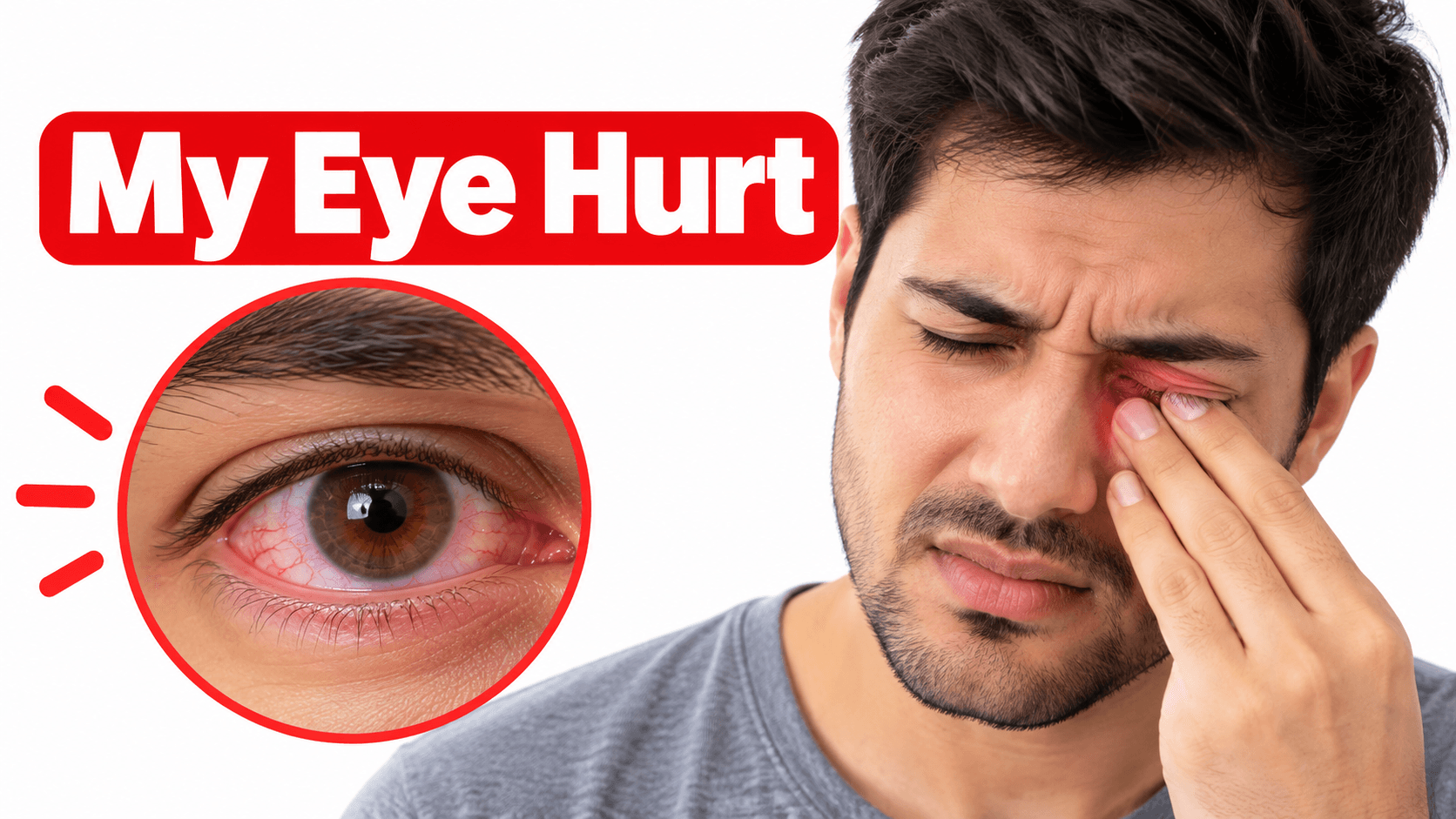
Eye pain can be uncomfortable and sometimes worrying. You may feel pain as a sharp sensation, burning, aching, pressure, or irritation in or around your eye. In some cases, eye pain is caused by something minor, such as tired eyes or dryness. However, certain types of eye pain can be linked to infections, injuries, inflammation, or other eye conditions that need medical attention.
Understanding why your eye hurts can help you recognize possible causes and know when it may be time to see an eye-care professional.
What Does Eye Pain Feel Like?
The way eye pain feels can vary depending on what is causing it. Some people may experience mild irritation, while others may feel sharp, burning, aching, or throbbing pain. Eye discomfort can be experienced on the surface of the eye, deep behind it, or around the surrounding eyelid area.
Common Ways Eye Pain May Feel
People may describe eye pain as:
- Burning or stinging: The eyes may feel irritated, especially with dryness or allergies.
- Sharp or stabbing pain: This may occur suddenly and can sometimes be linked to an injury or irritation.
- Aching or throbbing: A dull ache may occur with eye strain, headaches, or discomfort around the eye.
- Pressure: You may experience a sensation of fullness or pressure around the eye or deep behind it.
- Gritty or scratchy feeling: It may feel as though sand, dust, or something else is trapped in the eye.
- Sensitivity to light: Bright sunlight, room lights, or screens may become uncomfortable.
- Pain when blinking: Irritation or a problem affecting the surface of the eye may make blinking uncomfortable.
Other Symptoms That May Occur
Eye pain does not always happen by itself. Depending on what is causing the eye discomfort, you may experience other symptoms as well, such as:
- Redness of the eye
- Excessive watering
- Swollen eyelids
- Blurred vision
- Eye discharge
- Itching or burning
- Headache
- Increased sensitivity to light
- Difficulty focusing
For instance, dry eyes can lead to a burning sensation, scratchy feeling, or irritation, whereas an eye infection may cause discomfort along with redness and discharge.
Where You Feel the Pain Matters
The location of the pain can sometimes provide useful clues.
Pain on the surface of the eye may be associated with dryness, irritation, a foreign particle, or a problem affecting the cornea.
Pain behind or around the eye can sometimes occur with headaches, sinus problems, inflammation, or other conditions affecting the tissues surrounding the eye.
Pain with eye movement can also be important, particularly when it occurs with vision changes or other unusual symptoms.
When Eye Pain Needs Attention
Mild eye discomfort that improves after resting your eyes may not always indicate a serious problem. However, severe, sudden, or persistent eye pain should not be ignored.
Seek medical care promptly if your eye pain is accompanied by:
- Sudden changes in vision
- Loss of vision
- Severe redness
- Significant sensitivity to light
- An eye injury
- Chemical exposure
- Severe headache or vomiting
- Increasing swelling around the eye
Understanding how the pain feels and noticing other symptoms can help an eye-care professional determine what may be causing the problem. If you are unsure about the cause or the pain does not improve, getting a professional eye examination is the safest approach.
Common Causes of Eye Pain
There are many possible reasons why your eye may hurt. Some are temporary and mild, while others require professional evaluation.
1. Dry Eyes
Dry eyes are one of the common causes of eye discomfort. Your eyes need enough tears to stay lubricated and comfortable. When there are not enough tears, or when tears evaporate too quickly, the eyes can become dry and irritated.
You may notice:
- Burning or stinging
- Redness
- Gritty or sandy feeling
- Blurred vision
- Watery eyes
Long periods of screen use, dry air, air conditioning, wind, and certain medications can contribute to dry-eye symptoms.
Taking regular breaks from screens and avoiding direct airflow toward your eyes may help reduce irritation.
2. Eye Strain
Spending a long time looking at a computer, phone, television, or other digital screen can cause eye strain. Reading for extended periods or working in poor lighting may also contribute.
Eye strain can cause:
- Aching eyes
- Headaches
- Blurred vision
- Difficulty focusing
- Dryness or watering
- Increased sensitivity to light
Following the 20-20-20 rule may help: every 20 minutes, look at something about 20 feet away for at least 20 seconds.
3. Something Is in Your Eye
Dust, eyelashes, small particles, or other foreign material can become trapped in the eye and cause sudden irritation.
You may feel as though something is scratching your eye, especially when blinking.
Avoid rubbing the eye because rubbing can potentially scratch the cornea. Instead, gently rinse the eye with clean water or sterile saline if appropriate. If the object does not come out or pain continues, seek professional care.
4. Conjunctivitis
Conjunctivitis, commonly called pink eye, occurs when the conjunctiva becomes inflamed. It can be caused by infections or allergies.
Symptoms may include:
- Red or pink eye
- Watery discharge
- Itching
- Burning
- Swollen eyelids
- Crusting around the eyelids
Because some forms of conjunctivitis can spread to other people, good hand hygiene and avoiding the sharing of towels or cosmetics are important.
5. Allergies
Eye allergies can cause significant itching, redness, watering, and irritation. Common triggers include pollen, dust, pet dander, and other allergens.
Allergy-related eye discomfort often affects both eyes and may occur along with sneezing, a runny nose, or other allergy symptoms.
Avoiding known triggers and discussing appropriate treatment with a healthcare professional can help manage symptoms.
6. Contact Lens Problems
Contact lenses can sometimes cause eye pain if they are worn incorrectly, kept in for too long, not cleaned properly, or used beyond their recommended replacement period.
Pain, redness, light sensitivity, discharge, or blurred vision in a contact-lens wearer should not be ignored because certain eye infections can become serious.
If your eye hurts while wearing contact lenses, remove the lenses and seek professional advice, particularly if symptoms are significant or do not improve.
7. Corneal Scratches
The cornea is the transparent, protective layer that covers the front portion of the eye. A scratch on the cornea, known as a corneal abrasion, can cause considerable discomfort.
Possible symptoms include:
- Sharp eye pain
- Excessive tearing
- Redness
- Light sensitivity
- Blurred vision
- Feeling that something is stuck in the eye
A suspected corneal injury should be evaluated by an eye-care professional, especially when pain or vision changes are present.
8. Sinus Problems
Sometimes discomfort around the eyes can come from sinus congestion or inflammation rather than from the eye itself.
Sinus-related pressure may cause pain around the forehead, cheeks, nose, or behind the eyes. It may occur together with nasal congestion, facial pressure, or a headache.
If eye-area pain is severe, persistent, or associated with vision changes, it should not automatically be assumed to be a sinus problem.
More Serious Causes of Eye Pain
Most cases of eye discomfort are caused by temporary problems such as dryness, eye strain, allergies, or minor irritation. However, some causes of eye pain can be more serious and may require prompt medical attention. Severe or unusual eye pain should not be ignored, especially when it occurs with changes in vision or other concerning symptoms.
1. Glaucoma
Certain types of glaucoma can cause sudden and severe eye pain. Acute angle-closure glaucoma is a medical emergency because pressure inside the eye can rise quickly and damage the optic nerve.
Possible symptoms may include:
- Severe eye pain
- Redness in the eye
- Blurred vision
- Seeing halos around lights
- Severe headache
- Nausea or vomiting
If these symptoms develop suddenly, seek emergency medical care.
2. Uveitis
Uveitis is inflammation inside the eye and can cause significant discomfort. It may affect one or both eyes and can sometimes be associated with other inflammatory conditions.
Symptoms may include:
- Eye pain or aching
- Redness
- Blurred vision
- Sensitivity to light
- Small spots or shapes floating in your vision
Because untreated inflammation can potentially affect vision, professional evaluation is important.
3. Serious Eye Infection
Some eye infections can become serious, particularly infections involving the cornea. A serious infection may cause increasing pain, redness, discharge, light sensitivity, or reduced vision.
Contact-lens users should be especially cautious about these symptoms because certain infections can progress quickly.
4. Corneal Injury
The cornea is the transparent surface that forms the front part of the eye. A scratch, cut, or other injury to the cornea can cause substantial pain.
You may experience:
- Sharp pain
- Excessive tearing
- Redness
- Blurred vision
- Light sensitivity
- A sensation that something is stuck in the eye
A suspected corneal injury should be assessed by an eye-care professional.
5. Eye Injury or Chemical Exposure
An injury caused by a sharp object, flying particle, accident, or chemical can damage the eye. Chemical exposure to the eye requires immediate action and medical attention.
Do not rub an injured eye. If a chemical gets into the eye, immediately rinse the eye with clean running water and seek urgent medical care.
When to Seek Urgent Medical Help
Eye pain requires prompt attention when it is severe, sudden, getting worse, or associated with vision changes.
Seek urgent medical care if you experience:
- Sudden loss or significant change in vision
- Severe eye pain
- Significant redness
- Severe sensitivity to light
- Eye pain after an injury
- Chemical exposure
- Severe swelling
- Nausea or vomiting along with eye pain
Getting an early medical evaluation can help determine the cause of the problem and may lower the chance of complications. Because some serious eye conditions can threaten vision, it is better to have unexplained or severe eye pain checked by a qualified eye-care professional rather than trying to diagnose the cause yourself.
When Should You See a Doctor for Eye Pain?
Not every episode of eye pain means that there is a serious problem. Mild discomfort can sometimes occur because of dry eyes, eye strain, allergies, or temporary irritation and may improve with rest and basic eye care. However, persistent, severe, or unusual eye pain should not be ignored.
Knowing when to seek medical attention is important because some eye conditions can affect vision if they are not treated promptly.
Seek Urgent Medical Attention If You Have:
- Severe or sudden eye pain
- Sudden changes in vision or loss of vision
- Severe redness or swelling around the eye
- Strong sensitivity to light
- Severe headache along with eye pain
- Nausea or vomiting with eye pain
- Pain after an eye injury
- A chemical or foreign object entering the eye
- New or worsening blurred vision
- Difficulty moving the eye
- Significant discharge from the eye
These symptoms can sometimes occur with conditions that require prompt evaluation, so it is safer to seek professional medical care rather than waiting for the symptoms to disappear.
Contact-Lens Wearers Should Be Careful
People who wear contact lenses should pay particular attention to eye pain, redness, discharge, light sensitivity, or changes in vision. Some eye infections associated with contact lenses can become serious.
If your eye becomes painful while wearing contact lenses, remove the lenses and seek advice from an eye-care professional, particularly if symptoms are significant or continue.
What About Mild Eye Pain?
If the discomfort is mild and there are no warning signs, you may be able to monitor your symptoms. Taking breaks from screens, getting adequate rest, avoiding eye rubbing, and managing dryness may help.
However, see an eye-care professional if the pain continues, repeatedly returns, or gets worse. Symptoms that continue over time may require a professional examination to identify what is causing them.
Don’t Ignore Changes in Vision
Eye pain combined with a change in vision deserves special attention. Blurred vision, double vision, flashes of light, a sudden increase in floaters, or loss of vision can indicate a problem that requires prompt assessment.
Final Takeaway
When eye pain is severe, sudden, persistent, or accompanied by vision changes, redness, injury, light sensitivity, or other concerning symptoms, seek medical attention promptly. An eye specialist can check your eyes and decide what treatment is right for you.
It is important not to rely on home remedies or self-diagnosis when symptoms are severe or unusual. Prompt evaluation can help identify potentially serious problems and protect your vision.
How Can You Relieve Mild Eye Discomfort?
Mild eye discomfort can sometimes happen because of dry eyes, prolonged screen use, tiredness, allergies, or minor irritation. For many people, basic eye-care practices may help ease mild discomfort and support overall eye comfort. However, these measures are intended for mild symptoms only and should not replace professional medical care when pain is severe or persistent.
1. Give Your Eyes Regular Breaks
Spending a long time looking at a phone, computer, or television screen can contribute to eye strain and dryness. Take frequent breaks from close-up tasks and give your eyes a chance to rest and relax.
The 20-20-20 rule can be useful:
- Every 20 minutes, look away from your screen.
- Look at something about 20 feet away.
- Keep your gaze on the distant object for at least 20 seconds before returning your attention to your usual task.
Taking regular breaks may help reduce tiredness and improve comfort.
2. Blink More Often
When focusing closely on a digital screen, people often blink less often than usual, which can contribute to eye discomfort. Reduced blinking can allow tears to evaporate more quickly and may contribute to dryness.
Making a conscious effort to blink regularly can help distribute the tear film over the eyes and maintain better moisture and comfort.
3. Consider Artificial Tears
If mild discomfort is related to dry eyes, lubricating eye drops or artificial tears may provide temporary relief.
Choose an appropriate product and follow the instructions on the label. If you need eye drops frequently or your symptoms continue, speak with an eye-care professional.
4. Avoid Rubbing Your Eyes
Rubbing your eyes may provide temporary relief from itching or irritation, but it can make the irritation worse. It may also introduce dirt or germs into the eyes.
Try to keep your hands away from your eyes, especially when they are irritated.
5. Protect Your Eyes From Irritants
Smoke, dust, wind, and very dry air can make mild eye discomfort worse. When possible, reduce exposure to these irritants.
You can also consider wearing appropriate protective eyewear during activities where dust or small particles may enter your eyes.
6. Remove Contact Lenses When Appropriate
If your eyes feel irritated while wearing contact lenses, remove the lenses and allow your eyes to rest. Follow your eye-care professional’s instructions regarding lens cleaning, replacement, and wearing time.
Do not continue wearing contact lenses if they cause significant pain, redness, or vision changes.
7. Get Enough Rest
Tiredness can contribute to eye strain and discomfort. Getting enough sleep and taking regular breaks during extended periods of close-up tasks may help reduce eye strain and improve comfort.
When Home Care Is Not Enough
Simple measures may help with mild discomfort, but they should not be used to delay medical care when symptoms are concerning.
Seek prompt medical attention if you develop severe eye pain, sudden vision changes, significant redness, injury, strong light sensitivity, or worsening symptoms.
If mild eye discomfort continues for several days, keeps returning, or interferes with your daily activities, consider scheduling an eye examination to determine the underlying cause.
How Can You Help Prevent Eye Pain?
You cannot prevent every cause of eye pain, but good eye-care habits can reduce the risk of common problems such as dryness, irritation, and eye strain. Regular eye care can also make it easier to recognize changes in your vision or eye health that may require professional evaluation.
Take Regular Screen Breaks
Using phones, computers, and other digital devices for extended periods may contribute to eye strain and dryness. One helpful habit is the 20-20-20 rule: every 20 minutes, pause your screen activity and look at an object roughly 20 feet away for at least 20 seconds.
Keep Your Eyes Clean
Practice good hand hygiene by washing your hands often, and avoid touching or rubbing your eyes before your hands are clean. This can help reduce the chance of transferring dirt and germs to the eye.
Use Contact Lenses Properly
If you wear contact lenses, follow the cleaning, storage, replacement, and wearing instructions provided by your eye-care professional.
Important habits include:
- Wash your hands before handling lenses.
- Do not share contact lenses with anyone.
- Replace lenses according to the recommended schedule.
- Avoid wearing lenses longer than advised.
- Do not sleep in contact lenses unless specifically instructed to do so.
Protect Your Eyes
Use suitable protective eyewear when you are exposed to dust, chemicals, flying debris, or other substances that could harm your eyes. Wearing sunglasses can also help shield your eyes from strong sunlight.
Manage Dryness
Dry environments, air conditioning, wind, and prolonged screen use can contribute to dry eyes. Taking breaks, blinking regularly, and using appropriate lubricating eye drops when recommended may help maintain eye comfort.
Get Regular Eye Examinations
Regular eye examinations can help identify certain eye problems early, even when symptoms are not obvious.
Avoid Ignoring Symptoms
If you develop persistent eye pain, significant redness, vision changes, severe sensitivity to light, or pain after an injury, seek advice from a qualified eye-care professional.
Simple preventive habits can support eye comfort, but they cannot guarantee that eye problems will never occur. Paying attention to unusual symptoms and getting appropriate care when needed is an important part of protecting your vision.
Final Thoughts
Why does my eye hurt? Eye pain can have many possible causes, ranging from common problems such as dry eyes and eye strain to infections, corneal injuries, inflammation, and other eye conditions. The location and severity of the pain, along with symptoms such as redness, swelling, discharge, light sensitivity, or changes in vision, can provide important clues about the possible cause.
Mild eye discomfort may sometimes improve with adequate rest, regular screen breaks, and simple eye-care measures. However, severe or sudden eye pain, changes in vision, significant redness, an eye injury, or strong sensitivity to light should not be ignored. These symptoms may require prompt evaluation by a qualified eye-care professional.
Taking good care of your eyes, avoiding unnecessary rubbing, using contact lenses properly, and getting appropriate eye examinations can help support healthy vision. If eye pain persists, becomes worse, or has no clear explanation, seeking professional medical advice is an important step toward protecting your eyes and vision.
Frequently Asked Questions
1. Question: Why does my eye hurt?
Answer: Eye pain can be caused by dry eyes, eye strain, allergies, infections, corneal injuries, inflammation, or other eye conditions.
2. Question: Can too much screen time cause eye pain?
Answer: Yes. Spending too much time looking at phones, computers, or other digital screens can cause eye strain, dryness, and discomfort. Taking regular breaks may help reduce these symptoms.
3. Question: Can dry eyes cause eye pain?
Answer: Yes. Dry eyes can cause burning, stinging, redness, irritation, and a gritty or sandy feeling. Screen use, dry air, wind, and reduced blinking can sometimes make symptoms worse.
4. Question: When should I see a doctor for eye pain?
Answer: You should seek medical attention if the pain is severe, sudden, persistent, or occurs with vision changes, significant redness, strong light sensitivity, an eye injury, swelling, nausea, or vomiting.
5. Question: How can I relieve mild eye discomfort?
Answer: Give your eyes regular breaks, blink frequently, avoid rubbing your eyes, reduce exposure to smoke and dust, and use appropriate lubricating eye drops when recommended.
6. Question: Can eye pain be a sign of a serious problem?
Answer: Yes. Severe eye pain can sometimes be related to conditions such as glaucoma, uveitis, serious eye infections, or eye injuries. Severe pain or pain accompanied by vision changes should be evaluated promptly by an eye-care professional.