
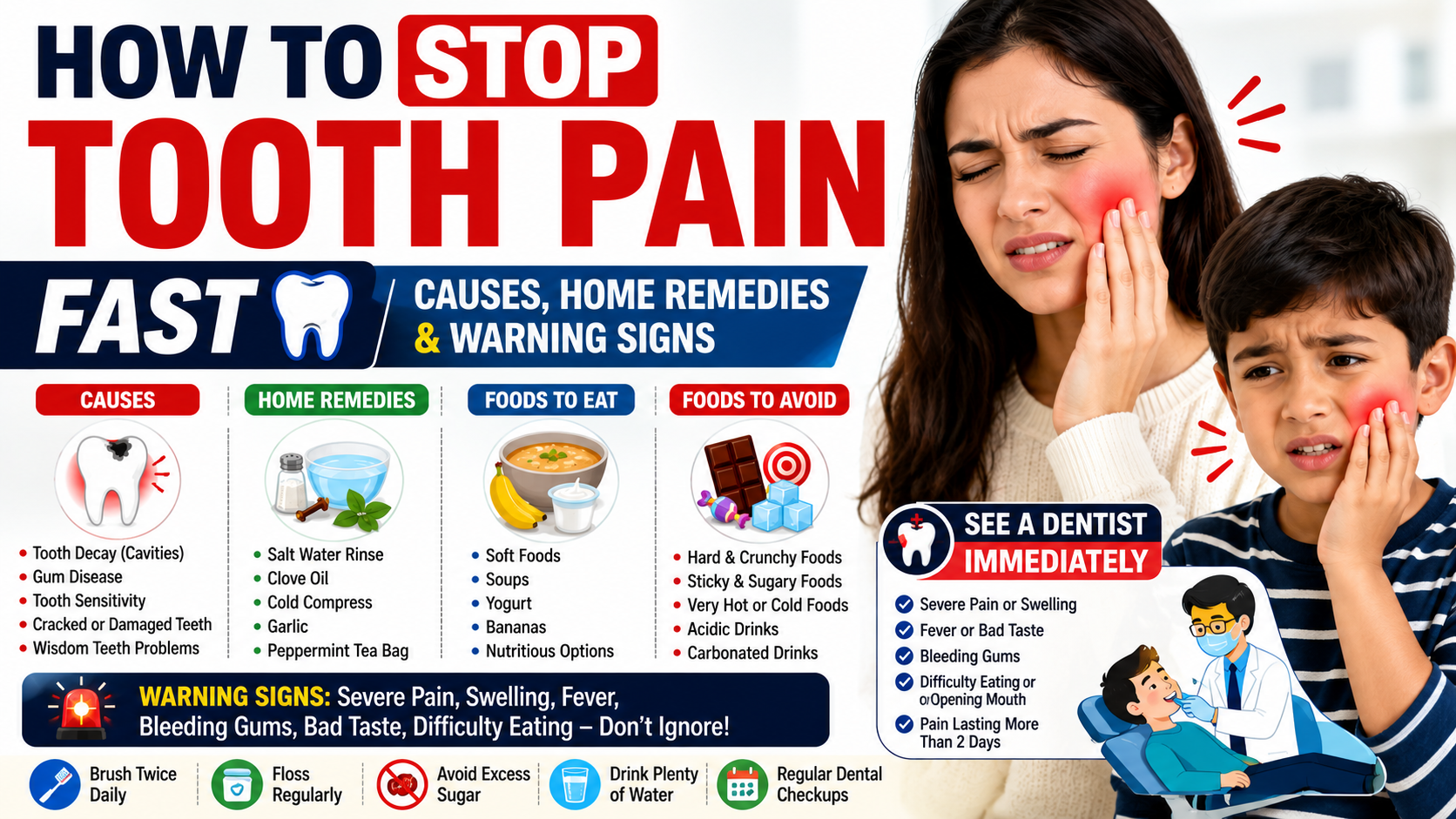
Main Causes and Early Symptoms of Tooth Pain
Tooth pain can be a distressing dental issue that affects individuals of all ages, often causing discomfort that can disrupt everyday activities and reduce overall quality of life. Sometimes the pain is mild and temporary, while in other situations it can become severe enough to disturb eating, sleeping, and daily activities. Tooth pain usually indicates that something is wrong inside the tooth, gums, or surrounding area. Understanding the main causes and early symptoms of tooth pain can help you take quick action before the condition becomes worse.
Common Causes of Tooth Pain
1. Tooth Decay (Cavities)
Tooth decay is a leading reason behind tooth pain, occurring when harmful bacteria gradually damage the tooth structure and create cavities that can cause discomfort and sensitivity. When bacteria in the mouth produce acids, they slowly damage the outer layer of the tooth, creating cavities. At first, a cavity may not cause noticeable discomfort, but as it grows deeper, pain and sensitivity often begin to appear.
Common signs include:
- Sharp pain while eating sweets
- Sensitivity to cold drinks
- Pain while consuming hot foods
- Small visible holes in the teeth
2. Gum Disease
Poor oral hygiene can lead to plaque buildup around the gums, causing inflammation and infection. Early gum disease often starts with redness, swelling, and bleeding while brushing. If ignored, the infection can spread deeper and create severe tooth pain or even tooth loss.
Symptoms of gum disease may include:
- Swollen gums
- Bleeding during brushing
- Bad breath
- Pain around the gums
3. Tooth Sensitivity
Some individuals experience sudden pain when eating ice cream, drinking tea, or breathing cold air. This usually happens when the protective enamel layer becomes weak or when gums recede, exposing sensitive parts of the teeth.
Tooth sensitivity is commonly triggered by:
- Very cold foods
- Hot beverages
- Sweet foods
- Acidic drinks
4. Cracked or Damaged Tooth
Biting hard foods, accidents, or grinding teeth during sleep can create small cracks that expose the inner nerves of the tooth. The pain may come and go at first, making it difficult to identify the exact cause.
Possible reasons for cracked teeth:
- Chewing hard candy or ice
- Sports injuries
- Teeth grinding at night
- Sudden accidents
5. Wisdom Teeth Problems
Wisdom teeth can also create serious pain, especially in young adults. If wisdom teeth do not have enough room to emerge properly, they can press against neighboring teeth or become trapped beneath the gums, leading to pain and discomfort.
Common wisdom tooth symptoms:
- Jaw pain
- Swelling near the back teeth
- Headaches
- Difficulty opening the mouth
Early Symptoms of Tooth Pain
The early symptoms of tooth pain should never be ignored. Many dental problems become worse if treatment is delayed.
Warning Signs to Watch For
- Sensitivity to hot or cold foods
- Mild discomfort while chewing
- Swollen or red gums
- Persistent bad breath
- Throbbing tooth pain
- Pain spreading toward the jaw or ear
- Difficulty sleeping because of pain
Why Early Treatment Matters
Leaving tooth pain untreated can increase the risk of serious infections and may lead to more complex dental problems over time. Proper oral hygiene and regular dental checkups are important for preventing serious dental problems.
Simple Tips for Healthy Teeth
- Brush your teeth twice daily
- Use dental floss regularly
- Avoid excessive sugary foods
- Drink enough water
- Visit a dentist for routine checkups
Early treatment not only reduces pain quickly but also helps prevent expensive and complicated dental procedures in the future.
Home Remedies to Relieve Tooth Pain Quickly
Tooth pain can appear suddenly and make everyday activities extremely uncomfortable. Eating, drinking, talking, and even sleeping may become difficult when the pain becomes severe. While visiting a dentist is the best long-term solution, several home remedies can help reduce tooth pain temporarily and provide quick relief. These natural methods are simple, affordable, and commonly used by many people before receiving professional dental treatment.
1. Salt Water Rinse
Rinsing the mouth with warm salt water is a simple home remedy that may help reduce discomfort, clean the affected area, and temporarily ease tooth pain. Salt works as a natural disinfectant and helps reduce inflammation inside the mouth. It can also remove food particles and bacteria trapped between the teeth.
How to Use:
- Mix half a teaspoon of salt in a glass of warm water
- Gently rinse the mixture around your mouth for about 30 seconds before spitting it out.
- Spit it out carefully
- Repeat 2–3 times daily
Using this method may help calm inflammation and provide short-term relief from mild tooth pain.
2. Cold Compress
Placing a cold compress against the affected side of the face may help reduce discomfort and minimize swelling around the painful area. Cold temperatures shrink blood vessels, which may lower inflammation and discomfort.
Steps to Apply:
- Wrap ice cubes in a clean cloth
- Place it on the affected side of the face
- Hold for 15–20 minutes
- Repeat after short breaks if necessary
A cold compress is especially useful for pain caused by swelling or injury.
3. Clove Oil
Clove oil is a popular natural remedy because it contains eugenol, a compound known for its pain-relieving and antibacterial properties. Many people use clove oil for temporary tooth pain relief.
How to Use Clove Oil:
- Apply a small amount of clove oil to a cotton ball and gently place it on the painful tooth or surrounding gum area for temporary relief.
- Gently apply it to the painful tooth
- Avoid using excessive amounts
- Repeat carefully if needed
Some people also place a whole clove near the painful tooth for mild relief.
4. Garlic Remedy
Garlic has natural antibacterial properties that may help fight bacteria responsible for tooth infections. For generations, it has been a popular natural remedy used to help manage minor tooth discomfort and oral health concerns.
Simple Garlic Method:
- Crush one fresh garlic clove
- Mix with a small pinch of salt
- Apply gently to the affected area
Although the taste may be strong, garlic may help reduce pain and bacteria temporarily.
5. Peppermint Tea Bags
Peppermint contains soothing properties that may help numb sensitive gums and reduce irritation.
How to Use:
- Use a slightly warm peppermint tea bag
- Place it gently on the painful area
- Leave it for a few minutes
Some people prefer cooling the tea bag in the refrigerator before use for extra comfort.
Important Things to Avoid During Tooth Pain
Certain habits can worsen tooth pain and increase discomfort.
Avoid These Common Mistakes:
- Eating extremely hot or cold foods
- Consuming too many sugary snacks
- Chewing hard foods on the painful side
- Ignoring swelling or infection signs
- Using sharp objects to clean teeth
When Home Remedies Are Not Enough
Home remedies may provide temporary relief, but they do not permanently cure dental problems. Severe pain, swelling, fever, or pus around the tooth could indicate a serious infection that requires professional treatment.
You Should Visit a Dentist If:
- Pain lasts more than two days
- Swelling becomes severe
- You develop fever or headache
- Difficulty eating or speaking increases
- The tooth becomes loose or damaged
Taking quick action can prevent serious dental complications and help protect your oral health in the long run.
Foods to Eat and Avoid During Tooth Pain
Tooth pain can make eating extremely difficult and uncomfortable. In many cases, certain foods may increase sensitivity and worsen the pain, while others can help reduce irritation and provide comfort. Choosing the right foods during tooth pain is very important because the wrong diet may put extra pressure on the affected tooth and increase inflammation. A soft, healthy, and balanced diet can support faster recovery and make daily life easier until proper dental treatment is received.
Best Foods to Eat During Tooth Pain
When suffering from tooth pain, soft foods are usually the safest option because they require less chewing and put minimal pressure on the teeth and gums.
1. Warm Soups
Warm soups are easy to consume and can provide important nutrients without irritating the painful area. However, the soup should not be extremely hot because heat may increase sensitivity.
Good Soup Options:
- Vegetable soup
- Tomato soup
- Lentil soup
- Chicken soup
Warm liquids can also help keep the body hydrated and comfortable.
2. Mashed Potatoes
Mashed potatoes are soft, filling, and gentle on sensitive teeth. Their soft texture makes them easy to chew and less likely to cause additional discomfort in sensitive teeth.
Benefits of Mashed Potatoes:
- Soft texture
- Easy to swallow
- Provides energy
- Comfortable for sore teeth
Avoid adding excessive spices if the gums are irritated.
3. Yogurt
Yogurt is one of the best foods during tooth pain because it is cool, soft, and rich in calcium. It may also help soothe irritated gums.
Why Yogurt Helps:
- Easy to eat
- Cooling effect on gums
- Contains calcium for teeth
- Soft texture reduces discomfort
Choose plain yogurt with less sugar whenever possible.
4. Scrambled Eggs
Scrambled eggs are soft and packed with protein, making them a healthy option during dental discomfort.
Advantages:
- Easy chewing
- Rich in nutrients
- Soft consistency
- Gentle on teeth
They can help maintain energy levels while avoiding unnecessary pain.
5. Bananas and Soft Fruits
Soft fruits like bananas are easy to chew and provide important vitamins. Applesauce is another good option because it does not require biting.
Recommended Soft Fruits:
- Bananas
- Applesauce
- Ripe papaya
- Soft mango slices
Because they are gentle on the mouth, these foods are less likely to trigger sensitivity or worsen tooth discomfort.
Foods to Avoid During Tooth Pain
Certain foods can make tooth pain worse by increasing pressure, sensitivity, or bacterial growth.
Avoid These Foods:
Hard Foods
Crunchy or hard foods can put extra pressure on weakened teeth, potentially increasing discomfort or causing further damage while chewing.
Examples include:
- Ice cubes
- Hard candy
- Nuts
- Chips
Sugary Foods
Sugar feeds harmful bacteria and may worsen cavities or infections.
Sugary foods to limit:
- Chocolates
- Candy
- Soft drinks
- Sweet desserts
Very Hot or Cold Foods
Very hot or very cold foods and drinks can increase tooth sensitivity, often causing sudden and sharp discomfort.
Common triggers:
- Ice cream
- Hot coffee
- Cold beverages
- Boiling soups
Sticky Foods
Sticky foods can become trapped between teeth and increase discomfort.
Examples:
- Caramel
- Chewing gum
- Sticky sweets
Helpful Eating Tips During Tooth Pain
Following a few simple eating habits may help reduce pain and protect the affected tooth.
Simple Tips:
- Chew on the opposite side of the mouth
- Eat slowly and carefully
- Drink enough water after meals
- Brush gently using a soft toothbrush
- Avoid smoking and tobacco products
A healthy diet combined with proper oral hygiene can help reduce discomfort and support faster healing. However, if tooth pain continues or becomes severe, visiting a dentist is necessary to identify and treat the actual cause of the problem.
When You Should Visit a Dentist Immediately for Tooth Pain
Tooth pain is often ignored in the beginning because many people believe it will disappear on its own. Sometimes mild pain may improve temporarily, but in many situations, tooth pain can be a warning sign of a serious dental problem. Delaying treatment may lead to infections, gum damage, tooth loss, or other health complications. Knowing when to visit a dentist immediately is very important because early treatment can prevent the condition from becoming dangerous and more expensive to treat.
Severe and Continuous Tooth Pain
Persistent and intense tooth pain is one of the most important warning signs that an underlying dental problem may need immediate attention. Mild discomfort for a short period may not always be serious, but continuous throbbing pain often indicates deeper problems such as tooth decay, nerve infection, or an abscess.
Signs That Require Immediate Attention:
- Pain lasting more than two days
- Sharp or throbbing pain
- Pain that becomes worse at night
- Difficulty concentrating or sleeping because of pain
Persistent pain should never be ignored because dental infections can spread quickly if left untreated.
Swelling Around the Tooth or Face
Swelling is another serious symptom that may indicate infection. If the gums, jaw, or face begin to swell, it could mean bacteria have spread deeper into the tissues.
Dangerous Symptoms Include:
- Swollen gums
- Puffy cheeks
- Jaw swelling
- Pain while opening the mouth
In some cases, swelling may also be accompanied by fever, which can signal a serious infection requiring urgent dental care.
Fever and Bad Taste in the Mouth
When a fever occurs along with tooth pain, it may indicate that the body is responding to an infection that requires prompt dental attention. Some people may also notice a bad smell or unpleasant taste in the mouth caused by pus around the infected tooth.
Common Infection Symptoms:
- Fever or chills
- Bad breath
- Bitter taste in the mouth
- Pus near the gums
- Swollen lymph nodes
Dental infections should be treated quickly because they may spread to nearby areas if ignored.
Difficulty Eating or Chewing
If tooth pain becomes so severe that eating or chewing is difficult, professional treatment is usually necessary. Skipping meals due to tooth pain can negatively affect your overall health by reducing the nutrients your body needs to function properly.
Problems You Should Not Ignore:
- Pain while chewing
- Sensitivity to all foods and drinks
- Difficulty drinking water
- Jaw pain while eating
A dentist can identify the exact cause and provide the proper treatment to reduce discomfort safely.
Broken, Loose, or Damaged Teeth
A cracked, broken, or loose tooth can expose nerves and increase the risk of infection. Dental injuries should be treated as quickly as possible to prevent permanent damage.
Common Causes of Tooth Damage:
- Sports injuries
- Falling accidents
- Biting hard objects
- Teeth grinding
Even if the pain seems manageable, damaged teeth often require professional repair.
Bleeding or Severely Inflamed Gums
Bleeding gums during brushing may sometimes be mild, but continuous bleeding combined with pain and swelling can indicate serious gum disease.
Warning Signs of Gum Problems:
- Red and swollen gums
- Frequent bleeding
- Gum recession
- Loose teeth
Early treatment of gum disease can help protect teeth and prevent long-term complications.
Why Early Dental Treatment Matters
Ignoring serious tooth pain can lead to severe infections, permanent tooth damage, and expensive treatments later. Visiting a dentist early often makes treatment easier, faster, and less painful.
Benefits of Quick Treatment:
- Faster pain relief
- Lower risk of infection spread
- Better protection for teeth and gums
- Reduced treatment costs in the future
Maintaining good oral hygiene, eating healthy foods, and scheduling regular dental checkups are important steps for preventing serious dental problems. However, if you notice severe pain, swelling, fever, or damaged teeth, seeking immediate dental care is the safest decision for your overall health.
Conclusion
Tooth pain is a common problem that can affect daily life in many ways. Sometimes the pain may start as mild discomfort, but if ignored, it can become severe and lead to serious dental complications. Understanding the main causes and early symptoms of tooth pain helps people take quick action before the condition becomes worse.
Simple home remedies like salt water rinses, cold compresses, clove oil, and proper oral hygiene may provide temporary relief from pain. At the same time, choosing soft and healthy foods while avoiding sugary, hard, or extremely hot and cold items can help reduce irritation and protect sensitive teeth.
However, persistent pain, swelling, fever, bleeding gums, or difficulty eating should never be ignored. These symptoms may indicate infections or serious dental problems that require immediate professional treatment. Getting timely dental treatment can reduce the risk of serious oral health problems, protect your teeth from further damage, and help avoid costly procedures in the future.
Taking care of oral health through regular brushing, flossing, healthy eating habits, and routine dental checkups is the best way to prevent tooth pain and maintain a healthy smile for years to come.
Frequently Asked Questions
Q1. What is the most common cause of tooth pain?
A: The most common cause of tooth pain is tooth decay or cavities. Gum disease and tooth infections are also common reasons.
Q2. How can I relieve tooth pain quickly at home?
A: You can try warm salt water rinses, cold compresses, and clove oil for temporary relief from tooth pain.
Q3. Which foods should I avoid during tooth pain?
A: Avoid sugary foods, hard snacks, sticky candies, and extremely hot or cold drinks because they may worsen the pain.
Q4. When should I visit a dentist for tooth pain?
A: You should see a dentist if the pain lasts more than two days, becomes severe, or causes swelling and fever.
Q5. Can tooth pain go away without treatment?
A: Mild pain may temporarily improve, but the actual dental problem often remains and can become worse over time.
Q6. Can a tooth infection become dangerous?
A: Yes, untreated tooth infections can spread to nearby areas and lead to serious health complications.
Q7. How can I prevent tooth pain in the future?
A: Brushing twice daily, flossing regularly, reducing sugar intake, and getting regular dental checkups can help prevent tooth pain.