
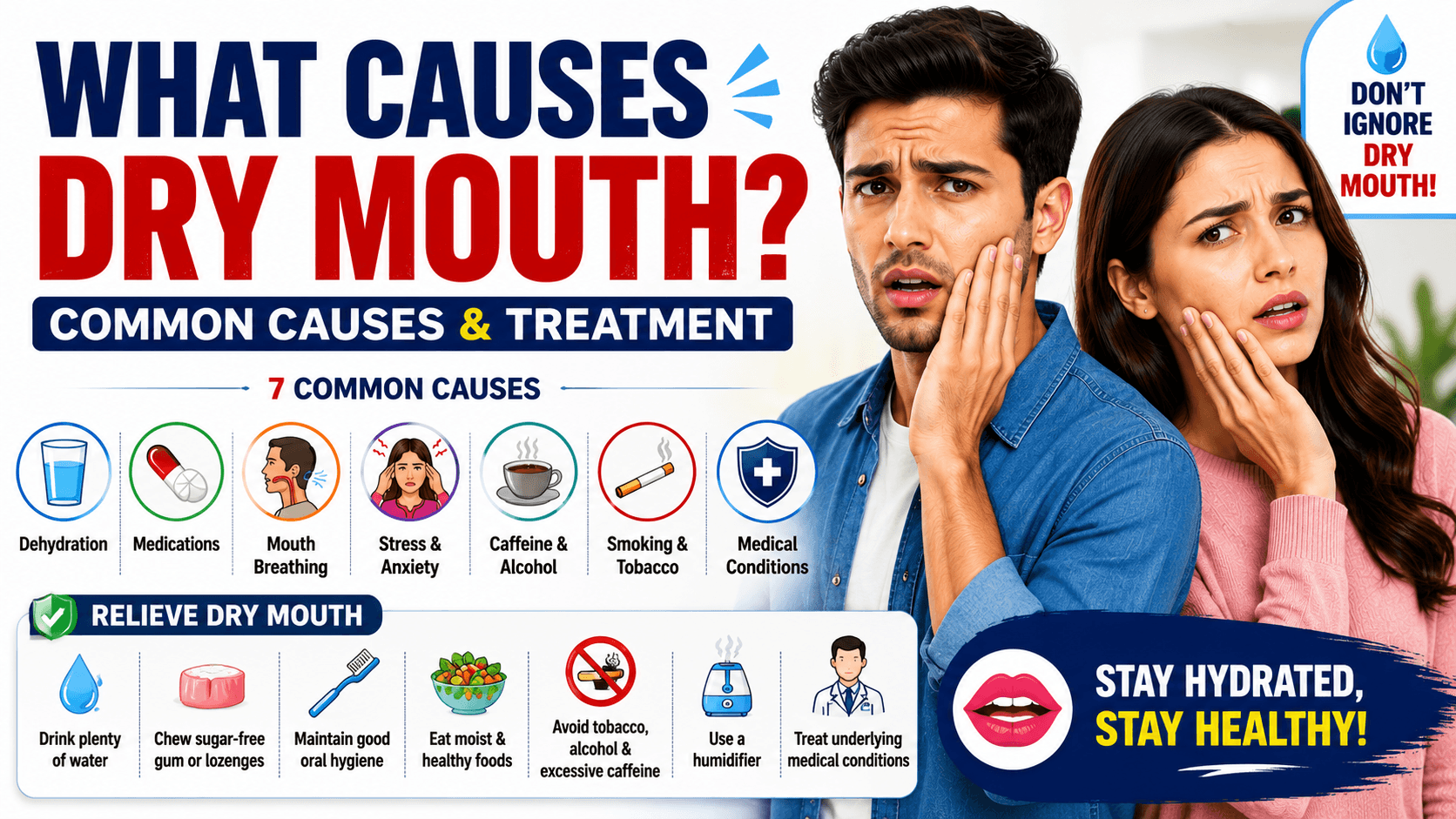
What Causes Dry Mouth?
Dry mouth, medically known as xerostomia, occurs when the mouth does not produce enough saliva to keep the tissues moist. Saliva plays an important role in everyday oral health. It helps moisten food, makes swallowing easier, supports digestion, protects teeth from decay, and keeps the mouth comfortable. When saliva production decreases, the mouth may feel sticky, dry, or uncomfortable, and these symptoms can become more noticeable while speaking, eating, or sleeping.
Dry mouth is not always caused by a serious health problem. In many cases, it can happen temporarily because of dehydration, stress, anxiety, mouth breathing, or certain medicines. However, persistent dry mouth may sometimes be associated with an underlying medical condition or a problem affecting the salivary glands.
One of the most common causes of dry mouth is not drinking enough fluids. When the body becomes dehydrated, it may produce less saliva. Excessive sweating, vomiting, diarrhea, fever, or prolonged physical activity can also contribute to dehydration and make the mouth feel unusually dry.
Medications and Dry Mouth
Many commonly used medicines can reduce saliva production as a side effect. A person may notice dry mouth after starting a new medication or after changing the dosage. Medicines used for allergies, colds, depression, high blood pressure, pain, and certain other conditions may sometimes contribute to this problem.
If you suspect that a medicine is causing your dry mouth, do not stop taking it on your own. Instead, discuss the symptom with a healthcare professional. They may determine whether a dosage adjustment, alternative medicine, or another approach is appropriate.
Mouth Breathing and Dry Mouth
Breathing through the mouth instead of the nose can cause moisture to evaporate more quickly. This is particularly common during sleep. People who have nasal congestion, allergies, a blocked nose, or certain breathing problems may be more likely to breathe through their mouth.
This can lead to waking up with a very dry mouth, sticky saliva, unpleasant breath, or a dry throat. If mouth breathing happens regularly, identifying and addressing the underlying reason may help reduce dryness.
Stress and Anxiety
Stress and anxiety can temporarily affect saliva production. Some people notice that their mouth becomes dry before a speech, examination, interview, medical appointment, or other stressful situation. This happens because the body’s response to stress can temporarily change normal saliva production.
Occasional stress-related dry mouth is usually temporary. However, frequent or persistent symptoms may require further evaluation, especially when dry mouth occurs without an obvious trigger.
Medical Conditions That May Cause Dry Mouth
Certain health conditions can also be associated with reduced saliva production. These may include conditions that affect the salivary glands, nerves, hormones, or the body’s ability to maintain normal fluid balance.
For example, diabetes can sometimes contribute to dry mouth, particularly when blood glucose levels are not well controlled. Other conditions, including autoimmune disorders that affect moisture-producing glands, may also cause persistent dryness.
Dry mouth can sometimes occur alongside other symptoms, such as:
- Frequent thirst
- Difficulty swallowing or speaking
- Dry or sore throat
- Cracked lips
- Changes in taste
- Bad breath
- Increased risk of tooth decay
- Mouth sores or irritation
The presence of these symptoms does not automatically mean that a person has a particular medical condition. The underlying cause needs to be determined based on the individual’s overall symptoms and health history.
Other Factors That Can Reduce Saliva
Smoking or using tobacco, consuming too much caffeine or alcohol, and prolonged dehydration may make dry mouth worse. Aging itself does not necessarily cause dry mouth, but older adults may experience it more often because they are more likely to take medications or have health conditions that affect saliva production.
Certain treatments, particularly radiation therapy involving the head and neck, can also damage salivary glands and significantly reduce saliva production. In such situations, dry mouth may persist and require specific management.
When Should You Be Concerned About Dry Mouth?
Temporary dry mouth is generally not a reason for immediate concern. However, persistent or severe dry mouth should not be ignored. A lack of saliva over a long period can increase the risk of tooth decay, gum problems, mouth infections, difficulty eating, and other oral health issues.
You should consider speaking with a healthcare professional or dentist if dry mouth continues for several weeks, repeatedly interferes with eating or sleeping, or occurs together with other unexplained symptoms.
Finding the cause is important because treatment depends on why saliva production has decreased. Improving hydration may help when dehydration is responsible, while medication-related dry mouth may require professional medication review. If an underlying medical condition is responsible, treating or managing that condition may help improve symptoms.
Overall, dry mouth can have many possible causes, ranging from simple dehydration and temporary stress to medications, mouth breathing, lifestyle factors, and certain medical conditions. Understanding the possible cause is the first step toward finding effective relief and protecting long-term oral health.
Common Causes of Dry Mouth
Dry mouth can develop for many different reasons, and sometimes more than one factor contributes to the problem at the same time. The mouth depends on a steady supply of saliva to stay moist and comfortable. When saliva production decreases or saliva is lost too quickly, a person may experience dryness, stickiness, difficulty swallowing, changes in taste, or an uncomfortable feeling in the mouth. Understanding the common causes can make it easier to identify what may be contributing to the symptoms.
Dehydration
Dehydration is a common temporary cause of dry mouth. When the body does not receive enough fluids, it tries to conserve water, which can reduce saliva production. Dry mouth may occur after heavy exercise, excessive sweating, hot weather, fever, vomiting, or diarrhea.
People who simply do not drink enough water during the day may also notice a dry or sticky mouth. Drinking adequate fluids can often improve dryness when dehydration is the main cause.
Mouth Breathing
Breathing through the mouth can cause moisture to evaporate from the tongue, gums, and other tissues. This is particularly common during sleep. A blocked nose caused by allergies, a cold, sinus congestion, or other nasal problems may make a person breathe through their mouth more often.
People who regularly wake up with a dry mouth, dry throat, or bad breath may be experiencing nighttime mouth breathing. Addressing the reason for nasal blockage may help reduce the problem.
Stress and Anxiety
Stress can temporarily change normal saliva production. During stressful situations, some people notice that their mouth suddenly feels dry. This may happen before public speaking, examinations, interviews, important meetings, or other situations that cause nervousness.
Stress-related dryness is usually temporary. However, people experiencing frequent anxiety or ongoing stress may notice that dry mouth occurs repeatedly.
Certain Foods and Drinks
Some foods and beverages can make the mouth feel drier. Foods that are very salty, spicy, or dry may increase the sensation of thirst or require more saliva while eating. Caffeinated beverages may also contribute to dryness in some people, especially when consumed in large amounts.
Alcohol can be particularly drying because it may contribute to fluid loss and can also affect the moisture of tissues inside the mouth. Limiting beverages or foods that consistently make symptoms worse may provide relief.
Smoking and Tobacco Use
Smoking can contribute to a dry mouth and may also affect the overall health of the mouth. Tobacco use can irritate oral tissues and may change normal saliva production. People who smoke may also experience bad breath, changes in taste, gum problems, or increased oral irritation.
Reducing or stopping tobacco use can benefit overall oral health and may help reduce some symptoms associated with dryness.
Physical Activity and Excessive Sweating
People can lose significant amounts of fluid during intense exercise or physical activity, particularly in hot or humid conditions. If lost fluids are not replaced, dehydration can develop and saliva production may decrease.
Athletes and people who work outdoors may therefore experience temporary dry mouth after prolonged activity. Replacing fluids regularly can help maintain normal hydration.
Sleeping With the Mouth Open
Sleeping with the mouth open can cause saliva and moisture to evaporate throughout the night. This is why some people wake up with a dry mouth even though they drank enough water during the previous day.
Snoring, nasal congestion, allergies, and certain sleeping habits can contribute to open-mouth sleeping. If morning dry mouth happens frequently, identifying the reason for sleeping with the mouth open may be helpful.
Aging and Dry Mouth
Aging by itself does not necessarily cause dry mouth. However, dry mouth may become more common among older adults because they may be more likely to take medications or have health conditions that affect saliva production.
Therefore, persistent dryness should not simply be considered a normal part of getting older. A healthcare professional or dentist can help determine whether medication, dehydration, an oral problem, or another condition is responsible.
Hormonal and Body Changes
Changes in the body’s normal hormonal balance can sometimes influence moisture levels and contribute to dry mouth. Some people notice changes in oral dryness during periods of significant hormonal fluctuation.
Because hormonal changes can have many possible causes, persistent symptoms should be discussed with a healthcare professional rather than assuming that hormones are solely responsible.
Environmental Factors
Dry air can make the mouth and throat feel uncomfortable. Spending long periods in an air-conditioned or heated environment may reduce moisture in the surrounding air, potentially making existing dry-mouth symptoms more noticeable.
People who already have reduced saliva production may be especially sensitive to dry environments. Using a humidifier and maintaining good hydration may help improve comfort.
Oral Health Problems
Certain oral health problems can occur alongside dry mouth or make the mouth feel uncomfortable. Gum irritation, mouth sores, infections, and other dental problems may sometimes produce sensations that a person describes as dryness.
Because saliva protects the teeth and oral tissues, long-lasting reduced saliva can itself increase the risk of tooth decay, gum disease, mouth infections, and difficulty maintaining oral comfort.
When Common Causes Need Further Attention
Occasional dry mouth caused by dehydration, exercise, stress, or sleeping with an open mouth often improves when the underlying trigger is addressed. However, dryness that continues for a long time may have a different cause.
Pay particular attention if dry mouth is accompanied by persistent thirst, frequent urination, difficulty swallowing, mouth sores, significant changes in taste, tooth decay, or other unexplained symptoms. These signs may indicate that further evaluation is appropriate.
Overall, common causes of dry mouth range from everyday factors such as dehydration, mouth breathing, stress, diet, smoking, and dry environments to medication effects and underlying health problems. Identifying the specific trigger is important because the best way to manage dry mouth depends on what is causing it.
Medications That Can Cause Dry Mouth
Many medications can cause dry mouth as a side effect. This happens because some medicines can reduce the amount of saliva produced by the salivary glands or change the way saliva flows through the mouth. In some cases, the dryness may be mild and temporary, while in others it can continue for as long as the person takes the medication.
Dry mouth caused by medication is relatively common because many different types of medicines can affect saliva production. A person may not always realize that a medication is responsible, especially if the dryness develops gradually after starting treatment.
Allergy and Cold Medicines
Some medicines used to relieve allergies, colds, and nasal symptoms can contribute to dry mouth. Antihistamines are a common example. They work by reducing the effects of histamine, which can help control allergy symptoms, but they may also reduce moisture in the mouth.
People taking these medicines may notice a dry or sticky feeling, especially after taking a dose. Other symptoms can include a dry throat or thicker saliva.
Antidepressants
Certain antidepressant medications can reduce saliva production and cause oral dryness. The effect can vary depending on the specific medication, dosage, and individual response.
People taking antidepressants may notice dry mouth along with other changes such as altered taste or increased thirst. If the symptom becomes uncomfortable or persistent, discussing it with the prescribing healthcare professional can help identify suitable options.
Blood Pressure Medicines
Some medicines used to manage high blood pressure may contribute to dry mouth. The effect is not the same for everyone, and different blood pressure medications can affect the body in different ways.
People should never stop or change blood pressure medication without medical advice simply because they experience dry mouth. A healthcare professional can determine whether the medicine is contributing to the symptom and whether any adjustment is appropriate.
Pain Medicines
Certain pain-relieving medicines may cause dry mouth, particularly some medications used for ongoing or severe pain. Reduced saliva can make the mouth feel sticky and may increase discomfort while eating or speaking.
If pain medication is being taken regularly and dry mouth develops after starting it, the medication should be considered as one possible contributing factor.
Decongestants
Decongestants are commonly used to relieve a blocked or stuffy nose. Although they may make nasal breathing easier, some can also contribute to dryness of the mouth and throat.
In some cases, a person may experience both nasal symptoms and dry mouth, making it difficult to determine whether the dryness is caused by the illness, mouth breathing, or the medication itself.
Medications for Mental Health Conditions
Some medicines used for anxiety, depression, sleep problems, and other mental health conditions can affect saliva production. The likelihood and severity of dry mouth can differ considerably between medications.
If dry mouth becomes bothersome, the person should speak with the healthcare professional who prescribed the medicine. They may be able to recommend ways to manage the symptom without interrupting necessary treatment.
Medications Used for Bladder Problems
Some medicines prescribed for urinary or bladder-related conditions can produce dry mouth. These medications may affect certain nerve signals involved in bladder function, and the same effects can sometimes influence saliva production.
People taking these medicines may experience dryness along with other side effects. A healthcare professional can explain whether the symptoms are expected and how they can be managed.
Muscle Relaxants and Other Medicines
Certain muscle relaxants and other prescription medicines can also cause dry mouth. Because hundreds of medications can potentially contribute to oral dryness, it is not always possible to identify the cause based only on the medication’s name.
The timing of symptoms can provide useful information. For example, if dry mouth began shortly after starting a new medication or became worse after a dosage increase, the medicine may be contributing to the problem.
Why Medication-Related Dry Mouth Matters
Saliva does more than simply keep the mouth moist. It helps wash away food particles, neutralize acids, support swallowing, and protect teeth and oral tissues. When saliva production remains low for a long period, the risk of tooth decay, gum problems, mouth irritation, bad breath, and oral infections may increase.
This is why persistent medication-related dry mouth should not simply be ignored.
What Should You Do If Your Medicine Causes Dry Mouth?
If you believe a medication is causing dry mouth, keep taking the medicine as prescribed until you have spoken with your healthcare professional. Do not suddenly stop prescription medication on your own.
A doctor, dentist, or pharmacist may review your medications and determine whether one or more could be contributing to the dryness. Depending on the situation, they may suggest a different medication, adjust the dosage, change the timing, or recommend strategies to manage dry mouth.
Simple measures such as drinking water regularly, maintaining good oral hygiene, using sugar-free gum or lozenges to stimulate saliva, and avoiding excessive caffeine or alcohol may also help some people.
However, the appropriate approach depends on the person’s health and medications. Persistent or severe dry mouth deserves professional attention, particularly when it causes difficulty eating, swallowing, speaking, sleeping, or maintaining good oral health.
In summary, allergy medicines, cold medicines, antidepressants, blood pressure medicines, pain medicines, decongestants, bladder medications, muscle relaxants, and several other drugs may contribute to dry mouth. Identifying a medication-related cause can be an important step toward managing the symptom while continuing to treat the condition for which the medicine was prescribed.
Medical Conditions Linked to Dry Mouth
Dry mouth is often temporary and may be caused by dehydration, mouth breathing, stress, or medication. However, when the mouth remains unusually dry for a long time without an obvious reason, an underlying medical condition may sometimes be involved. Reduced saliva production can occur when a condition affects the salivary glands, nerves, hormones, fluid balance, or the body’s ability to regulate normal moisture levels.
Persistent dry mouth does not automatically mean that a person has a serious illness. Many different conditions can produce similar symptoms, so the cause should be evaluated based on the person’s overall health, medications, lifestyle, and other symptoms.
Diabetes
Diabetes can be associated with dry mouth, particularly when blood glucose levels are not well controlled. High blood glucose can contribute to increased urination and fluid loss, which may lead to dehydration and reduced saliva.
People with diabetes may also experience increased thirst, frequent urination, tiredness, blurred vision, or slow healing. Dry mouth alone cannot diagnose diabetes, but persistent dryness together with other symptoms may be a reason to discuss testing with a healthcare professional.
Sjögren’s Syndrome
Sjögren’s syndrome is an autoimmune condition that commonly affects moisture-producing glands. It can reduce the production of saliva and tears, resulting in persistent dry mouth and dry eyes.
People with Sjögren’s syndrome may also experience difficulty swallowing dry foods, changes in taste, mouth irritation, dental problems, fatigue, or joint discomfort. Because saliva helps protect teeth, prolonged dryness can increase the risk of cavities and other oral health problems.
Salivary Gland Disorders
Problems affecting the salivary glands can interfere with normal saliva production. Inflammation, infection, blockage, injury, or other salivary gland disorders may cause changes in the amount or flow of saliva.
Some people may notice dryness together with swelling or tenderness around the jaw, cheeks, or areas where the salivary glands are located. Recurrent swelling, pain, or significant changes in saliva flow should be evaluated by a healthcare professional or dentist.
Dehydration-Related Conditions
Certain illnesses can cause significant fluid loss through vomiting, diarrhea, fever, heavy sweating, or frequent urination. When the body loses more fluid than it replaces, dehydration can occur and saliva production may decrease.
In these situations, dry mouth is often accompanied by thirst, dark-colored urine, tiredness, dizziness, or reduced urination. Treating the underlying fluid loss and restoring hydration may improve the dryness.
Kidney Problems
Some kidney conditions can affect the body’s ability to maintain normal fluid and electrolyte balance. Depending on the condition, people may experience changes in thirst, urination, and hydration status, which can contribute to oral dryness.
Dry mouth by itself is not a reliable sign of kidney disease. However, persistent dryness accompanied by unusual changes in urination, swelling, fatigue, or other unexplained symptoms should be discussed with a healthcare professional.
Thyroid Disorders
Changes in thyroid function can sometimes be associated with oral symptoms, including a feeling of dryness. Thyroid disorders can affect many body processes, and symptoms may vary depending on whether thyroid activity is too high or too low.
Someone with persistent dry mouth and other symptoms such as unexplained weight changes, changes in heart rate, unusual tiredness, temperature sensitivity, or changes in bowel habits may benefit from medical evaluation.
Oral Thrush and Other Mouth Infections
Certain infections inside the mouth can cause discomfort, burning, altered taste, and a sensation of dryness. Oral thrush, for example, can produce creamy or white patches on the tongue or other areas of the mouth.
A dry mouth can also increase the risk of oral infections because saliva normally helps protect the mouth from harmful microorganisms. Therefore, dryness and infection can sometimes contribute to each other.
Nerve-Related Conditions
The nervous system helps control saliva production. Conditions or injuries affecting nerves involved in salivary gland function may therefore interfere with normal saliva flow.
Neurological disorders can have many different symptoms, and dry mouth alone is not enough to identify a nerve-related problem. If dryness develops together with other unexplained neurological symptoms, professional evaluation is important.
Anxiety and Mental Health Conditions
Anxiety and prolonged psychological stress can temporarily reduce saliva production. Some people experience noticeable dry mouth during periods of intense nervousness, worry, or emotional stress.
In addition, certain medications used to treat mental health conditions can also cause dry mouth. Therefore, when dryness occurs in someone experiencing anxiety or another mental health condition, both the condition itself and the medications being used may need to be considered.
Hormonal Changes
Hormonal changes can influence many functions throughout the body and may sometimes be associated with changes in oral moisture. Some people notice increased mouth dryness during periods of significant hormonal fluctuation.
However, hormonal changes are only one possible explanation. Persistent symptoms should not automatically be attributed to hormones without considering medications, hydration, oral health, and other possible causes.
Cancer Treatment and Radiation Therapy
Certain cancer treatments can significantly affect saliva production. Radiation therapy involving the head and neck can damage salivary glands, sometimes resulting in long-lasting or severe dry mouth.
Chemotherapy may also temporarily affect saliva and taste. People receiving cancer treatment should tell their healthcare team about persistent oral dryness because appropriate oral care and symptom management can help protect the mouth and teeth.
Sleep-Related Conditions
Some sleep-related problems may contribute indirectly to dry mouth. For example, people who snore or have obstructed nasal breathing may sleep with their mouths open, allowing moisture to evaporate.
A person who consistently wakes up with severe dry mouth, loud snoring, morning headaches, or significant daytime sleepiness may benefit from discussing these symptoms with a healthcare professional.
When to Seek Medical Evaluation
Dry mouth that continues for several weeks, repeatedly disrupts eating or sleeping, or causes significant oral discomfort deserves professional attention. It is especially important to seek evaluation when dryness occurs with other unexplained symptoms.
A healthcare professional or dentist may review medications, examine the mouth, assess hydration, and consider other possible causes. Additional tests may be recommended when an underlying medical condition is suspected.
Overall, several medical conditions can be linked to dry mouth, including diabetes, Sjögren’s syndrome, salivary gland disorders, dehydration-related illnesses, thyroid problems, kidney conditions, infections, nerve-related disorders, and effects of cancer treatment. Identifying the underlying cause is important because treating the condition and protecting oral health can often improve comfort and reduce complications.
Lifestyle Factors That May Cause Dry Mouth
Everyday habits and lifestyle choices can sometimes contribute to dry mouth or make existing dryness worse. Saliva production depends partly on adequate hydration, normal breathing, and the overall condition of the body. When certain habits interfere with these factors, the mouth may feel dry, sticky, or uncomfortable.
Lifestyle-related dry mouth is often manageable once the contributing habit is identified. However, persistent symptoms should not automatically be blamed on lifestyle, especially when dryness continues despite making healthy changes.
Not Drinking Enough Water
Insufficient fluid intake is one of the simplest lifestyle factors that can contribute to dry mouth. When the body does not receive enough fluids, it may reduce saliva production to conserve water.
People may become dehydrated without realizing it, particularly during hot weather, exercise, travel, or long periods of work. Drinking water regularly throughout the day can help maintain normal hydration and support saliva production.
Excessive Caffeine
Coffee, tea, energy drinks, and other caffeinated beverages may contribute to dryness in some people, particularly when consumed frequently or in large amounts. Caffeine can also encourage some people to urinate more, which may contribute to fluid loss.
If you notice that your mouth becomes noticeably drier after consuming several caffeinated drinks, reducing the amount and drinking enough water may help.
Alcohol Consumption
Alcohol can contribute to dehydration and may make dry-mouth symptoms more noticeable. Alcoholic beverages can also irritate the tissues inside the mouth.
People who already experience dry mouth may find that alcohol makes the sensation worse. Limiting alcohol and maintaining adequate hydration can help reduce this effect.
Smoking and Tobacco Use
Smoking can negatively affect oral moisture and overall mouth health. Tobacco smoke may irritate oral tissues and contribute to unpleasant breath, altered taste, gum problems, and dryness.
Quitting or reducing tobacco use can benefit overall oral health and may reduce some symptoms associated with a dry mouth.
Mouth Breathing
Breathing through the mouth allows moisture to evaporate more quickly than normal nasal breathing. This can happen during exercise, sleep, or when the nose is blocked.
People who frequently wake up with a dry mouth may want to consider whether they are sleeping with their mouth open. Treating nasal congestion and addressing other causes of mouth breathing may improve symptoms.
High-Salt or Very Dry Foods
Very salty foods can increase thirst and may make the mouth feel drier. Dry foods such as crackers, chips, and certain baked foods may also be difficult to chew and swallow when saliva levels are low.
Choosing foods with more moisture and drinking water with meals may make eating more comfortable.
Poor Oral Hygiene
Poor oral hygiene does not necessarily cause reduced saliva production, but it can make the effects of dry mouth more uncomfortable and increase the risk of dental problems.
When saliva is reduced, teeth and gums lose some of the natural protection saliva provides. Regular brushing, flossing, and dental checkups therefore become especially important.
Excessive Physical Activity
Exercise and physically demanding work can cause significant fluid loss through sweating. If fluids are not replaced, dehydration may develop and saliva production can decrease.
This is particularly relevant in hot or humid environments. Drinking fluids regularly during and after prolonged physical activity can help maintain hydration.
Stressful Daily Routines
Ongoing stress can affect normal saliva production. People may notice a dry mouth before presentations, examinations, interviews, or other stressful events.
Relaxation techniques, adequate sleep, regular physical activity, and healthy daily routines may help manage stress-related symptoms. If stress is persistent or significantly affects daily life, professional support may be useful.
Dry Indoor Air
Air conditioning, heating systems, and low-humidity environments can make moisture evaporate from the mouth and throat more quickly. This may be especially noticeable at night.
Keeping the environment comfortably humid and drinking enough fluids may help reduce dryness, particularly for people who already have reduced saliva production.
Irregular Sleep
Poor sleep and sleeping with the mouth open can contribute to morning dry mouth. Snoring, nasal congestion, and other breathing problems may increase the likelihood of mouth breathing during sleep.
Improving sleep habits and addressing persistent snoring or nasal blockage may help if morning dryness happens regularly.
Practical Lifestyle Changes
Simple changes may help reduce lifestyle-related dry mouth:
- Drink water regularly throughout the day.
- Limit excessive caffeine and alcohol.
- Avoid smoking and tobacco products.
- Choose moist foods when the mouth feels very dry.
- Maintain good brushing and flossing habits.
- Address persistent nasal congestion.
- Consider using a humidifier in a very dry environment.
- Maintain a consistent and healthy sleep routine.
Overall, lifestyle factors such as dehydration, excessive caffeine or alcohol, smoking, mouth breathing, salty foods, physical activity, stress, and dry environments can contribute to or worsen dry mouth. Identifying which habits trigger your symptoms can be a useful first step toward improving oral comfort. If dryness remains persistent despite lifestyle changes, a dentist or healthcare professional should evaluate the underlying cause.
How to Diagnose the Cause of Dry Mouth
Finding the cause of persistent dry mouth usually begins with a detailed discussion about symptoms, medications, lifestyle habits, and overall health. Dry mouth can have many possible causes, so a healthcare professional or dentist may need to consider several factors before identifying the most likely reason.
Occasional dryness caused by dehydration, stress, exercise, or sleeping with an open mouth may improve once the trigger is addressed. However, dry mouth that continues for several weeks or repeatedly interferes with eating, speaking, sleeping, or oral health should be evaluated professionally.
Medical and Dental History
The first step is usually reviewing your medical and dental history. A healthcare professional may ask when the dryness started, whether it occurs throughout the day or mainly at night, and whether anything makes it better or worse.
They may also ask about other symptoms, such as:
- Increased thirst
- Difficulty swallowing or speaking
- Dry eyes
- Mouth sores
- Changes in taste
- Bad breath
- Tooth decay
- Gum problems
- Frequent urination
- Unexplained tiredness
This information can help identify possible causes.
Medication Review
Because many medicines can contribute to dry mouth, a complete medication review is important. This includes prescription medicines, over-the-counter products, and sometimes supplements.
The healthcare professional may look for a connection between starting a medicine and the beginning or worsening of dry-mouth symptoms. If a medication appears to be contributing, they can decide whether any adjustment is appropriate.
You should not stop or change prescription medication without professional advice.
Examination of the Mouth
A dentist or healthcare professional may examine the mouth for signs of reduced saliva production and related problems. They may look at the tongue, gums, cheeks, teeth, and other oral tissues.
Signs such as sticky saliva, dryness, irritation, mouth sores, tooth decay, or fungal infection may provide useful clues. The condition of the teeth and gums can also show whether long-term dryness is affecting oral health.
Checking Saliva Production
When necessary, a healthcare professional may assess how much saliva the salivary glands are producing. This can help determine whether the sensation of dryness is caused by genuinely reduced saliva production.
The method used depends on the person’s symptoms and the healthcare professional’s assessment. Not everyone with dry mouth requires specialized saliva testing.
Blood Tests
If an underlying medical condition is suspected, blood tests may be recommended. These tests can help evaluate conditions that may be associated with dry mouth, depending on the person’s other symptoms and medical history.
For example, testing may be considered when symptoms suggest problems involving blood glucose, thyroid function, or other systemic conditions. The specific tests depend on the suspected cause.
Testing for Autoimmune Conditions
Persistent dry mouth combined with symptoms such as very dry eyes, joint discomfort, or other unexplained problems may lead a healthcare professional to consider an autoimmune condition such as Sjögren’s syndrome.
Additional testing may be recommended when appropriate. The exact evaluation varies from person to person and may involve blood tests or referral to a specialist.
Dental Evaluation
A dental examination is particularly useful because long-term dry mouth can increase the risk of cavities, gum disease, oral infections, and other dental complications.
A dentist can assess whether reduced saliva is already affecting oral health and recommend preventive care. Regular dental visits are especially important for people who experience persistent dry mouth.
Evaluating Dehydration and Lifestyle Factors
Healthcare professionals may also ask about daily water intake, caffeine, alcohol, tobacco use, exercise, diet, sleep habits, and mouth breathing.
These factors can sometimes explain temporary or mild dryness. Identifying lifestyle triggers can also help distinguish between a simple cause and a condition requiring further investigation.
When Further Testing May Be Needed
Not every case of dry mouth requires extensive testing. If symptoms clearly improve after correcting dehydration or another temporary trigger, additional investigation may not be necessary.
However, persistent, severe, or unexplained dry mouth deserves closer evaluation, particularly when it occurs with other symptoms or causes significant oral problems.
The goal of diagnosis is not simply to confirm that the mouth is dry. It is to determine why saliva production has decreased or why moisture is being lost, so that appropriate treatment can be chosen.
In summary, diagnosing the cause of dry mouth may involve a medical and dental history, medication review, oral examination, saliva assessment, and selected laboratory tests when necessary. Because dry mouth has many possible causes, a personalized evaluation is the best way to identify the underlying problem and protect long-term oral health.
How to Relieve and Prevent Dry Mouth
Relieving dry mouth starts with understanding what is causing it. If the dryness is related to dehydration, certain medications, mouth breathing, lifestyle habits, or an underlying medical condition, addressing that cause can make a significant difference. While occasional dry mouth may improve on its own, persistent dryness requires attention because saliva plays an important role in protecting the teeth, gums, tongue, and other tissues inside the mouth.
The good news is that several simple habits can help increase moisture, improve comfort, and reduce the complications associated with long-lasting dry mouth.
Drink Water Regularly
Staying adequately hydrated is one of the simplest ways to manage dry mouth. Instead of waiting until you feel very thirsty, drink water regularly throughout the day. Taking small, frequent sips may be more comfortable than drinking a large amount at once.
Keep water nearby while working, traveling, exercising, or sleeping. If dehydration is contributing to the dryness, improving fluid intake may gradually make the mouth feel more comfortable.
Stimulate Saliva Production
Chewing sugar-free gum or sucking on sugar-free candies can encourage the salivary glands to produce more saliva. Products containing xylitol may also be helpful for people concerned about tooth decay because xylitol does not feed cavity-causing bacteria in the same way as ordinary sugar.
Avoid sugary candies when possible, since frequent sugar exposure can increase the risk of cavities, especially when saliva production is already low.
Choose Moist Foods
Dry or crunchy foods can be difficult to chew and swallow when saliva is limited. Choosing foods with more natural moisture can make meals easier and more comfortable.
Soups, yogurt, soft fruits, vegetables, and other moist foods may be easier to eat. Adding sauces or gravies to appropriate meals can also improve moisture. Eating slowly and taking small sips of water with meals may further help with swallowing.
Limit Caffeine and Alcohol
Large amounts of caffeine or alcohol may worsen dryness in some people. If you notice that your symptoms become stronger after consuming coffee, energy drinks, caffeinated tea, or alcoholic beverages, consider reducing them.
Water should generally be the main source of hydration. Limiting substances that consistently make your mouth feel drier can improve comfort.
Avoid Smoking and Tobacco
Smoking and other tobacco products can irritate the mouth and may worsen dry-mouth symptoms. Tobacco can also increase the risk of gum disease, tooth problems, bad breath, and other oral health complications.
Avoiding tobacco is an important step toward protecting overall oral health, particularly when saliva production is already reduced.
Maintain Good Oral Hygiene
Saliva naturally helps protect the teeth from acids and harmful microorganisms. When saliva levels are low, the risk of cavities and gum problems can increase.
Brush your teeth regularly with fluoride toothpaste and clean between your teeth as recommended by your dentist. Regular dental checkups can also help detect cavities, gum problems, or infections before they become more serious.
Use a Humidifier
Dry indoor air can make mouth and throat dryness more noticeable, particularly while sleeping. A humidifier can add moisture to the surrounding air and may improve comfort for some people.
Keeping the bedroom comfortably humid may be particularly useful for people who wake up with a dry mouth. The humidifier should be cleaned properly and regularly according to the manufacturer’s instructions.
Address Mouth Breathing
If you frequently breathe through your mouth, identifying the reason is important. Nasal congestion caused by allergies, colds, sinus problems, or other conditions can make nasal breathing difficult.
Treating the underlying nasal problem may reduce mouth breathing and help prevent moisture from evaporating during the day or night. Persistent snoring or nighttime breathing problems should be discussed with a healthcare professional.
Review Medications With a Professional
If dry mouth began after starting a new medicine, talk with your doctor or pharmacist. Many medications can reduce saliva production, but you should never stop a prescribed medicine on your own.
A healthcare professional can determine whether the medication may be responsible and whether a different dose, timing, or alternative treatment might be appropriate.
Try Artificial Saliva Products
Some people with persistent dry mouth may benefit from saliva substitutes or moisturizing products designed specifically for oral dryness. These products may come as sprays, gels, rinses, or other forms.
They can provide temporary moisture and improve comfort, especially when natural saliva production remains low. A dentist or healthcare professional can help recommend an appropriate product based on individual needs.
Protect Your Teeth
People with chronic dry mouth should pay particular attention to dental protection. Reduced saliva can increase the risk of cavities because the mouth loses some of its natural ability to wash away food particles and neutralize acids.
Using fluoride toothpaste and following a regular dental-care routine can help protect the teeth. Your dentist may recommend additional fluoride treatment if you have a high risk of tooth decay.
Manage Stress
Stress and anxiety can sometimes temporarily reduce saliva production. Relaxation techniques, regular physical activity, adequate sleep, and healthy daily routines may help reduce stress-related dryness.
If stress is persistent and significantly affects your daily life, discussing it with a qualified healthcare professional may be beneficial.
When to See a Doctor or Dentist
Occasional dry mouth may improve with hydration and lifestyle changes, but persistent or severe dryness should be professionally evaluated. This is especially important if you have difficulty eating, swallowing, speaking, or sleeping.
You should also seek professional advice if dry mouth occurs together with frequent cavities, mouth sores, white patches, persistent thirst, dry eyes, unexplained weight changes, or other unusual symptoms.
The best treatment depends on the underlying cause. If dehydration is responsible, increasing fluids may help. If medication is involved, a healthcare professional may review the treatment. If an underlying medical condition is responsible, managing that condition may improve saliva production and overall comfort.
Overall, dry mouth can often be managed by staying hydrated, stimulating saliva, maintaining excellent oral hygiene, avoiding tobacco, limiting drying substances, addressing mouth breathing, and seeking professional care when necessary. Taking these steps can reduce discomfort and help protect the mouth from the dental complications associated with long-term low saliva production.
Conclusion
Dry mouth is a common problem that can happen for many different reasons, and understanding the underlying cause is important for choosing the right way to manage it. As discussed throughout this guide, dehydration, mouth breathing, stress, certain foods and drinks, smoking, and other lifestyle habits can contribute to temporary or persistent dryness. Many commonly used medications can also reduce saliva production, making dry mouth a possible side effect of treatment.
In some people, however, dry mouth may be linked to an underlying medical condition such as diabetes, Sjögren’s syndrome, salivary gland problems, thyroid disorders, dehydration-related conditions, infections, or the effects of certain medical treatments. This is why persistent dryness should not always be assumed to be caused by simply not drinking enough water.
Finding the cause usually involves reviewing your symptoms, medical history, medications, lifestyle habits, and oral health. A dentist or healthcare professional may examine the mouth and recommend additional testing when necessary. Identifying the underlying reason is the key to effective long-term management.
Simple habits can often improve comfort. Drinking water regularly, choosing moist foods, limiting excessive caffeine and alcohol, avoiding tobacco, maintaining good oral hygiene, stimulating saliva with sugar-free gum or candies, and addressing mouth breathing may all help. Artificial saliva products may also provide temporary relief for people with ongoing symptoms.
Most importantly, do not ignore dry mouth that lasts for several weeks or repeatedly interferes with eating, speaking, sleeping, or maintaining good oral health. Persistent dryness can increase the risk of tooth decay, gum problems, mouth infections, bad breath, and oral irritation because saliva provides important protection to the mouth.
Ultimately, dry mouth is a symptom rather than a single disease. Paying attention to when it occurs, what makes it worse, and whether other symptoms are present can provide useful clues. With the right evaluation, appropriate treatment, and consistent oral-care habits, many people can manage dry mouth effectively and protect their long-term oral health.
➤ Tap here to explore effective remedies for common health issues along with practical tips to keep your body strong and healthy.
https://hinditipsonline.com/blog/
➤ If you’d rather watch than read, just click the link below to enjoy the full video.
https://youtu.be/V767saC_QYQ?si=p_YfwsyydS31N9Bd
Frequently Asked Questions
Q1. What Causes Dry Mouth?
A: Dry mouth can be caused by dehydration, certain medications, mouth breathing, stress, smoking, alcohol, excessive caffeine, and some medical conditions. Persistent dry mouth may require professional evaluation to identify the exact cause.
Q2. Can Medications Cause Dry Mouth?
A: Yes. Many medications, including some allergy medicines, antidepressants, blood pressure medicines, pain medicines, and decongestants, can reduce saliva production and cause dry mouth. Do not stop prescribed medication without consulting your healthcare professional.
Q3. Can Dehydration Cause Dry Mouth?
A: Yes. Not drinking enough water or losing fluids through sweating, fever, vomiting, or diarrhea can reduce saliva production. Drinking water regularly can help when dehydration is the main cause.
Q4. What Medical Conditions Are Linked to Dry Mouth?
A: Dry mouth can sometimes be associated with conditions such as diabetes, Sjögren’s syndrome, salivary gland disorders, thyroid problems, certain infections, and other health conditions. Dry mouth alone does not confirm any particular disease.
Q5. Can Stress and Anxiety Cause Dry Mouth?
A: Yes. Stress and anxiety can temporarily reduce saliva production, causing a dry or sticky feeling in the mouth. If the dryness continues even when stress decreases, other possible causes should be considered.
Q6. How Can I Relieve Dry Mouth?
A: Drinking water regularly, chewing sugar-free gum, using sugar-free lozenges, choosing moist foods, limiting excessive caffeine and alcohol, avoiding tobacco, and maintaining good oral hygiene may help relieve dry mouth.
Q7. Can Dry Mouth Cause Dental Problems?
A: Yes. Long-lasting dry mouth can increase the risk of tooth decay, gum problems, mouth infections, bad breath, and oral irritation because saliva helps protect the teeth and tissues inside the mouth.
Q8. How Is the Cause of Dry Mouth Diagnosed?
A: A doctor or dentist may review your symptoms, medications, medical history, lifestyle habits, and oral health. They may examine your mouth and recommend additional tests when an underlying medical condition is suspected.
Q9. When Should I See a Doctor or Dentist for Dry Mouth?
A: Seek professional advice if dry mouth lasts for several weeks, becomes severe, or interferes with eating, swallowing, speaking, sleeping, or maintaining oral health. Persistent dryness with other unexplained symptoms should also be evaluated.