
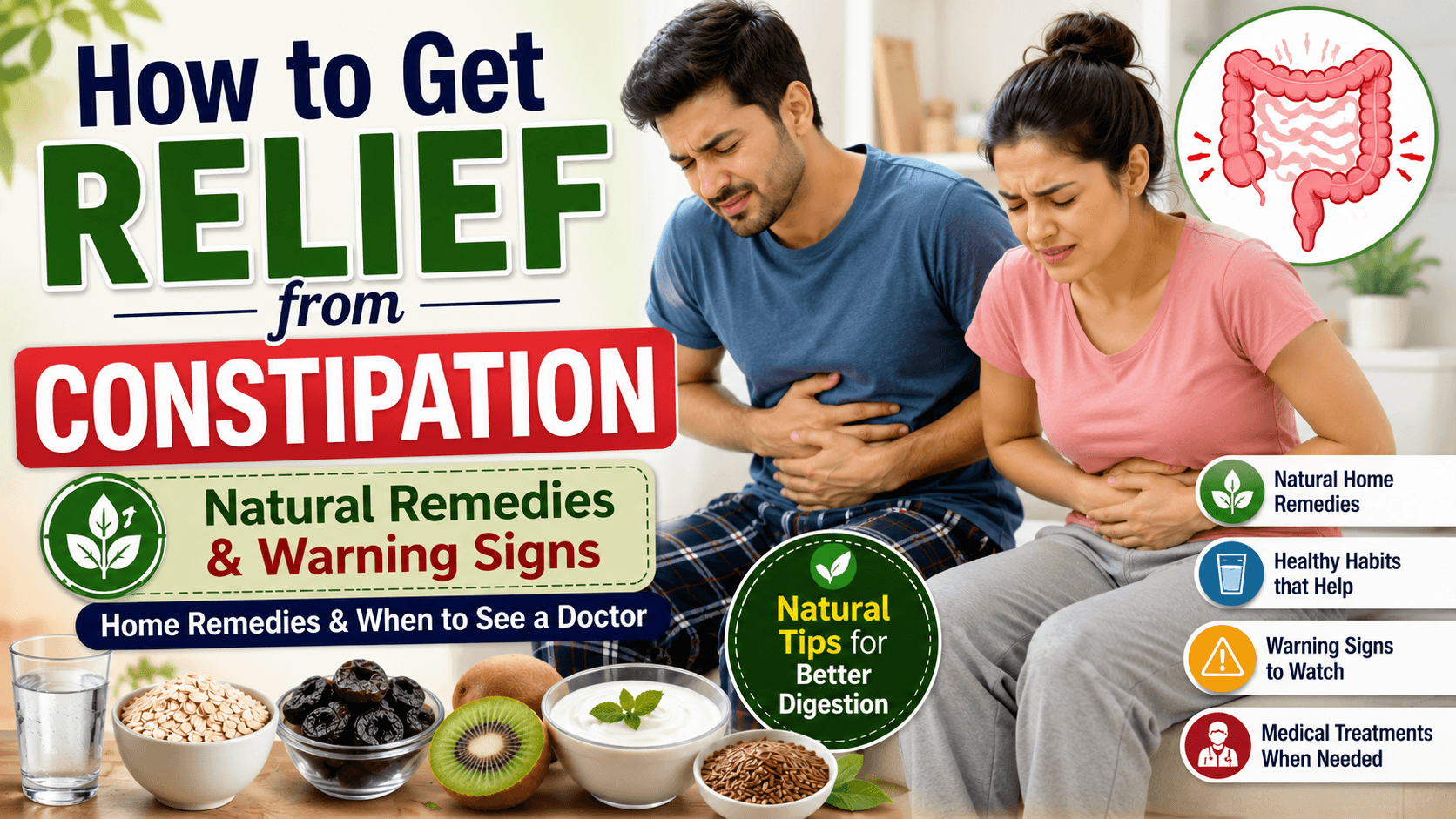
Natural Ways to Get Quick Relief from Constipation at Home
Constipation is a common digestive problem that affects people of all ages. It usually happens when bowel movements become less frequent or stools become hard, dry, and difficult to pass. Many cases of constipation can be relieved naturally by making simple changes to your daily routine. These healthy habits not only provide quick relief but also help prevent constipation from returning in the future.
Below are some of the most effective natural ways to get relief from constipation at home.
Drink Plenty of Water
Dehydration is one of the leading reasons why constipation develops. When your body lacks enough fluids, stools become harder and more difficult to pass, making bowel movements less comfortable. When your body does not get enough fluids, the colon absorbs more water from waste, making stools hard and difficult to pass.
To stay properly hydrated:
- Drink 8–10 glasses of water throughout the day.
- Begin your day by drinking a glass of warm water to help stimulate digestion and encourage regular bowel movements.
- Drink extra water if you exercise or spend time in hot weather.
- Limit sugary drinks and excessive caffeine if they contribute to dehydration.
Keeping your body hydrated helps soften stools and supports smoother bowel movements.
Increase Your Fiber Intake
Fiber adds bulk to stool and helps it move more easily through the digestive system. Gradually increasing fiber intake is one of the best natural ways to relieve constipation.
Good sources of fiber include:
- Fresh fruits such as apples, pears, berries, and oranges.
- Vegetables like broccoli, carrots, spinach, and green beans.
- Choose whole-grain foods such as oatmeal, brown rice, and whole-wheat bread to increase your daily fiber intake and support healthy digestion.
- Beans, lentils, and chickpeas.
- Fiber-rich nuts and seeds, including flaxseeds and chia seeds, can support healthy digestion and help promote regular bowel movements.
Increase fiber slowly and drink plenty of water to avoid bloating or discomfort.
Stay Physically Active
Regular exercise stimulates the muscles in your intestines, helping waste move through your digestive tract more efficiently.
Helpful activities include:
- Brisk walking for 20–30 minutes daily.
- Light jogging or cycling.
- Yoga poses that support digestion.
- Gentle stretching after long periods of sitting.
Even a short daily walk can improve bowel regularity.
Eat Foods That Support Healthy Digestion
Certain foods naturally encourage healthy bowel movements and improve digestive health.
Consider including:
- Yogurt with live probiotic cultures.
- Kefir or other fermented dairy products.
- Prunes and prune juice.
- Kiwi fruit.
- Papaya.
- Leafy green vegetables.
These foods help maintain a healthy balance of gut bacteria while supporting smoother digestion.
Establish a Regular Bathroom Routine
Ignoring the urge to have a bowel movement can make constipation worse over time.
Try these healthy habits:
- Go to the bathroom at the same time every day.
- Do not delay when you feel the urge.
- Relax and avoid rushing during bowel movements.
- Consider sitting on the toilet for a few minutes after breakfast, when digestion is naturally more active.
A consistent routine helps train your body to have regular bowel movements.
Reduce Processed and Low-Fiber Foods
Certain foods can slow down the digestive process and make constipation more likely, especially if they are low in fiber and highly processed.
Limit foods such as:
- Fast food.
- Fried foods.
- Processed snacks.
- White bread and refined flour products.
- Sugary desserts.
- Highly processed frozen meals.
Replacing these foods with fresh, fiber-rich options can improve digestive function.
Try Warm Fluids in the Morning
Many people find that warm beverages stimulate digestion.
Good options include:
- Warm water with lemon.
- Herbal tea.
- Warm milk (if tolerated).
- Warm vegetable soup.
These drinks may help encourage bowel movements, especially when consumed after waking up.
Manage Stress Levels
Stress can affect the digestive system and may contribute to constipation in some people.
Healthy stress-management techniques include:
- Deep breathing exercises.
- Meditation.
- Yoga.
- Spending time outdoors.
- Getting enough sleep each night.
Supporting both mental and physical well-being can improve digestive health.
Avoid Overusing Laxatives
Although laxatives may provide temporary relief, using them too often can make your intestines rely on them for bowel movements.
Instead:
- Focus on healthy eating habits.
- Drink enough water daily.
- Exercise regularly.
- Use over-the-counter laxatives only as directed or after consulting a healthcare professional.
Natural lifestyle changes are generally safer for long-term constipation management.
Be Patient and Stay Consistent
Natural methods may not provide instant results, and it can take a few days of consistent effort before you notice an improvement in your bowel movements. Staying consistent with healthy habits is the key to long-term digestive health.
Remember to:
- Eat balanced, fiber-rich meals every day.
- Stay hydrated.
- Exercise regularly.
- Maintain a regular bathroom schedule.
- Listen to your body’s natural signals.
Making these simple lifestyle changes can significantly reduce constipation and improve overall digestive comfort.
By following these natural methods consistently, many people experience easier bowel movements, less discomfort, and better digestive health without relying heavily on medications. However, if constipation lasts for several weeks, keeps returning, or is accompanied by severe abdominal pain, blood in the stool, unexplained weight loss, or persistent vomiting, it is important to seek medical evaluation promptly.
When Constipation Becomes Serious: Warning Signs and Medical Treatments
Most cases of constipation improve with healthy lifestyle changes such as eating more fiber, drinking enough water, and staying physically active. However, constipation is not always a minor problem. If it lasts for a long time, becomes severe, or is accompanied by other unusual symptoms, it may indicate an underlying medical condition that requires professional evaluation and treatment. Recognizing the warning signs early can help prevent complications and ensure you receive the right care.
Signs That Constipation May Be Serious
Occasional constipation is common, but certain symptoms should never be ignored. If you notice any of the following warning signs, it is important to consult a healthcare professional.
Watch for these symptoms:
- Constipation lasting more than two to three weeks.
- Severe or persistent abdominal pain.
- Blood in the stool or rectal bleeding.
- Unexplained weight loss.
- Vomiting along with constipation.
- Severe bloating that does not improve.
- Difficulty passing gas.
- Pencil-thin stools for an extended period.
- Sudden constipation without an obvious cause, especially in older adults.
These symptoms could be linked to digestive disorders or other medical conditions that require prompt diagnosis.
Common Medical Conditions That Can Cause Constipation
Chronic constipation is sometimes a symptom of another health problem rather than the condition itself.
Some possible underlying causes include:
- Irritable Bowel Syndrome (IBS), particularly the constipation-predominant type.
- Hypothyroidism, where an underactive thyroid slows body functions, including digestion.
- Diabetes, which can affect the nerves controlling the digestive system.
- Certain neurological conditions, including Parkinson’s disease and multiple sclerosis, can interfere with the nerves that control bowel function, increasing the risk of constipation.
- Colon or rectal disorders, including bowel obstruction or colorectal cancer.
- Pelvic floor dysfunction, where the muscles involved in bowel movements do not work properly.
Finding and treating the root cause of constipation is the key to achieving lasting relief and preventing the problem from returning.
How Doctors Diagnose Chronic Constipation
If constipation becomes persistent, your doctor will ask about your symptoms, medical history, diet, medications, and lifestyle.
Depending on your condition, they may recommend:
- A physical examination.
- Doctors may recommend blood tests to identify thyroid disorders or other health conditions that could be contributing to constipation.
- Stool tests if necessary.
- Imaging studies such as an abdominal X-ray or CT scan.
- A colonoscopy, especially for people over a certain age or those with warning signs like bleeding or unexplained weight loss.
- Specialized tests to evaluate bowel muscle function.
These tests help determine the exact cause and guide the most appropriate treatment plan.
Medical Treatments for Constipation
The most effective treatment for constipation depends on how severe the condition is and what is causing it in the first place. Your healthcare provider may recommend one or more of the following options.
Fiber Supplements
If your diet does not provide enough fiber, supplements may help increase stool bulk and improve bowel movements.
Common examples include:
- Psyllium husk.
- Methylcellulose.
- Wheat dextrin.
It is important to drink plenty of water while taking fiber supplements.
Stool Softeners
Stool softeners allow more water to enter the stool, making it easier to pass. These are often recommended after surgery or in situations where straining should be avoided.
Osmotic Laxatives
These medications draw water into the intestines to soften stool and stimulate bowel movements.
Examples include:
- Polyethylene glycol (PEG).
- Lactulose.
- Magnesium hydroxide.
They should be used according to medical advice, especially if symptoms persist.
Stimulant Laxatives
Stimulant laxatives encourage the muscles of the intestines to move stool through the digestive tract.
Common options include:
- Bisacodyl.
- Senna.
These medicines are generally intended for short-term use because frequent use may reduce normal bowel function over time.
Prescription Medications
For chronic constipation that does not improve with lifestyle changes or over-the-counter treatments, doctors may prescribe medications that increase fluid secretion in the intestines or improve bowel movement activity.
Prescription medicines should only be used under medical supervision.
Lifestyle Changes Still Matter
Even if medical treatment is necessary, healthy daily habits remain an important part of recovery.
Doctors often recommend:
- Eating plenty of fruits, vegetables, and whole grains.
- Drinking enough water throughout the day.
- Exercising regularly.
- Go to the bathroom as soon as you feel the urge instead of delaying, as holding it in can make constipation worse over time.
- Maintaining a consistent bathroom schedule.
- Limiting processed and low-fiber foods.
These habits support the effectiveness of medical treatment and help reduce the chance of constipation returning.
When You Should Seek Immediate Medical Care
Although constipation is usually not an emergency, some symptoms require urgent medical attention.
Seek immediate medical care if you experience:
- Severe abdominal pain that becomes worse.
- Not being able to pass stool or release gas for several days may be a sign of a serious digestive problem and should not be ignored.
- Persistent vomiting.
- Heavy rectal bleeding.
- High fever along with constipation.
- Sudden swelling of the abdomen.
- Signs of dehydration, such as dizziness or confusion.
These symptoms could be a sign of a more serious health condition and should be evaluated by a healthcare professional as soon as possible for proper diagnosis and timely treatment.
Conclusion
Constipation is a frequent digestive issue, but it can often be avoided or improved by making healthy lifestyle changes and following good daily habits. Drinking enough water, eating fiber-rich foods, staying physically active, and maintaining a regular bathroom routine are simple yet effective ways to support healthy bowel movements. These natural lifestyle changes not only provide relief from constipation but also improve overall digestive health and well-being.
At the same time, it is important not to ignore constipation that becomes persistent or is accompanied by symptoms such as severe abdominal pain, blood in the stool, unexplained weight loss, vomiting, or prolonged difficulty passing stool. These warning signs could be linked to an underlying health problem and should be assessed by a medical professional to ensure the right diagnosis and treatment. Seeking medical advice early can help prevent complications and ensure the correct diagnosis.
The key to long-term relief is consistency. A balanced diet, proper hydration, regular exercise, and healthy bowel habits can significantly reduce the risk of constipation and promote better digestive function. If home remedies do not improve your symptoms or constipation continues to return frequently, consult a qualified healthcare professional for personalized advice and treatment. Looking after your digestive system today can help you enjoy better comfort, support your overall well-being, and improve your quality of life in the long run.
Frequently Asked Questions
Q1. What is the fastest natural way to relieve constipation at home?
A: The fastest natural ways to relieve constipation include drinking plenty of water, eating fiber-rich foods, taking a short walk, and drinking warm water or herbal tea in the morning. These simple habits can help soften stools and promote regular bowel movements.
Q2. Which foods help relieve constipation naturally?
A: Foods that may help relieve constipation include apples, pears, berries, leafy green vegetables, oats, whole grains, beans, lentils, prunes, kiwi, papaya, yogurt with probiotics, and flaxseeds. These foods are rich in fiber and support healthy digestion.
Q3. When should I see a doctor for constipation?
A: You should seek medical advice if constipation lasts more than two to three weeks, keeps returning, or is accompanied by severe abdominal pain, blood in the stool, vomiting, unexplained weight loss, or difficulty passing gas. These symptoms may indicate a more serious underlying condition.
Q4. Can drinking more water help with constipation?
A: Yes. Drinking enough water helps keep stools soft and easier to pass. Dehydration is one of the most common causes of constipation, so staying well hydrated is essential for maintaining healthy bowel movements.
Q5. Are laxatives safe for treating constipation?
A: Laxatives can provide temporary relief, but they should not be used regularly without medical advice. Overusing laxatives may reduce the bowel’s natural ability to function properly. Long-term constipation is best managed through healthy eating, regular exercise, proper hydration, and guidance from a healthcare professional if needed.