
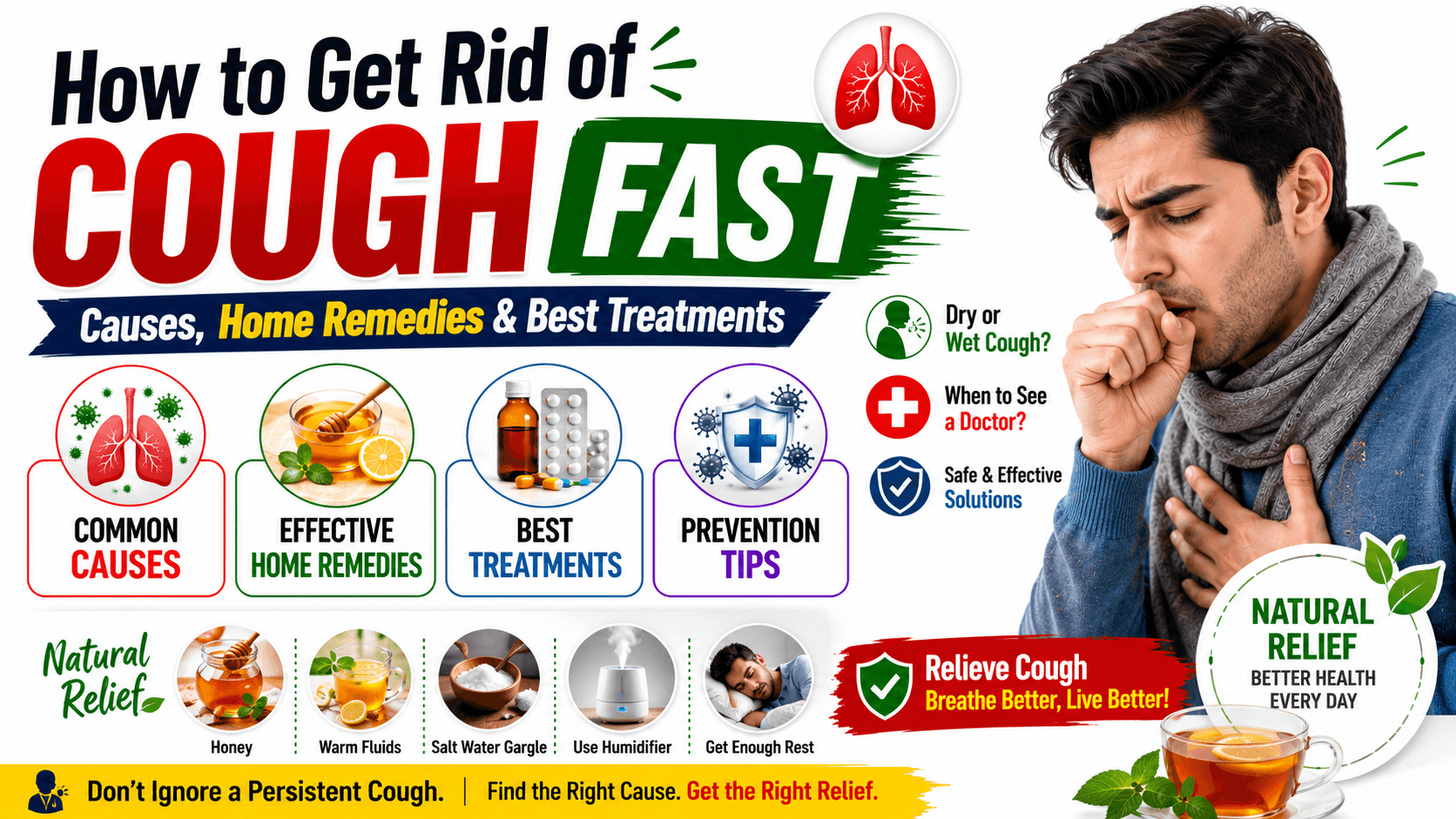
What Causes a Cough? Common Reasons You Should Know
A cough is your body’s natural way of protecting your lungs and throat. It helps remove dust, mucus, germs, and other irritants from your airways. While an occasional cough is normal, a cough that lasts for several days may be a sign of an underlying health problem.
Common Causes of a Cough
- Common Cold or Flu: Viral infections are the most common reason for a cough. You may also experience a sore throat, runny nose, fever, and body aches.
- Allergies: Dust, pollen, pet dander, and mold can irritate your throat and airways, leading to frequent coughing, sneezing, and itchy eyes.
- Smoking: Cigarette smoke damages the lungs and irritates the airways, often causing a long-lasting cough, commonly known as a smoker’s cough.
- Air Pollution: Breathing polluted air, dust, or chemical fumes can trigger coughing, especially in people with sensitive lungs.
- Asthma: People with asthma often develop a dry cough that becomes worse at night, during exercise, or after exposure to cold air.
- Acid Reflux (GERD): When stomach acid flows back into the throat, it can cause irritation and a persistent cough, particularly after meals or while lying down.
- Respiratory Infections: Conditions such as bronchitis or pneumonia can cause a severe cough along with fever, chest discomfort, and mucus production.
When Should You See a Doctor?
Seek medical attention if your cough:
- Lasts for more than three weeks.
- Produces blood.
- Causes difficulty breathing.
- Is accompanied by a high fever.
- Causes severe chest pain.
- Gets worse instead of improving.
How to Get Rid of a Cough Fast: Effective Home Remedies
Most coughs caused by a cold, mild viral infection, or throat irritation can be managed at home. While there is no instant cure, the right home remedies can help soothe your throat, reduce irritation, and speed up recovery. If your cough is mild, try the following methods before using medication.
Drink Plenty of Warm Fluids
Warm drinks help keep your throat moist and loosen mucus, making it easier to cough it out. Good options include warm water, herbal tea, clear soup, and warm lemon water.
Try Honey for Natural Relief
Honey is widely recognized as a natural ingredient that can help soothe coughs by calming throat irritation and providing gentle relief from persistent coughing. It coats the throat, reduces irritation, and may help calm nighttime coughing. Mix one or two teaspoons of honey into warm water or herbal tea. Honey should never be given to infants younger than 12 months, as it may pose a serious health risk.
Gargle with Warm Salt Water
Salt water helps reduce throat swelling and removes mucus. Mix half a teaspoon of salt in a glass of warm water and gargle for 30 seconds several times a day.
Stay Hydrated
Drinking enough water helps thin mucus, making it easier to clear your airways. Proper hydration also prevents your throat from becoming dry, which can make coughing worse.
Use a Humidifier
Dry air can irritate the throat and increase coughing. Using a humidifier or taking a warm shower can add moisture to the air and make breathing more comfortable.
Get Enough Rest
Your body needs time to fight the infection. Sleeping well and avoiding heavy physical activity can help your immune system recover faster.
Avoid Smoke and Other Irritants
Stay away from cigarette smoke, dust, strong perfumes, and chemical fumes, as these can make your cough worse and slow down healing.
Eat Foods That Support Recovery
Warm soups, fruits rich in vitamin C, vegetables, and protein-rich foods can support your immune system. Avoid very spicy or oily foods if they irritate your throat.
Know When Home Remedies Are Not Enough
If your cough lasts longer than three weeks, becomes severe, causes breathing problems, chest pain, high fever, or you cough up blood, home remedies may not be enough. In these cases, you should seek medical advice to identify the underlying cause and receive the appropriate treatment.
Best Medical Treatments and Medicines for Cough Relief
If home remedies do not provide enough relief, medical treatments and cough medicines may help depending on the cause of your cough. It is important to remember that there is no single medicine that works for every type of cough. The right treatment depends on whether your cough is dry, wet, caused by allergies, or linked to an infection.
Cough Suppressants
For a dry cough that keeps you awake or causes throat irritation, doctors may recommend cough suppressants. These medicines help reduce the urge to cough, especially during the night, allowing you to rest more comfortably.
Expectorants
If you have a wet cough with thick mucus, expectorants can help thin the mucus, making it easier to cough out. This helps clear your airways and may reduce chest congestion.
Lozenges and Throat Sprays
Medicated throat lozenges and throat sprays can temporarily soothe a sore or irritated throat. They are especially helpful if your cough is caused by throat dryness or mild irritation.
Allergy Medicines
If allergies are causing your cough, a doctor may recommend antihistamines or other allergy medications. These medicines help reduce the body’s allergic response, relieving coughing, sneezing, and a runny nose.
Inhalers for Asthma
People with asthma-related coughs may need inhalers to open the airways and reduce inflammation. These medicines should only be used as prescribed by a healthcare professional.
Antibiotics
Antibiotics are ineffective against viral illnesses like the common cold and influenza, as they are designed to treat bacterial infections, not viruses. They are only effective for bacterial infections and should be taken only when prescribed by a doctor. Taking antibiotics unnecessarily can contribute to antibiotic resistance and may cause unwanted side effects.
Follow the Medicine Instructions
Always take medicines exactly as directed on the label or by your healthcare provider. Do not exceed the recommended dosage, and avoid giving adult cough medicines to young children unless advised by a doctor.
If your cough continues for more than three weeks, keeps getting worse, or is accompanied by symptoms such as a high fever, chest pain, difficulty breathing, or coughing up blood, seek medical attention promptly. A healthcare professional can determine the underlying cause and recommend the most appropriate treatment for your condition.
When Is a Cough Serious? Warning Signs That Need Medical Attention
Most coughs caused by the common cold, mild viral infections, or allergies improve within a few days or weeks. However, not every cough is harmless. In some cases, a cough can be a sign of a more serious health condition that requires medical attention. Knowing the warning signs can help you decide when it is time to see a doctor instead of relying only on home remedies.
Your Cough Lasts More Than Three Weeks
A cough that continues for more than three weeks should not be ignored. A long-lasting cough may be linked to asthma, acid reflux (GERD), bronchitis, or another underlying condition that needs proper diagnosis and treatment.
You Have Trouble Breathing
If your cough is accompanied by shortness of breath, wheezing, or difficulty breathing, seek medical care immediately. These symptoms could indicate asthma, pneumonia, or another serious lung problem.
You Have a High Fever
A cough along with a high fever, chills, or body aches may be a sign of a bacterial or viral infection that requires medical evaluation. If the fever does not improve after a couple of days, contact your healthcare provider.
You Cough Up Blood
Coughing up blood is never considered normal. Even if the amount is small, you should seek medical attention as soon as possible because it may be caused by a serious lung condition.
You Feel Chest Pain
Chest pain during coughing can sometimes result from strained muscles, but it may also indicate a more serious condition affecting the lungs or heart. If the pain is severe, persistent, or occurs along with breathing difficulties, do not delay getting medical help.
The Cough Keeps Getting Worse
A cough that becomes more frequent, more painful, or starts producing large amounts of thick, discolored mucus should be checked by a doctor. Worsening symptoms may mean that the infection or underlying condition is progressing.
Extra Care for Children and Older Adults
Young children, older adults, pregnant women, and people with weakened immune systems should be evaluated sooner if they develop a persistent or severe cough. These groups are more likely to experience complications from respiratory illnesses.
Paying attention to these warning signs can help you receive treatment before the condition becomes more serious. If you are unsure about your symptoms or your cough does not improve despite proper care, it is always safer to consult a qualified healthcare professional for an accurate diagnosis and appropriate treatment.
How to Prevent Coughs and Keep Your Respiratory System Healthy
Preventing a cough is often easier than treating one. While it is impossible to avoid every cold or infection, following a few healthy habits can greatly reduce your risk of developing a cough and help keep your lungs and airways in good condition.
Wash Your Hands Regularly
Viruses and bacteria can spread through contaminated surfaces and close contact with infected people. Washing your hands with soap and water for at least 20 seconds is one of the simplest and most effective ways to prevent respiratory infections.
Stay Away from Sick People
If someone around you has a cold, flu, or another contagious illness, try to avoid close contact whenever possible. This can reduce your chances of catching the infection and developing a cough.
Avoid Smoking and Secondhand Smoke
Smoking damages the lungs and irritates the airways, making coughing more common. Even breathing in secondhand smoke can trigger coughing and increase the risk of respiratory problems. Quitting smoking and avoiding smoky environments can significantly improve lung health.
Drink Plenty of Water
Staying well hydrated helps keep your throat and airways moist. Drinking enough water also helps thin mucus, making it easier for your body to clear it naturally.
Eat a Healthy, Balanced Diet
A nutritious diet supports a strong immune system. Include plenty of fruits, vegetables, whole grains, lean proteins, and foods rich in vitamins and minerals. These essential nutrients strengthen your immune system, allowing your body to defend itself against infections more efficiently.
Exercise Regularly
Regular physical activity improves lung function, strengthens your immune system, and supports overall health. Even simple activities such as walking, cycling, or light stretching can be beneficial when done consistently.
Keep Your Home Clean
Dust, mold, and pet dander can irritate the airways and trigger coughing, especially in people with allergies. Cleaning your home regularly, improving ventilation, and using an air purifier if needed can help reduce these irritants.
Manage Allergies and Other Health Conditions
If you have allergies, asthma, or acid reflux (GERD), following your treatment plan can help prevent coughing episodes. Keeping these conditions under control reduces irritation in the airways and throat.
By practicing these healthy habits every day, you can lower your risk of developing a cough and protect your respiratory system. If you experience a persistent cough despite taking preventive measures, consult a healthcare professional to determine the underlying cause and receive appropriate treatment.
Conclusion
A cough is a common symptom that can be caused by many different factors, including viral infections, allergies, smoking, asthma, or acid reflux. In most cases, it is not serious and improves with proper rest, home remedies, and good self-care. Simple steps such as drinking warm fluids, staying hydrated, using honey for throat relief, and getting enough sleep can help reduce coughing and support a faster recovery.
If home remedies are not enough, the right medical treatment depends on the cause of the cough. Dry and wet coughs require different approaches, and medicines should always be used according to the instructions or a healthcare professional’s advice. It is also important to remember that antibiotics are only effective against bacterial infections and should never be taken without a doctor’s prescription.
While many coughs improve on their own, you should never ignore warning signs such as a cough lasting longer than three weeks, difficulty breathing, chest pain, coughing up blood, or a high fever. These symptoms may indicate a more serious condition that requires prompt medical attention.
The best way to reduce your chances of getting a cough is to maintain healthy daily habits. Washing your hands regularly, avoiding cigarette smoke, eating a balanced diet, staying physically active, drinking enough water, and managing existing health conditions can all help keep your lungs healthy and your immune system strong.
By understanding the causes of a cough, using the right treatment, recognizing serious symptoms, and following preventive measures, you can recover more quickly and protect your respiratory health in the future. If your symptoms persist or become worse, consult a qualified healthcare professional for an accurate diagnosis and personalized treatment.
Frequently Asked Questions
Q1. What is the fastest way to get rid of a cough?
A: The fastest way to relieve a cough depends on its cause. Drinking warm fluids, staying hydrated, using honey (for adults and children over one year), getting enough rest, and avoiding smoke can help ease mild coughs. If your cough is severe or persistent, consult a healthcare professional for the right treatment.
Q2. How long does a cough usually last?
A: A cough caused by the common cold or flu often improves within 1 to 3 weeks. However, if your cough lasts longer than three weeks or continues to get worse, you should see a doctor to determine the underlying cause.
Q3. Should I take antibiotics for a cough?
A: Not always. Most coughs are caused by viral infections, and antibiotics do not work against viruses. Antibiotics should only be used when a doctor confirms that your cough is caused by a bacterial infection.
Q4. When should I see a doctor for a cough?
A: You should seek medical attention if your cough lasts for more than three weeks, causes difficulty breathing, chest pain, a high fever, coughing up blood, or produces large amounts of thick mucus. These symptoms may require medical evaluation.
Q5. Can allergies cause a persistent cough?
A: Yes. Allergies to pollen, dust, pet dander, or mold can irritate your throat and airways, leading to a persistent cough. Managing your allergies and avoiding triggers can help reduce coughing.
Q6. How can I prevent getting a cough?
A: You can lower your risk by washing your hands regularly, avoiding smoking and secondhand smoke, drinking enough water, eating a healthy diet, exercising regularly, and staying away from people who have contagious respiratory infections. These habits help keep your lungs healthy and support a strong immune system.