
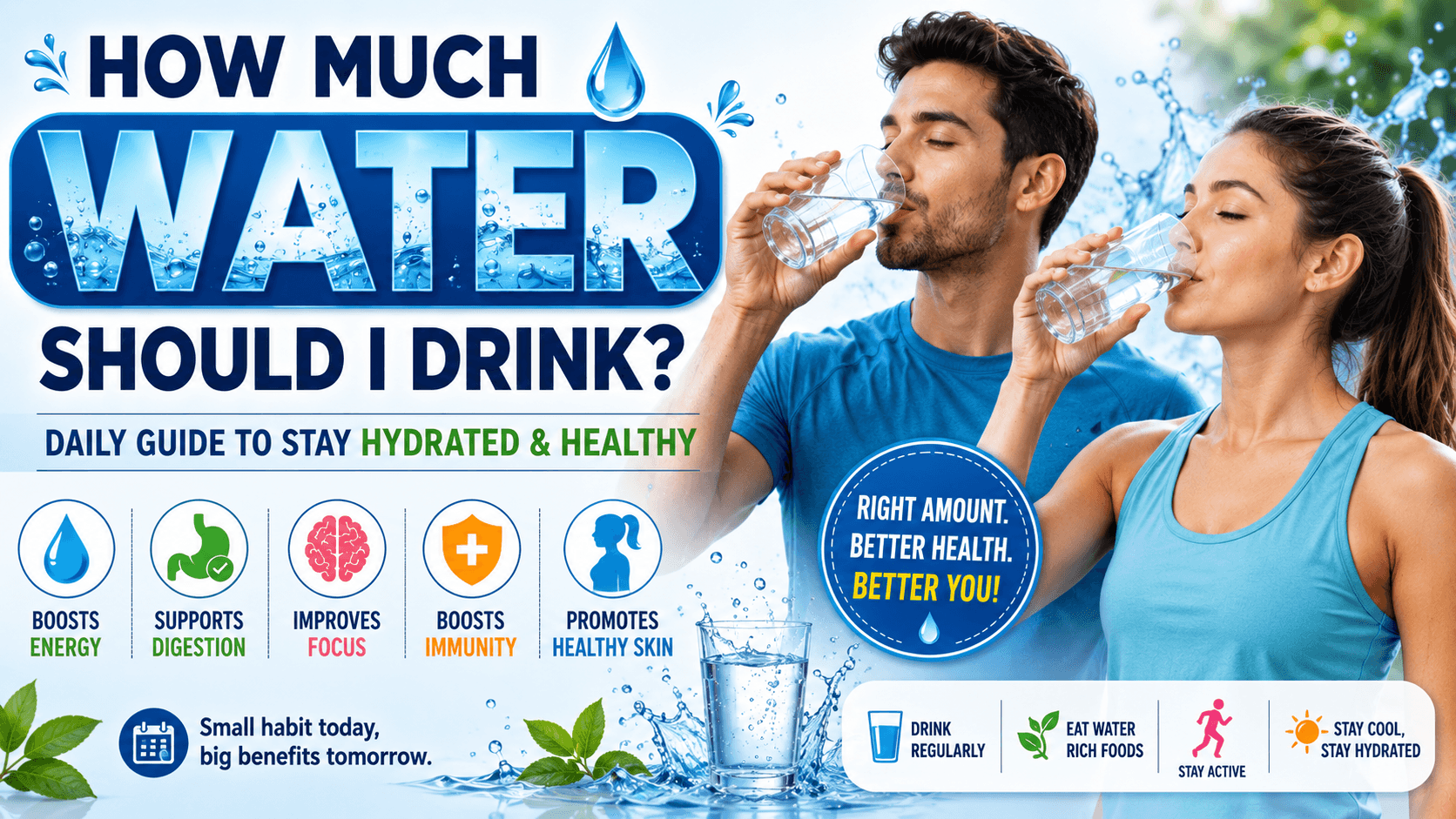
How Much Water Should You Drink Each Day? Factors That Affect Your Hydration Needs
There is no single amount of water that is perfect for everyone. The right daily water intake depends on several factors, including your age, body size, activity level, weather, and overall health. While many people have heard the “8 glasses a day” rule, your personal hydration needs may be higher or lower.
Factors That Affect How Much Water You Need
Your body loses water throughout the day through breathing, sweating, and urination. The amount you need to replace depends on several important factors:
- Age: Children, adults, and older adults all have different hydration needs.
- Body Weight: Larger individuals generally require more water than smaller individuals.
- Physical Activity: Exercise increases sweating, so active people usually need extra fluids.
- Weather: Hot and humid conditions cause more fluid loss through sweat.
- Pregnancy and Breastfeeding: Women who are pregnant or breastfeeding often need additional water.
- Health Conditions: Fever, vomiting, diarrhea, or certain medical conditions can increase fluid requirements.
General Daily Water Intake Guidelines
Although individual needs vary, these general recommendations can be helpful:
- Adult women: Around 2.7 liters (about 11.5 cups) of total fluids per day.
- Adult men: Around 3.7 liters (about 15.5 cups) of total fluids per day.
- Children and teenagers: Water needs vary based on age, growth, and activity level.
Remember that these amounts include fluids from water, other beverages, and water-rich foods such as fruits and vegetables.
When You Should Drink More Water
Some situations increase your body’s need for fluids. You may need to drink extra water if you:
- Exercise regularly or play sports.
- Spend time outdoors in hot weather.
- Have a physically demanding job.
- Experience excessive sweating.
- Have a fever, vomiting, or diarrhea.
- Travel to high-altitude locations.
In these situations, drinking water regularly throughout the day can help replace lost fluids and support normal body function.
Listen to Your Body
Instead of focusing only on a fixed number of glasses, pay attention to your body’s signals.
Signs that you are likely well hydrated include:
- Light yellow or pale-colored urine.
- Feeling energetic throughout the day.
- Rarely feeling thirsty.
- Normal concentration and alertness.
- Moist lips and mouth.
Signs that you may need more water include:
- Dark yellow urine.
- Dry mouth or lips.
- Feeling thirsty.
- Headache.
- Fatigue or dizziness.
These signs can help you adjust your water intake based on your daily needs.
Easy Tips to Stay Hydrated
Building healthy hydration habits is easier than trying to drink a large amount of water all at once.
- Start your morning with a glass of water.
- Carry a reusable water bottle when you leave home.
- Drink water before, during, and after exercise.
- Eat water-rich foods like watermelon, cucumber, oranges, tomatoes, and strawberries.
- Sip water regularly instead of waiting until you feel very thirsty.
- Use phone alerts or simple daily reminders to help you remember to drink water regularly if you tend to forget.
Can You Drink Too Much Water?
Although uncommon, drinking excessive amounts of water in a short period can be harmful. Too much water may lower the sodium level in your blood, a condition known as water intoxication or hyponatremia. For most healthy people, simply drinking according to thirst and increasing intake during hot weather or physical activity is a safe approach.
The goal is to stay consistently hydrated rather than forcing yourself to drink large amounts of water unnecessarily. By understanding the factors that influence your hydration needs and paying attention to your body’s signals, you can maintain healthy water intake and support your overall well-being every day.
Signs You’re Not Drinking Enough Water and Simple Ways to Stay Properly Hydrated
Water is essential for nearly every function in your body. It helps regulate body temperature, supports digestion, transports nutrients, and keeps your organs working properly. When you do not drink enough water, your body can quickly show signs that it needs more fluids. Recognizing these warning signs early and developing healthy hydration habits can help you stay active and feel your best.
Warning Signs That You Need to Drink More Water
Your body often gives clear signals when it needs more water. Watch for these common signs:
- Constant Thirst: Feeling thirsty is one of the earliest signs that your body needs fluids.
- Dark Yellow Urine: Urine that is light yellow often indicates good hydration, while dark yellow urine can be a sign that your body needs more fluids.
- Dry Mouth and Chapped Lips: A lack of moisture in your mouth or cracked lips can be a sign that you need to drink more water.
- Headaches: Mild dehydration may contribute to headaches in some people.
- Fatigue: Not drinking enough water can leave you feeling tired or lacking energy.
- Dizziness or Lightheadedness: Fluid loss may affect blood circulation and make you feel dizzy.
- Dry Skin: Your skin may appear less hydrated when your fluid intake is too low.
- Difficulty Concentrating: Even mild dehydration can sometimes affect focus and mental performance.
Why Staying Hydrated Is Important
Proper hydration supports many important body functions and helps you feel healthier throughout the day.
Some of the benefits of drinking enough water include:
- Helps regulate body temperature.
- Supports healthy digestion.
- Keeps joints lubricated.
- Delivers nutrients and oxygen throughout the body.
- Supports kidney function.
- Helps maintain healthy skin.
- May improve physical performance during exercise.
- Supports normal brain function and concentration.
Simple Ways to Stay Properly Hydrated
Staying hydrated does not have to be difficult. Small daily habits can make a big difference.
- Start Your Morning with Water: Make it a habit to drink a glass of water shortly after you wake up to help rehydrate your body after a night’s sleep.
- Carry a reusable water bottle: Keeping water nearby makes it easier to drink regularly.
- Drink before you feel thirsty: Thirst is often a sign that your body already needs fluids.
- Take small sips throughout the day: Drinking consistently is often easier than drinking large amounts at once.
- Drink extra water during exercise: Replace fluids lost through sweat before, during, and after physical activity.
- Increase fluids in hot weather: High temperatures increase water loss through sweating.
- Eat water-rich foods: Fruits and vegetables can contribute to your daily fluid intake.
Foods That Help Keep You Hydrated
Many foods contain a high percentage of water and can support your daily hydration.
Examples include:
- Watermelon
- Cucumber
- Strawberries
- Oranges
- Tomatoes
- Lettuce
- Celery
- Zucchini
Including these foods as part of a balanced diet can help you stay hydrated naturally.
When to Pay Extra Attention to Hydration
Certain situations increase your body’s need for fluids.
You should pay closer attention to your water intake if you:
- Exercise regularly.
- Spend time outdoors in hot or humid weather.
- Have a fever, vomiting, or diarrhea.
- Are pregnant or breastfeeding.
- Work in physically demanding conditions.
- Travel to high-altitude locations.
In these situations, drinking water more frequently can help replace the fluids your body loses.
Build Healthy Hydration Habits
Making hydration part of your daily routine is one of the easiest ways to support your overall health. Instead of waiting until you feel very thirsty, drink water consistently throughout the day. Combine regular water intake with a healthy diet that includes water-rich fruits and vegetables.
By recognizing the early signs of dehydration and following simple hydration habits, you can help your body function efficiently, maintain energy levels, and support your overall well-being every day.
Conclusion
Drinking enough water is one of the simplest yet most important habits for maintaining good health. However, there is no single amount of water that is right for everyone. Your daily water needs depend on factors such as your age, body weight, physical activity, climate, and overall health. Instead of following a fixed rule, it is better to pay attention to your body’s natural signals and adjust your fluid intake when needed.
Recognizing the early signs of dehydration, such as thirst, dark yellow urine, dry mouth, fatigue, or headaches, can help you take action before dehydration becomes more serious. Developing simple habits like carrying a reusable water bottle, drinking water regularly throughout the day, and eating water-rich fruits and vegetables can make it much easier to stay properly hydrated.
Remember that both too little and too much water can affect your health. The goal is to maintain a healthy balance by drinking enough fluids to support your body’s daily functions without overdoing it. By understanding your personal hydration needs and making water a regular part of your daily routine, you can improve your energy levels, support digestion, help regulate body temperature, and promote your overall well-being. Small, consistent hydration habits today can have a positive impact on your health for years to come.
➤ Tap here to explore effective remedies for common health issues along with practical tips to keep your body strong and healthy.
https://hinditipsonline.com/category/health-tips/
➤ If you’d rather watch than read, just click the link below to enjoy the full video.
https://youtu.be/3BgvnAIENbk?si=khmsazhSN2ScCDTA
Frequently Asked Questions
Q1. How much water should I drink every day?
A: There is no single amount that works for everyone. Most adults need around 2–3 liters of fluids daily, but your ideal intake depends on your age, body weight, activity level, climate, and overall health.
Q2. Is drinking 8 glasses of water a day enough?
A: The “8 glasses a day” rule is a general guideline, not a strict requirement. Some people may need more water, especially if they exercise regularly, live in a hot climate, or have certain health conditions.
Q3. What are the signs that I am not drinking enough water?
A: Common signs of dehydration include feeling thirsty, dark yellow urine, dry mouth, headaches, fatigue, dizziness, and difficulty concentrating. Drinking water regularly can help prevent these symptoms.
Q4. Can coffee and tea count toward my daily water intake?
A: Yes. Tea, coffee, milk, and other beverages contribute to your daily fluid intake. Water-rich foods such as watermelon, cucumber, oranges, and tomatoes also help keep you hydrated, although plain water should remain your main source of hydration.
Q5. Should I drink more water during exercise or hot weather?
A: Yes. Physical activity and high temperatures increase fluid loss through sweat. Drinking extra water before, during, and after exercise helps replace lost fluids and supports proper hydration.
Q6. Can drinking too much water be harmful?
A: Yes. Drinking excessive amounts of water in a short period can lead to a rare but serious condition called hyponatremia, where sodium levels in the blood become too low. It is best to drink water according to your body’s needs rather than forcing large amounts.