
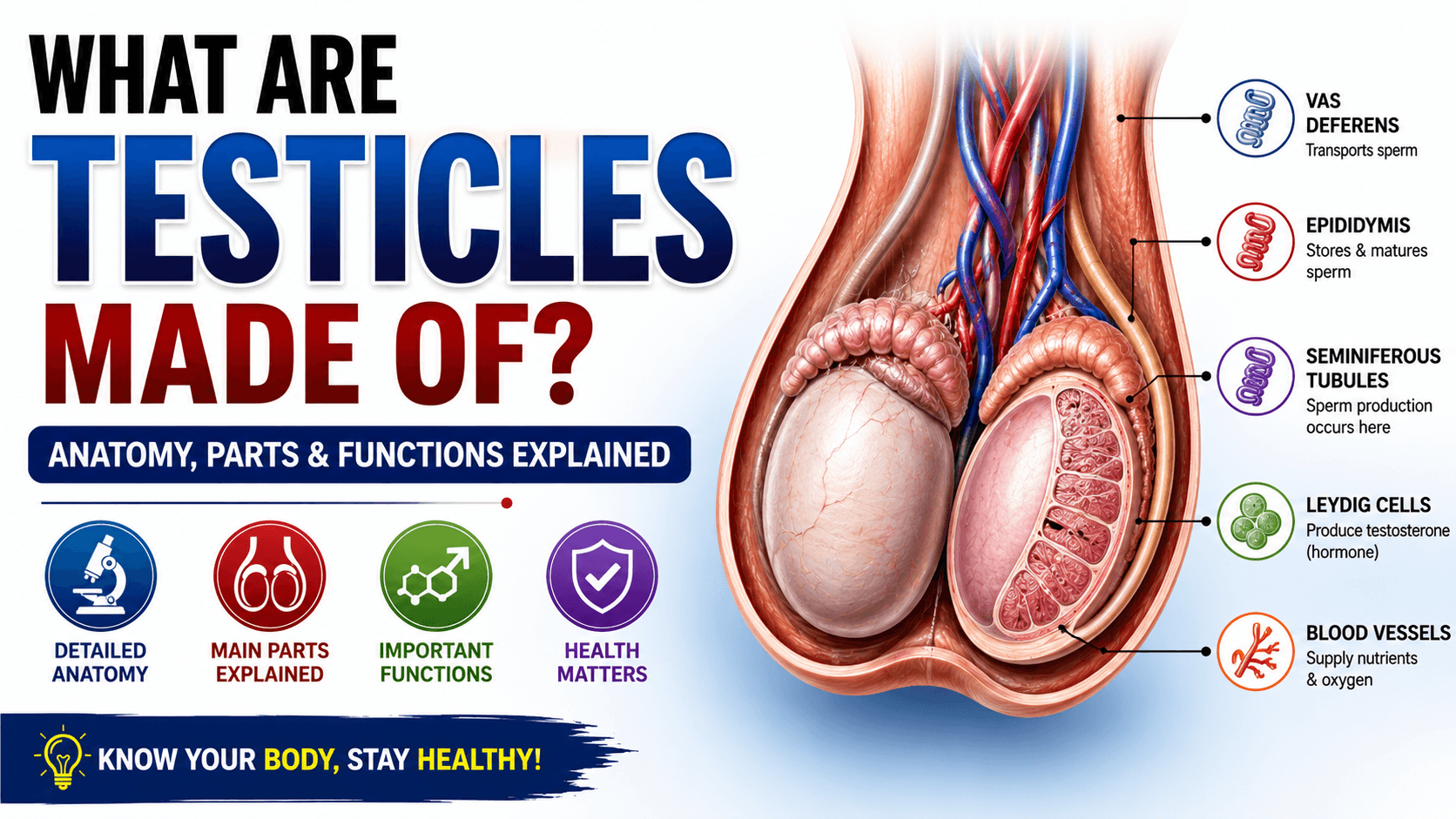
What Are Testicles Made Of? A Complete Look at Their Anatomy
The testicles, also known as the testes, are two oval-shaped reproductive organs that play a vital role in the male reproductive system. Although they appear simple from the outside, they contain several specialized tissues, cells, blood vessels, and microscopic structures that work together to produce sperm and testosterone. Understanding their anatomy makes it easier to see how male fertility and reproductive health are maintained.
The Main Parts That Make Up the Testicles
The testicles are made up of several important components, including:
- Tunica albuginea – A tough protective outer covering that gives the testicle its shape.
- Lobules – Hundreds of small compartments located inside each testicle.
- Seminiferous tubules – Specialized microscopic tubes that are the primary site of sperm production.
- Sertoli cells – Cells that nourish and protect developing sperm.
- Leydig cells – Cells responsible for producing testosterone.
- Blood vessels – Carry oxygen-rich blood to the tissues and remove waste materials to support healthy function.
- Nerves and lymphatic vessels – Help regulate function and maintain healthy tissues.
Each of these structures has a unique role, and together they keep the testicles functioning properly.
The Protective Outer Layer
The outer surface of each testicle is covered by a strong membrane called the tunica albuginea. This tough layer protects the delicate tissues inside from injury while helping the testicle maintain its oval shape. Beneath this covering, the testicle is divided into hundreds of small sections known as lobules.
Seminiferous Tubules: Where Sperm Are Made
Inside every lobule are tightly coiled seminiferous tubules, which make up most of the testicle’s internal tissue. These microscopic tubes are the primary site of sperm production.
Key facts about seminiferous tubules:
- They occupy most of the space inside the testicles.
- Millions of sperm are produced here every day.
- Sperm develop through several stages before becoming fully mature.
- The tubules provide the ideal environment for healthy sperm development.
Sertoli Cells: The “Nurse Cells”
Within the seminiferous tubules are specialized Sertoli cells, often called nurse cells because they support developing sperm throughout their growth.
Their main functions include:
- Supplying nutrients to immature sperm cells.
- Protecting sperm from harmful substances.
- Removing waste materials.
- Maintaining a stable environment for sperm production.
Without Sertoli cells, normal sperm development would not be possible.
Leydig Cells: The Testosterone Factories
Between the seminiferous tubules lies interstitial tissue, which contains Leydig cells. Leydig cells create testosterone, an essential hormone that supports male fertility and physical development.
Testosterone helps with:
- Sperm production.
- Muscle growth and strength.
- Bone health.
- Deepening of the voice during puberty.
- Growth of facial and body hair.
- Maintaining sexual health and libido.
Blood Vessels and Nerves
The testicles contain an extensive network of blood vessels that constantly supply oxygen and nutrients while removing waste products. Healthy blood circulation is essential because the cells inside the testicles are highly active.
The nerves inside the testicles help:
- Control blood flow.
- Provide sensation.
- Support normal reproductive function.
Lymphatic Vessels
A vital component of the testicular anatomy is the lymphatic network, which plays an important role in fluid balance, waste removal, and immune protection.
Its functions include:
- Draining excess fluid.
- Supporting the immune system.
- Keeping the tissues healthy.
- Removing waste products.
Connection to the Epididymis
Each testicle is attached to a tightly coiled tube called the epididymis.
After sperm are produced inside the seminiferous tubules, they move into the epididymis where they:
- Continue to mature.
- Gain the ability to swim.
- Are stored until ejaculation.
Why the Testicles Stay Outside the Body
The testicles are located inside the scrotum rather than inside the abdomen because sperm production requires a temperature slightly lower than normal body temperature.
The muscles of the scrotum automatically:
- Pull the testicles closer to the body in cold weather.
- Move them farther away when it is warm.
This natural temperature control helps maintain healthy sperm production.
A Complex Structure Working Together
Although the testicles are relatively small, they are made of a highly organized combination of:
- Protective tissues.
- Sperm-producing tubules.
- Hormone-producing cells.
- Blood vessels.
- Nerves.
- Connective tissues.
- Lymphatic vessels.
All of these structures work together continuously to support fertility, hormone production, and overall male reproductive health.
The Main Cells and Parts Inside the Testicles Explained
While the testicles may look like simple organs from the outside, their interior is made up of several highly specialized cells and structures that work together to support male fertility and hormone production. Every cell inside the testicles has a unique function, from creating sperm to producing testosterone and protecting developing reproductive cells. Understanding these internal parts helps explain how the male reproductive system works efficiently every day.
The Most Important Cells Inside the Testicles
The testicles contain several specialized types of cells, each performing a different job:
- Germ cells – Develop into mature sperm.
- Sertoli cells – Help developing sperm grow by supplying nutrients and a protected environment.
- Leydig cells – Produce testosterone.
- Peritubular myoid cells – Help move sperm through the seminiferous tubules.
- Blood vessel cells – Deliver oxygen and nutrients.
- Immune cells – Help protect the testicles from infections.
Each of these cells is essential for maintaining healthy reproductive function.
Germ Cells: The Beginning of Sperm Life
The most important cells inside the testicles are germ cells, also called reproductive cells. These cells are responsible for producing sperm through a process known as spermatogenesis.
Germ cells develop in several stages:
- Spermatogonia – The earliest reproductive cells.
- Primary spermatocytes – Cells that begin dividing.
- Secondary spermatocytes – Intermediate stage.
- Spermatids – Nearly mature sperm cells.
- Spermatozoa – Fully developed sperm.
This complete process usually takes around 64 to 74 days before mature sperm are ready to move into the epididymis.
Sertoli Cells: Supporting Every Stage of Sperm Development
Inside the seminiferous tubules, every developing sperm cell is surrounded by Sertoli cells. These are often called the “support cells” because they perform many important functions.
Their responsibilities include:
- Feeding developing sperm.
- Providing structural support.
- Removing damaged cells.
- Producing proteins needed for sperm growth.
- Forming the blood-testis barrier, which protects sperm from harmful substances.
Without healthy Sertoli cells, sperm production can slow down or stop completely.
Leydig Cells: Producing the Male Hormone
Located between the seminiferous tubules are Leydig cells, which manufacture testosterone.
Testosterone is responsible for:
- Supporting sperm production.
- Developing male reproductive organs.
- Increasing muscle mass.
- Maintaining bone density.
- Stimulating facial and body hair growth.
- Supporting sexual desire and erectile function.
The brain controls testosterone production through hormones released by the pituitary gland, ensuring hormone levels remain balanced.
Peritubular Myoid Cells
Surrounding each seminiferous tubule are peritubular myoid cells.
These cells help by:
- Providing structural support.
- Gently contracting to move sperm through the tubules.
- Helping maintain the shape of the seminiferous tubules.
Although less well known, they play an important role in transporting newly formed sperm.
Blood Vessels Keep the Cells Alive
Every cell inside the testicles depends on a healthy blood supply.
Blood vessels provide:
- Oxygen.
- Nutrients.
- Hormones.
- Waste removal.
Poor circulation can negatively affect both sperm production and testosterone levels.
Connective Tissue Holds Everything Together
The internal structures are supported by connective tissue, which:
- Separates different sections of the testicle.
- Protects delicate cells.
- Supports blood vessels and nerves.
- Maintains the overall structure of the organ.
Without this supportive framework, the specialized cells could not function efficiently.
The Blood-Testis Barrier
One of the most fascinating structures inside the testicles is the blood-testis barrier.
This protective barrier:
- Separates developing sperm from the bloodstream.
- Prevents harmful substances from reaching sperm cells.
- Reduces the risk of immune system attacks on developing sperm.
- Creates a stable environment for sperm production.
It is formed mainly by tight connections between Sertoli cells.
How the Epididymis Works With the Testicles
Although the epididymis is not technically inside the testicle, it is directly attached to it and plays a crucial role.
Newly formed sperm pass from the seminiferous tubules into the epididymis, where they:
- Continue maturing.
- Gain the ability to swim.
- Are stored until ejaculation.
Without this final stage of development, sperm would not be capable of fertilizing an egg.
How All These Parts Work Together
Healthy sperm production depends on every structure working as a team:
- Germ cells create sperm.
- Sertoli cells protect and nourish them.
- Leydig cells produce testosterone.
- Peritubular myoid cells move sperm through the tubules.
- Blood vessels supply oxygen and nutrients.
- Connective tissue provides strength and organization.
- The epididymis completes sperm maturation.
Because every part depends on the others, damage to any one of these cells or structures can affect fertility, hormone production, or overall testicular health.
How the Testicles Produce Sperm and Testosterone
The testicles perform two of the most important functions in the male reproductive system: producing sperm and making testosterone, the primary male sex hormone. These processes begin during puberty and usually continue throughout adult life. Although they happen at the same time, different cells inside the testicles are responsible for each task, and both depend on signals from the brain and a healthy lifestyle.
How Sperm Are Produced
Sperm are created inside the seminiferous tubules, where germ cells gradually develop into fully mature sperm through a process called spermatogenesis. This process takes about 64–74 days to complete.
The stages of sperm production include:
- Germ cells begin dividing.
- Immature sperm cells gradually develop.
- Sertoli cells provide nutrients and protection.
- Mature sperm move into the epididymis for final development and storage.
Once mature, sperm remain in the epididymis until they are released during ejaculation.
How Testosterone Is Made
While sperm are formed inside the seminiferous tubules, Leydig cells located between these tubules produce testosterone. The brain controls this process by releasing hormones that signal the Leydig cells to make the right amount of testosterone.
Testosterone is essential for:
- Healthy sperm production.
- Muscle and bone development.
- Growth of facial and body hair.
- Deepening of the voice during puberty.
- Maintaining sex drive and reproductive health.
Factors That Support Healthy Testicle Function
Several daily habits help the testicles produce healthy sperm and maintain normal testosterone levels:
- Choose nutrient-dense foods that provide adequate vitamins, minerals, and protein every day.
- Exercise regularly and maintain a healthy body weight.
- Get enough sleep every night.
- Avoid smoking, excessive alcohol, and anabolic steroids.
- Protect the testicles from injury and prolonged heat exposure.
- Manage stress and attend regular medical checkups if needed.
When the testicles are healthy and supported by good lifestyle habits, they can continue producing sperm and testosterone efficiently, helping maintain fertility, hormone balance, and overall male reproductive health.
Conclusion
The testicles are far more complex than they appear from the outside. They are made up of specialized tissues, seminiferous tubules, Sertoli cells, Leydig cells, blood vessels, nerves, and other supporting structures that work together to produce sperm and testosterone. Each part has a specific role, and the health of the entire male reproductive system depends on these components functioning properly.
Understanding what testicles are made of can help men better appreciate the importance of reproductive health and recognize why lifestyle choices matter. Eating a balanced diet, staying physically active, getting enough sleep, avoiding smoking and excessive alcohol, and protecting the testicles from injury or prolonged heat exposure can all support their normal function. Regular self-examinations are also helpful for noticing unusual changes, such as lumps, swelling, or persistent pain, which should be evaluated by a healthcare professional.
While it is normal for the size or position of the testicles to vary slightly from person to person, any sudden or significant changes should never be ignored. Early medical attention can help identify potential problems before they become more serious.
By learning about the anatomy and function of the testicles, you gain a better understanding of how sperm production, hormone balance, and male fertility are maintained. Keeping the testicles healthy is an important part of overall well-being and can contribute to long-term reproductive and hormonal health.
Frequently Asked Questions
Q1. What are testicles made of?
A: Testicles are made of seminiferous tubules, Sertoli cells, Leydig cells, connective tissue, blood vessels, nerves, and protective layers. Together, these structures produce sperm and the hormone testosterone.
Q2. What is the main function of the testicles?
A: The two primary functions of the testicles are:
-Producing sperm for reproduction.
-Producing testosterone, the main male sex hormone that supports puberty, muscle growth, and reproductive health.
Q3. Where is sperm produced inside the testicles?
A: Sperm are produced inside tiny coiled tubes called seminiferous tubules. After production, they move to the epididymis, where they mature and are stored until ejaculation.
Q4. Which cells produce testosterone?
A: Leydig cells, located between the seminiferous tubules, are responsible for producing testosterone. This hormone is essential for sperm production, sex drive, muscle development, and other male characteristics.
Q5. How can I keep my testicles healthy?
A: You can support testicular health by:
=Eating a balanced diet.
=Exercising regularly.
=Getting enough sleep.
=Avoiding smoking, excessive alcohol, and anabolic steroids.
=Protecting the testicles from injury and prolonged heat exposure.
=Performing regular self-examinations and consulting a doctor if you notice pain, swelling, or lumps.