
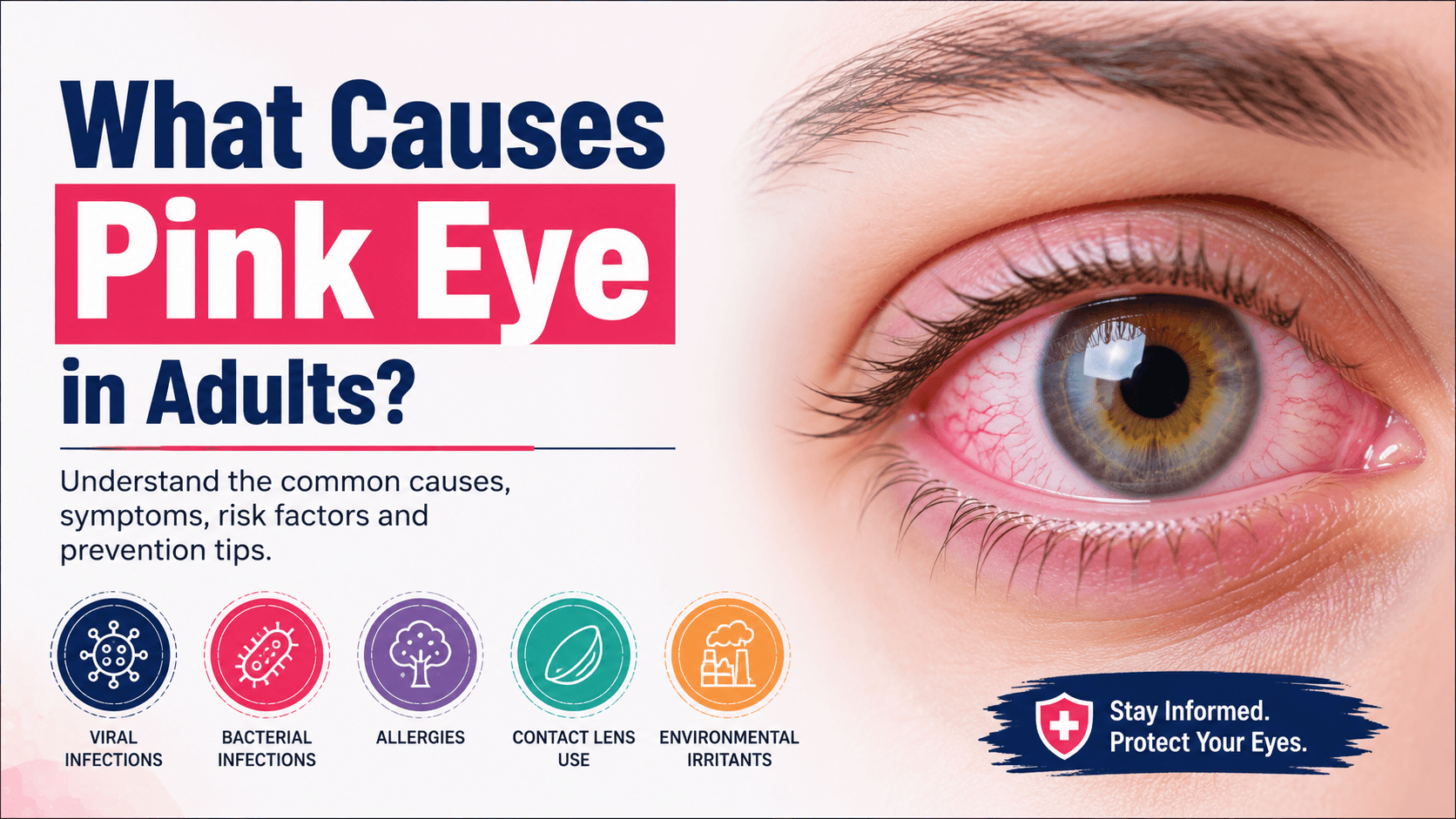
What Causes Pink Eye in Adults? Common Reasons, Symptoms, and Prevention Tips
Pink eye, medically known as conjunctivitis, is a common eye condition that affects millions of adults every year. Pink eye develops when the conjunctiva, a clear and delicate layer that covers the white area of the eye and lines the inner surface of the eyelids, becomes irritated or inflamed. This condition commonly leads to redness, irritation, and discomfort, causing the eyes to look pink, red, and inflamed.
While pink eye is usually not a serious condition, understanding its causes can help adults seek proper treatment and prevent its spread to others.
Common Causes of Pink Eye in Adults
1. Viral Infections
Viral infections are among the most common causes of pink eye in adults. The same viruses responsible for the common cold, flu, or respiratory infections can also infect the eyes. Viral conjunctivitis is highly contagious and can easily spread through close contact with infected people or by touching contaminated objects and surfaces.
Common symptoms include excessive tearing, eye redness, itching, and increased sensitivity to light. In many cases, the infection begins in one eye and may spread to the other eye within a few days.
2. Bacterial Infections
Bacterial conjunctivitis occurs when harmful bacteria infect the eye. Common bacteria that cause pink eye include Staphylococcus and Streptococcus species. Adults may develop bacterial pink eye after touching their eyes with unclean hands or sharing personal items such as towels, makeup, or contact lenses.
This type of pink eye often produces a thick yellow or green discharge that can cause the eyelids to stick together, especially after sleeping.
3. Allergies
Allergic conjunctivitis is also a common cause of pink eye in adults, often triggered by exposure to allergens. It occurs when the eyes react to allergens such as pollen, dust mites, pet dander, mold, or certain chemicals.
Unlike viral and bacterial forms of pink eye, allergic conjunctivitis cannot spread from one person to another because it is not caused by an infection. Symptoms usually include intense itching, excessive tearing, redness, and swollen eyelids. Many adults experience seasonal allergic pink eye during spring and fall when pollen levels are high.
4. Contact Lens Use
Improper use of contact lenses can increase the risk of pink eye. Wearing lenses for longer than recommended, failing to clean them properly, or sleeping while wearing them can introduce bacteria and irritate the eyes.
Contact lens-related conjunctivitis may cause redness, discomfort, blurred vision, and increased sensitivity to light. Maintaining proper contact lens hygiene is essential for reducing the risk of eye infections and preventing pink eye.
5. Exposure to Irritants
Various environmental irritants can trigger pink eye in adults. Common irritants include:
- Smoke
- Air pollution
- Chlorinated swimming pools
- Household cleaning products
- Chemical fumes
- Dust and dirt particles
When these substances come into contact with the eyes, they can cause inflammation and redness, leading to temporary conjunctivitis symptoms.
Risk Factors for Pink Eye
Certain factors can make adults more likely to develop pink eye, including:
- Frequent contact with infected individuals
- Poor hand hygiene
- Sharing eye makeup or personal items
- Seasonal allergies
- Regular contact lens use
- Working in crowded environments
Being aware of these risk factors can help reduce the chances of infection.
Symptoms of Pink Eye in Adults
The signs and symptoms of pink eye may differ depending on the specific cause of the condition. Common signs include:
- A red or pink discoloration in one or both eyes is one of the most common signs of pink eye.
- Itching or burning sensation
- Excessive tearing
- Eye discharge
- Swollen eyelids
- Blurred vision
- Sensitivity to light
- Feeling like something is stuck in the eye
If symptoms become severe or vision is affected, medical attention should be sought immediately.
How to Prevent Pink Eye
Adults can lower their risk of developing pink eye by following a few simple precautions:
- Wash hands regularly with soap and water.
- Avoid touching or rubbing the eyes.
- Do not share towels, pillows, or cosmetics.
- Clean contact lenses properly.
- Replace eye makeup regularly.
- Protect eyes from environmental irritants.
- Manage allergies with appropriate treatment.
Good hygiene remains one of the most effective ways to prevent both viral and bacterial conjunctivitis.
Conclusion
Pink eye in adults is a common eye condition that can develop for several reasons, including viral infections, bacterial infections, allergies, contact lens misuse, and exposure to environmental irritants. Although the symptoms—such as redness, itching, tearing, and eye discharge—can be uncomfortable and sometimes alarming, most cases can be managed effectively with proper care and timely treatment.
Understanding the specific cause of pink eye is important because the treatment approach may differ depending on whether the condition is caused by a virus, bacteria, or allergies. Practicing good hygiene, avoiding eye rubbing, washing hands frequently, and maintaining proper contact lens care can significantly reduce the risk of developing conjunctivitis. Adults who experience persistent symptoms, severe pain, vision changes, or recurring infections should consult an eye care professional for an accurate diagnosis and appropriate treatment.
By taking preventive measures and paying attention to eye health, most adults can avoid complications and recover quickly from pink eye. Healthy habits, regular eye care, and early intervention when symptoms appear are the best ways to protect your vision and keep your eyes comfortable, clear, and free from infection.
➤ Tap here to explore effective remedies for common health issues along with practical tips to keep your body strong and healthy.
https://hinditipsonline.com/category/health-tips/
➤ If you’d rather watch than read, just click the link below to enjoy the full video.
https://youtu.be/V6Qcq7KZ96k?si=nUPB9h9ch2MKlggO
Frequently Asked Questions
Q1. What is the most common cause of pink eye in adults?
A: The most common causes of pink eye in adults are viral infections, bacterial infections, and allergies. Viral conjunctivitis is especially common and often occurs alongside colds or other respiratory infections.
Q2. Is pink eye contagious in adults?
A: Yes, viral and bacterial pink eye are highly contagious and can spread through direct contact, contaminated surfaces, or shared personal items. However, allergic pink eye is not contagious and cannot be passed from one person to another.
Q3. How long does pink eye usually last?
A: The duration depends on the cause. Viral pink eye often clears up within 1–2 weeks, while bacterial pink eye may improve within a few days after starting antibiotic treatment. Allergic pink eye can last as long as exposure to the allergen continues.
Q4. Can adults go to work with pink eye?
A: Adults with viral or bacterial pink eye should be cautious because the infection can spread to coworkers. It is best to follow a healthcare provider’s advice and practice good hygiene until symptoms improve. Allergic pink eye usually does not require staying home since it is not contagious.
Q5. When should I see a doctor for pink eye?
A: You should seek medical attention if you experience severe eye pain, blurred vision, increased sensitivity to light, worsening symptoms, or if the condition does not improve after several days. Prompt treatment can help prevent complications and ensure proper recovery.
Q
A: