
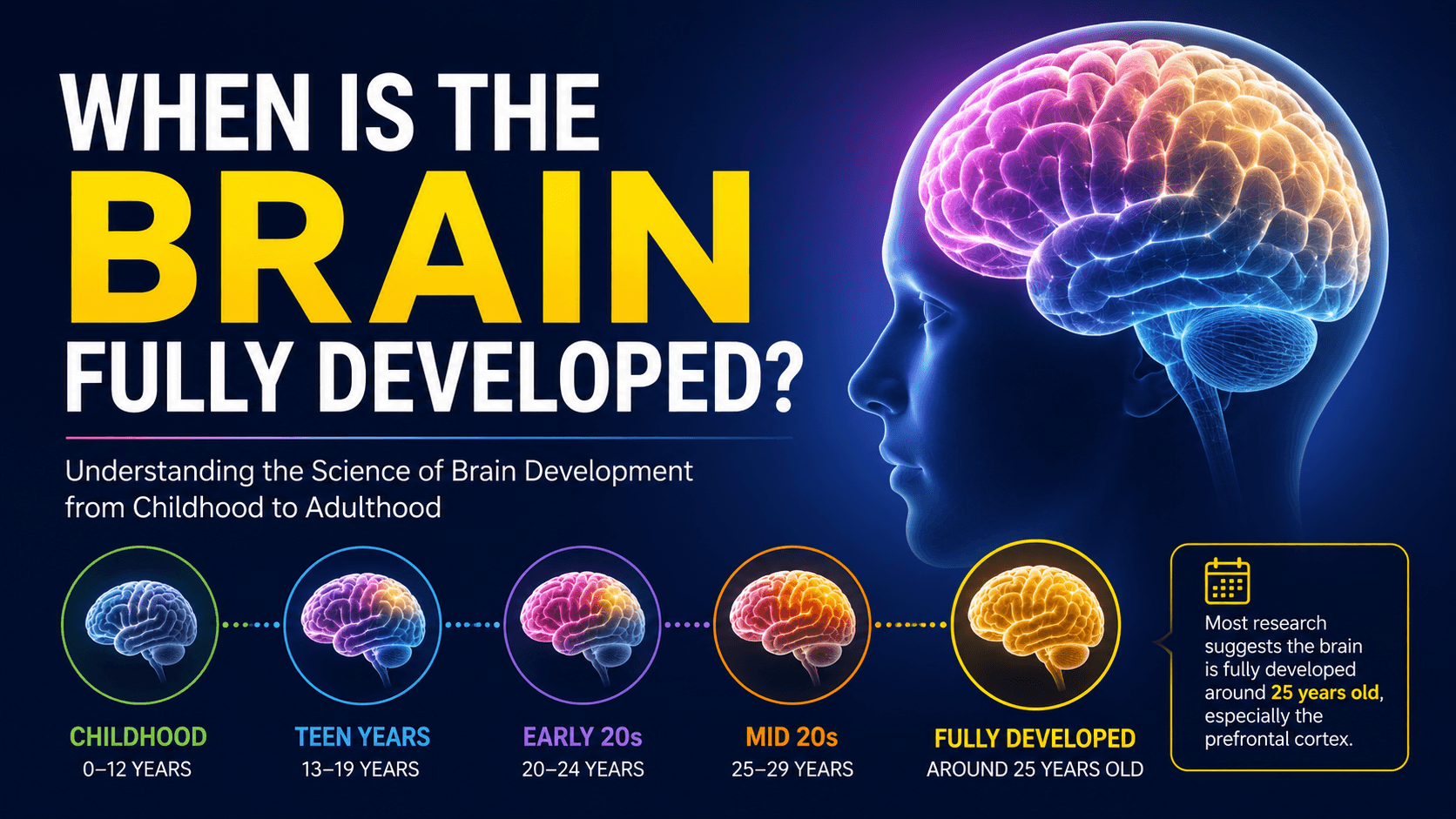
Brain Development Stages, From Childhood Through Adulthood
The human brain begins developing very early during pregnancy and continues to grow and change for many years after birth. Although a baby’s brain contains billions of nerve cells at birth, these cells continue forming new connections as the child grows. This ongoing process allows children to learn new skills, develop language, improve memory, and understand the world around them.
Key Stages of Brain Development
- Before Birth: The brain starts forming during pregnancy, laying the foundation for future growth.
- Infancy (0–2 Years): Rapid brain growth supports basic skills such as recognizing faces, responding to sounds, and developing movement.
- Early Childhood (3–5 Years): Language, memory, social skills, and emotional development improve quickly.
- School Age (6–12 Years): Learning, reasoning, attention, and problem-solving abilities become stronger.
- Teenage Years (13–19 Years): Emotional control and decision-making continue to develop, although the brain is still maturing.
- Early Adulthood (20s): The brain becomes more efficient, and areas responsible for planning and self-control reach full maturity.
Factors That Support Healthy Brain Development
- Eat a balanced, nutrient-rich diet.
- Get enough quality sleep every night.
- Stay physically active through regular exercise.
- Read, learn new skills, and solve puzzles to keep the brain engaged.
- Build healthy relationships and reduce chronic stress.
Adolescence is a period of major brain development, with important changes taking place in areas responsible for thinking, emotions, and decision-making. Areas responsible for emotions and rewards mature earlier than the prefrontal cortex, the region responsible for planning, self-control, and decision-making. This is why teenagers may sometimes act impulsively or take more risks than adults.
The final stage of brain development occurs during early adulthood. The prefrontal cortex is one of the last brain regions to fully mature, helping improve judgment, long-term planning, emotional regulation, and problem-solving abilities. This is why many experts state that the brain is generally fully developed between the ages of 25 and 30, although learning and adapting continue throughout life.
Summary
Healthy brain development depends on a combination of good nutrition, regular exercise, quality sleep, mental stimulation, and positive life experiences. While the brain reaches full structural maturity in early adulthood, it continues to learn, adapt, and create new neural connections throughout a person’s life.
At What Age Is the Brain Fully Developed?
Many people believe the brain becomes fully developed during the teenage years, but scientific research shows that brain development continues well into early adulthood. While most areas of the brain mature earlier, the prefrontal cortex—the part responsible for decision-making, planning, self-control, reasoning, and impulse management—is one of the last regions to fully develop. Because of this, experts generally agree that the brain reaches full maturity at around 25 years of age, although slight differences can exist from person to person.
Why Does Brain Development Take So Long?
Several important changes continue to occur in the brain during adolescence and early adulthood, including:
- Strengthening Neural Connections: Frequently used brain pathways become faster and more efficient.
- Synaptic Pruning: The brain removes weak or unnecessary connections while strengthening important ones.
- Myelination: A protective coating called myelin develops around nerve fibers, allowing messages to travel more quickly between brain cells.
- Improved Decision-Making: As the prefrontal cortex matures, people become better at planning, solving problems, and controlling impulses.
These changes help improve thinking skills, emotional regulation, memory, and overall cognitive performance.
Does Everyone’s Brain Develop at the Same Age?
Not exactly. Genetics, nutrition, education, sleep quality, physical activity, mental health, and life experiences can all influence brain development. Some people may reach certain developmental milestones slightly earlier or later than others. However, this variation is completely normal and does not necessarily indicate better or worse intelligence.
It is also important to understand that being fully developed does not mean the brain stops changing. Throughout life, the brain remains capable of learning new skills, forming new memories, and adapting to different experiences through a process known as neuroplasticity.
Overall, while the brain is generally considered fully developed by the mid-twenties, maintaining healthy habits such as regular exercise, quality sleep, balanced nutrition, stress management, and lifelong learning can continue to support brain function and cognitive health for many years.
What Factors Can Affect Healthy Brain Development?
Healthy brain development is influenced by a combination of genetics, lifestyle, and environmental factors. While genetics provide the basic blueprint for how the brain grows, daily habits and life experiences play a major role in determining how well the brain develops and functions. From childhood through adulthood, making healthy choices can support memory, learning, emotional well-being, and overall cognitive performance.
1. Nutrition
A balanced diet provides the brain with the nutrients it needs to grow and function properly. Foods rich in omega-3 fatty acids, protein, vitamins, minerals, fruits, vegetables, and whole grains help support brain cell growth and communication. Drinking enough water is also important because even mild dehydration can affect concentration and memory.
2. Quality Sleep
Sleep is essential for brain development and repair. During sleep, the brain strengthens memories, removes waste products, and supports learning. Children, teenagers, and adults all need adequate sleep to maintain healthy brain function. Poor sleep over long periods can reduce focus, slow thinking, and negatively affect emotional health.
3. Physical Activity
Regular exercise increases blood flow to the brain, delivering oxygen and nutrients that support healthy brain cells. Physical activity also encourages the release of chemicals that promote learning, memory, and mood. Activities such as walking, running, cycling, swimming, or playing sports can all contribute to better brain health.
4. Mental Stimulation
Keeping the brain active helps build and strengthen neural connections. Reading books, learning a new language, solving puzzles, playing musical instruments, and developing new skills all challenge the brain and improve cognitive abilities. Lifelong learning is one of the best ways to keep the brain healthy.
5. Stress and Mental Health
Short-term stress is a normal part of life, but long-term or chronic stress can interfere with brain development and memory. Managing stress through relaxation techniques, exercise, hobbies, and strong social support can help protect brain function. Maintaining good mental health also supports emotional balance and decision-making.
6. Avoiding Harmful Substances
Excessive alcohol consumption, smoking, and recreational drug use can negatively affect brain development, especially during adolescence and early adulthood when the brain is still maturing. Avoiding these substances helps protect brain cells and supports long-term cognitive health.
Overall, healthy brain development depends on a combination of proper nutrition, quality sleep, regular exercise, mental stimulation, stress management, and avoiding harmful habits. Following these healthy lifestyle practices can help the brain perform at its best throughout every stage of life.
Tips to Support Brain Health at Every Age
Keeping your brain healthy is important throughout every stage of life. Although the brain reaches full maturity in early adulthood, it continues to learn, adapt, and form new connections for the rest of your life. Adopting healthy daily habits can improve memory, concentration, problem-solving skills, and emotional well-being while also helping reduce the risk of cognitive decline as you age.
Eat a Brain-Healthy Diet
A nutritious diet provides the brain with the energy and nutrients it needs to function efficiently. Include foods rich in omega-3 fatty acids, lean protein, whole grains, fruits, vegetables, nuts, and seeds. Limiting highly processed foods, excessive sugar, and unhealthy fats may also support better cognitive health.
Stay Physically Active
Exercise not only strengthens the body but also enhances brain health, memory, and mental performance. Physical activity increases blood flow, delivers oxygen to brain cells, and supports the growth of new neural connections. Aim for at least 150 minutes of moderate exercise each week, such as brisk walking, cycling, swimming, or dancing.
Prioritize Quality Sleep
Sleep is essential for memory formation, learning, and brain repair. Most adults should aim for 7–9 hours of quality sleep each night, while children and teenagers generally require more. Keeping a consistent sleep schedule and avoiding electronic devices before bedtime helps support deeper, more refreshing sleep.
Keep Your Brain Active
Mental stimulation encourages the brain to create and strengthen neural connections. Reading books, solving puzzles, learning a new language, playing strategy games, or developing a new hobby are excellent ways to keep the mind engaged. Lifelong learning supports cognitive function and may help maintain mental sharpness as you age.
Manage Stress Effectively
Chronic stress can negatively affect memory, concentration, and emotional health. Practicing relaxation techniques such as deep breathing, meditation, yoga, or spending time outdoors can help reduce stress levels. Staying connected with family and friends also contributes to better mental well-being.
Avoid Harmful Habits
Smoking, excessive alcohol consumption, and recreational drug use can damage brain cells and interfere with healthy brain function. Protecting your head during sports, wearing seat belts, and following general safety precautions can also help prevent brain injuries.
Continue Learning Throughout Life
The brain has an amazing ability to adapt through a process called neuroplasticity. Whether you’re a child, teenager, adult, or older adult, continuing to learn new skills and challenge your mind helps keep the brain active and resilient.
By combining healthy eating, regular physical activity, quality sleep, mental stimulation, stress management, and avoiding harmful habits, you can support brain health at every age. These simple lifestyle choices not only improve day-to-day cognitive performance but also contribute to long-term brain function and overall well-being.
Conclusion
Understanding when the brain is fully developed helps us appreciate that brain growth is a long and gradual process rather than something that ends in childhood or the teenage years. Although the brain is generally considered fully mature around the age of 25, its ability to learn, adapt, and form new connections continues throughout life. This lifelong flexibility, known as neuroplasticity, allows people to develop new skills, improve memory, and recover from certain challenges even in adulthood.
Healthy brain development depends on much more than age alone. Proper nutrition, quality sleep, regular physical activity, mental stimulation, stress management, and avoiding harmful habits all play essential roles in supporting cognitive function. These healthy lifestyle choices can improve focus, decision-making, emotional well-being, and overall brain performance at every stage of life.
Whether you are a parent supporting a child’s development, a teenager building lifelong habits, or an adult looking to maintain mental sharpness, taking care of your brain should always be a priority. By making informed choices and following healthy daily routines, you can help your brain perform at its best for years to come. Investing in brain health today is an investment in better learning, productivity, and overall quality of life in the future.
Frequently Asked Questions
Q1. At what age is the brain fully developed?
A: Most experts agree that the brain is generally fully developed around the age of 25 years, when the prefrontal cortex responsible for decision-making, planning, and self-control reaches maturity.
Q2. Does the brain continue to develop after age 25?
A: Although the brain reaches full maturity around age 25, it continues to learn, adapt, and form new neural connections throughout life. This ability is known as neuroplasticity.
Q3. Why do teenagers often make impulsive decisions?
A: Teenagers are more likely to make impulsive decisions because the emotional centers of the brain develop earlier than the prefrontal cortex, which is responsible for judgment and self-control.
Q4. What factors support healthy brain development?
A: Healthy brain development is supported by a balanced diet, quality sleep, regular exercise, mental stimulation, stress management, and avoiding harmful habits like smoking and excessive alcohol consumption.
Q5. Can adults improve their brain health?
A: Yes. Adults can improve brain health by staying physically active, eating nutritious foods, getting enough sleep, learning new skills, reading regularly, and managing stress effectively.
Q6. What is neuroplasticity?
A: Neuroplasticity is the brain’s ability to reorganize itself by forming new neural connections. It allows people to learn new skills, adapt to changes, and recover from certain brain injuries.