
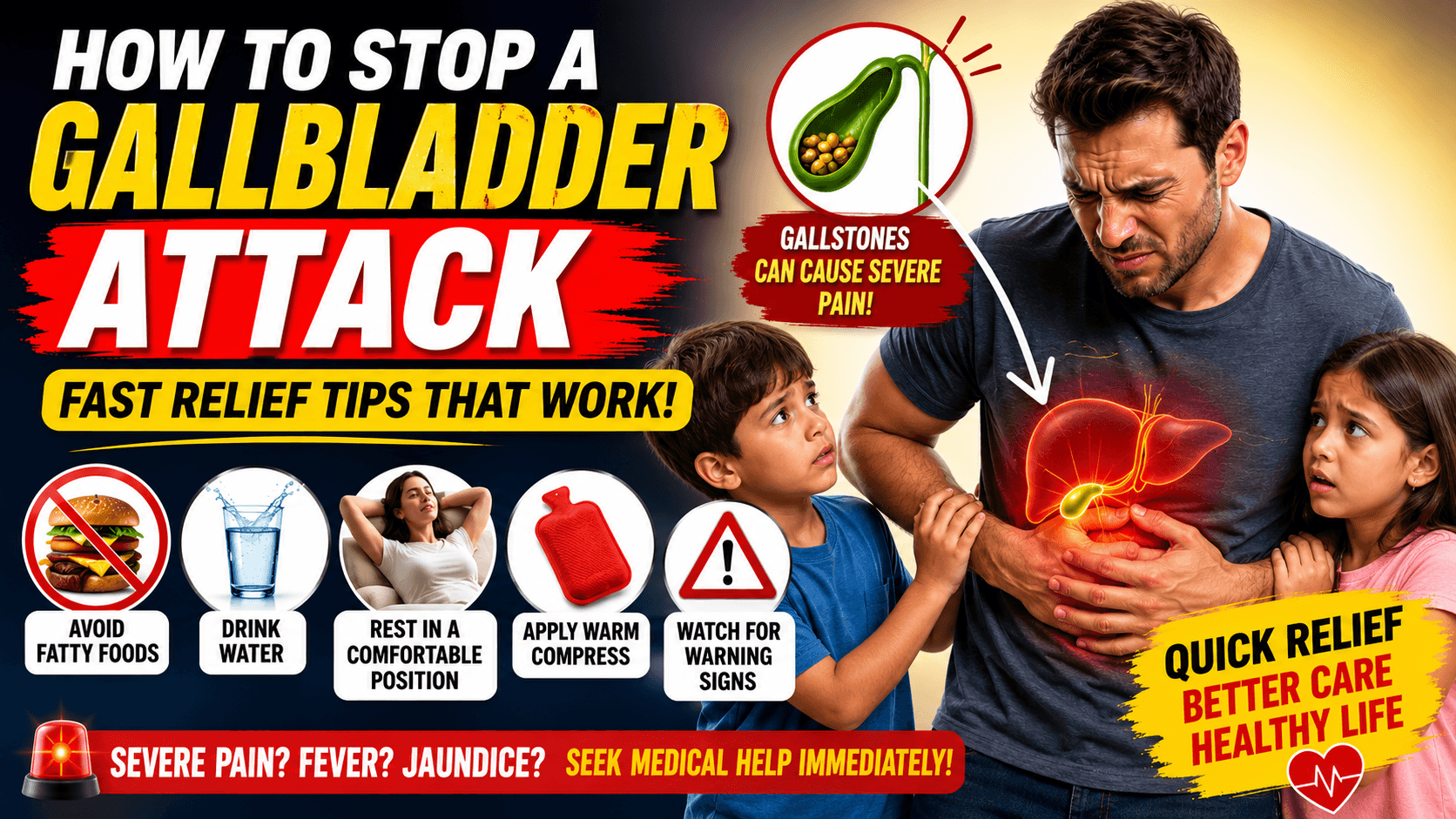
How to Stop a Gallbladder Attack While It Is Happening: Quick Relief Tips That May Help
A gallbladder attack can cause sudden, intense pain that usually starts in the upper right side of the abdomen and may spread to the back or right shoulder. The pain often begins after eating a large, fatty meal and can last from several minutes to a few hours. While you cannot stop a gallbladder attack instantly at home, the following steps may help reduce discomfort until you receive medical care.
1. Stop Eating Immediately
Avoid eating any food, especially fatty, fried, or greasy meals. Eating can cause the gallbladder to contract, which may worsen the pain.
2. Drink Small Sips of Water
Sip clean water slowly to keep your body hydrated without upsetting your stomach. Avoid alcohol, carbonated drinks, sugary beverages, and caffeinated drinks, as they may increase discomfort.
3. Rest in a Comfortable Position
Sit upright or lie on your left side if it feels more comfortable. Avoid sudden movements and give your body time to relax.
4. Apply a Warm Compress
Placing a warm (not extremely hot) heating pad or warm towel on the upper right abdomen may help relax the muscles and provide temporary comfort. Do not use excessive heat, as it can burn the skin.
5. Take Pain Medicine Only If Appropriate
If your doctor has previously recommended an over-the-counter pain reliever, you may use it according to the instructions. Never exceed the recommended dose.
6. Avoid Heavy Physical Activity
Strenuous exercise or lifting heavy objects during an attack can make the pain feel worse. Rest until the symptoms improve.
7. Watch for Emergency Warning Signs
Seek immediate medical attention if you experience:
- Severe pain lasting more than a few hours
- Fever or chills
- Yellowing of the skin or eyes (jaundice)
- Persistent vomiting
- Difficulty breathing or severe weakness
These symptoms may indicate a blocked bile duct or a gallbladder infection that requires urgent medical treatment.
8. Schedule a Medical Evaluation
Even if the pain goes away, do not ignore repeated gallbladder attacks. A healthcare provider can determine the underlying cause and recommend the most appropriate treatment to help prevent future attacks.
Gallbladder Attack Happening Right Now? What to Do for Fast Pain Relief
If you think you are having a gallbladder attack, staying calm and taking the right steps can help you manage the pain while you seek medical care. A gallbladder attack often causes sharp or cramping pain in the upper right side of the abdomen, which may spread to the back or right shoulder. The pain commonly starts after eating a high-fat meal and may be accompanied by nausea, vomiting, bloating, or indigestion.
Although there is no instant home cure for a gallbladder attack, avoiding food, drinking small amounts of water, and resting in a comfortable position may help reduce discomfort. Applying a warm compress to the painful area may also provide temporary relief for some people. However, these measures do not remove gallstones or treat the underlying cause of the attack.
If the pain becomes severe, lasts for several hours, or is accompanied by fever, chills, yellowing of the skin or eyes, repeated vomiting, or difficulty breathing, seek emergency medical care immediately. These symptoms could indicate a serious complication, such as a blocked bile duct or gallbladder infection, which requires prompt treatment.
Once the attack has passed, schedule an appointment with a healthcare professional. Recurrent gallbladder attacks should never be ignored, as proper diagnosis and treatment can help prevent future episodes and reduce the risk of complications.
How to Calm a Gallbladder Attack Naturally: Immediate Steps You Can Take
A gallbladder attack can cause sudden and severe pain, making it difficult to know what to do. While natural remedies cannot remove gallstones or cure a gallbladder attack, some simple measures may help you stay more comfortable until you receive medical care.
Stay Calm and Rest
Stress and anxiety can make pain feel worse. Try to stay calm, avoid unnecessary movement, and rest in a comfortable position. Many people feel better sitting upright or lying on their left side.
Stop Eating Right Away
If the attack starts after a meal, avoid eating anything else. Fatty, fried, and greasy foods can make the gallbladder contract, which may increase the pain. Wait until you have been evaluated by a healthcare professional before returning to your normal diet.
Drink Water Slowly
Keep yourself hydrated by taking slow, small sips of plain water. Avoid alcohol, soft drinks, energy drinks, and sugary beverages, as these may worsen digestive discomfort.
Use a Warm Compress
Place a warm towel or a heating pad wrapped in a cloth on the upper right side of your abdomen for 15–20 minutes. Gentle warmth may help relax nearby muscles and provide temporary comfort. Do not apply excessive heat directly to the skin.
Avoid Heavy Activity
During a gallbladder attack, refrain from strenuous exercise and heavy lifting to prevent worsening the pain. Resting allows your body to recover and may help prevent the pain from becoming more intense.
Know When Natural Remedies Are Not Enough
Natural measures can only provide temporary comfort. Get emergency medical attention right away if you experience any of the following symptoms:
- Severe pain lasting longer than 4–6 hours
- Fever or chills
- Yellowing of the skin or eyes (jaundice)
- Persistent vomiting
- Dark urine or pale-colored stools
- Difficulty breathing or fainting
These symptoms may be signs of a serious condition, such as a blocked bile duct or gallbladder infection, which requires prompt medical treatment.
Follow Up with Your Doctor
Even if the pain improves on its own, repeated gallbladder attacks should not be ignored. A healthcare provider can identify the underlying cause, recommend appropriate treatment, and help reduce the risk of future attacks and complications.
Severe Gallbladder Attack? Emergency Relief Tips and When to Seek Medical Help
A severe gallbladder attack is more than ordinary stomach pain. It usually causes intense pain in the upper right side of the abdomen that may spread to the back, right shoulder, or chest. The pain often begins suddenly, especially after eating a fatty meal, and may be accompanied by nausea, vomiting, bloating, or excessive sweating. While you can take a few steps to stay comfortable, a severe attack should always be taken seriously.
Take Immediate Relief Measures
If you suspect a gallbladder attack, stop eating immediately and drink only small sips of water. Rest in a comfortable position and avoid any heavy physical activity. A warm compress placed over the upper right abdomen may provide temporary comfort, but it will not treat the underlying cause.
Do Not Ignore Severe Symptoms
Some symptoms suggest that the attack may be caused by a blocked bile duct, gallbladder infection, or another serious complication. Seek emergency medical attention if you experience:
- Severe pain lasting more than 4–6 hours
- High fever or chills
- Yellowing of the skin or eyes (jaundice)
- Repeated vomiting that prevents you from drinking fluids
- Confusion, dizziness, or fainting
- Severe chest pain or difficulty breathing
These warning signs require prompt evaluation by a healthcare professional.
What Doctors May Do
At the hospital, doctors may perform a physical examination, blood tests, and imaging tests such as an ultrasound or CT scan to determine the cause of the pain. Treatment may include intravenous (IV) fluids, pain relief medication, antibiotics if an infection is present, or surgery to remove the gallbladder if necessary.
Prevent Future Gallbladder Attacks
After recovering, follow your healthcare provider’s advice to reduce the risk of another attack. Eating a balanced, lower-fat diet, maintaining a healthy weight, staying physically active, and attending follow-up appointments can help improve gallbladder health. If attacks continue to occur, your doctor may recommend gallbladder removal as the most effective long-term treatment.
What to Do During a Gallbladder Attack: Symptoms, Pain Relief, and Warning Signs
A gallbladder attack can happen suddenly and cause severe pain that may interfere with your daily activities. The pain is most commonly felt in the upper right side of the abdomen, but it can also spread to the back, right shoulder, or chest. Many attacks begin after eating a fatty or heavy meal and may last from several minutes to several hours. Recognizing the symptoms early and knowing what to do can help you respond appropriately while seeking medical care.
Common Symptoms of a Gallbladder Attack
Watch for these common signs:
- A stabbing or cramping sensation may develop in the upper right side of the belly.
- Discomfort often extends from the abdomen to the back or right shoulder.
- Nausea or vomiting
- Bloating or indigestion
- Pain that becomes worse after eating fatty foods
How to Manage the Pain
While home remedies cannot cure a gallbladder attack, these steps may provide temporary comfort:
- Wait to eat until your symptoms begin to settle or you receive medical advice.
- Drink small sips of plain water to stay hydrated.
- Rest in a comfortable position and avoid strenuous activity.
- Use a warm towel or heating pad on the painful area for short intervals to ease discomfort.
- Take pain medicine only if it has been recommended by your healthcare provider.
Warning Signs That Require Emergency Care
Do not delay medical treatment if you experience any of the following:
- Pain lasting longer than 4–6 hours
- Fever or chills
- Yellowing of the skin or eyes (jaundice)
- Persistent vomiting
- Dark urine or pale-colored stools
- Difficulty breathing, fainting, or severe weakness
These symptoms may indicate a serious complication, such as a blocked bile duct or gallbladder infection, that requires urgent medical attention.
Preventing Future Attacks
If you have had one gallbladder attack, you may be at risk of having another. Following a healthy, low-fat diet, maintaining a healthy weight, drinking enough water, and avoiding large, greasy meals may help reduce the risk. Most importantly, consult a healthcare professional for a proper diagnosis and treatment plan. Early medical care can help prevent complications and improve your long-term gallbladder health.
Conclusion
A gallbladder attack can be extremely painful and should never be ignored, especially if it occurs repeatedly or is accompanied by severe symptoms. While simple measures such as stopping food intake, drinking small sips of water, resting in a comfortable position, and applying a warm compress may provide temporary relief, these steps do not treat the underlying cause of the attack. Gallstones, inflammation, or a blocked bile duct often require proper medical evaluation and treatment.
It is important to recognize the warning signs that require immediate medical attention, including severe pain lasting for several hours, fever, chills, yellowing of the skin or eyes (jaundice), persistent vomiting, difficulty breathing, or extreme weakness. Delaying treatment in these situations can increase the risk of serious complications, including gallbladder infection or bile duct blockage.
Even if the pain disappears on its own, recurring gallbladder attacks should always be discussed with a healthcare professional. Early diagnosis through physical examination and imaging tests can help identify the cause and determine the most appropriate treatment. In many cases, making healthy lifestyle changes such as following a balanced low-fat diet, maintaining a healthy weight, staying hydrated, and exercising regularly can help reduce the risk of future attacks.
Remember, home remedies are only meant to provide short-term comfort and should never replace professional medical care. Taking gallbladder symptoms seriously, seeking timely treatment, and following your healthcare provider’s advice are the best ways to protect your health, prevent complications, and improve your long-term quality of life. Pasted text.txt
Frequently Asked Questions
Q1. What are the first signs of a gallbladder attack?
A: The most common signs include sudden pain in the upper right abdomen, pain that spreads to the back or right shoulder, nausea, vomiting, and bloating.
Q2. Can I stop a gallbladder attack at home?
A: Home remedies such as resting, avoiding food, drinking small sips of water, and using a warm compress may provide temporary relief, but they cannot treat the underlying cause.
Q3. When should I go to the hospital for a gallbladder attack?
A: Seek emergency medical care if the pain lasts more than 4–6 hours or is accompanied by fever, jaundice, persistent vomiting, or difficulty breathing.
Q4. What foods should I avoid during a gallbladder attack?
A: Avoid fatty, fried, greasy, spicy, and heavy meals, as they can worsen the pain by causing the gallbladder to contract.
Q5. Can gallbladder attacks be prevented?
A: Yes. Eating a low-fat diet, maintaining a healthy weight, staying hydrated, and following your doctor’s advice can help reduce the risk of future gallbladder attacks.